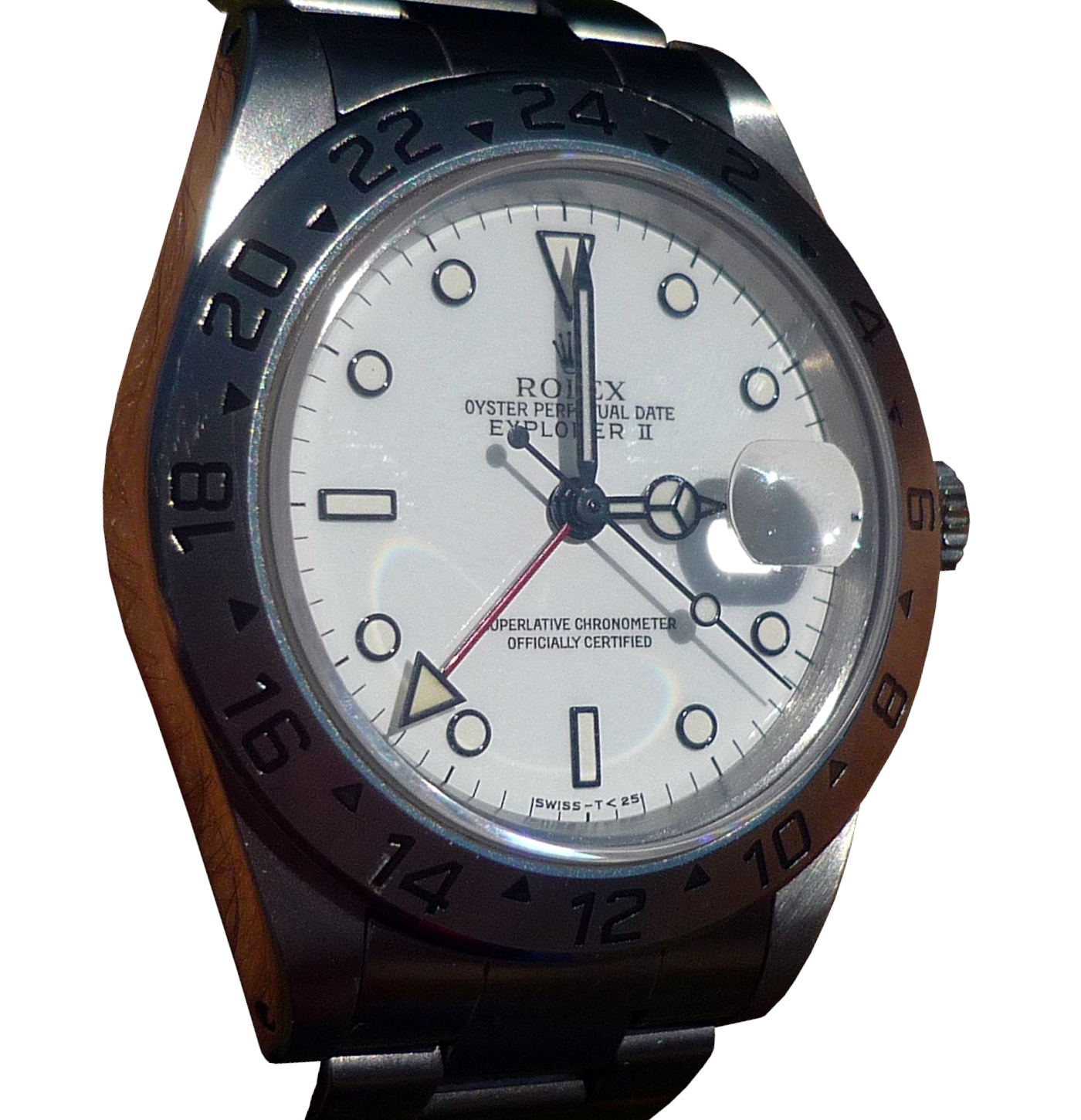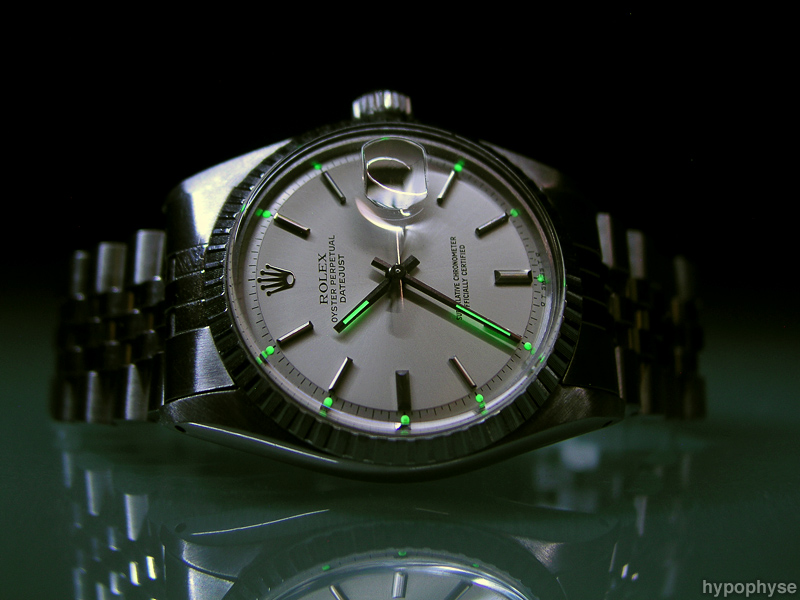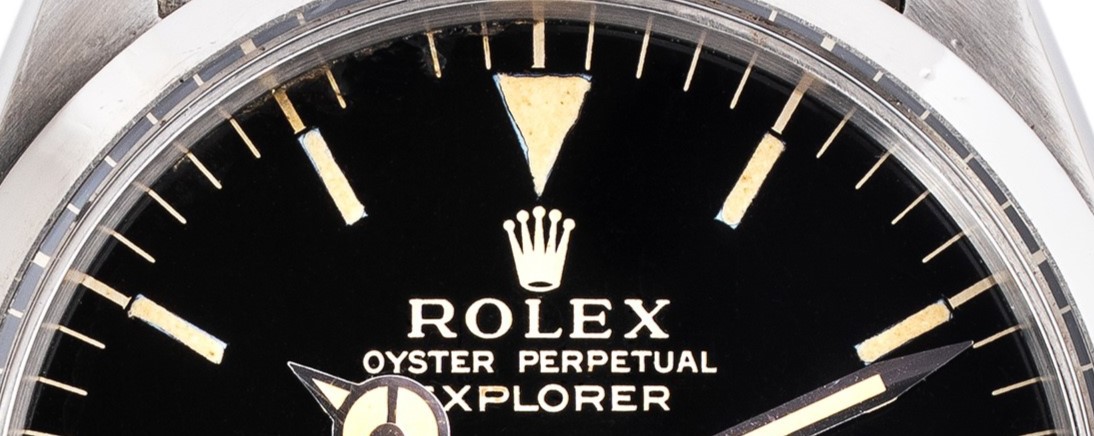
The long-running matte-dial Explorer produced from 1963 to 1989; vintage collectors treat this as the most correct-proportioned Explorer ever made.
Originality matters on this reference. An original dial and hands command a significant premium. Service replacements typically trade at a 20-40% discount to original examples.
Pre-owned watches trade across a wide condition spectrum. These ranges are typical for the secondary market.
The Explorer 1016 is a 36mm steel tool watch produced across 26 years, the longest production run of any Explorer reference. Its clean, legible dial and compact proportions have aged better than almost anything else from the period, and the reference attracts serious collectors who prioritize restraint over complication.
Production ran from 1963 to 1989, bridging the gilt-dial era and the modern glossy dial period. Early examples used the caliber 1560, a 25-jewel movement; the 1570 replaced it through the mid-1960s and carried the reference to the end. Dials shifted from matte black with gilt printing to glossy black with silver printing through the late 1960s and 1970s.
Service-replacement dials with subtle text differences (spider signature, lume type, "Swiss Made" vs "Swiss" at 6) are common in the market and significantly affect desirability. A small subset of examples developed a warm brown patina on the dial, commonly called tropical, and these command substantial premiums over standard black examples.
Check the dial closely: matte vs glossy, the lume plot material (tritium pitting is expected on early examples, but overly clean plots may indicate a service dial), and the exact text at 6 o'clock. Case condition matters more than almost any other factor; over-polished cases lose the sharp lug chamfers and are difficult to value accurately. The case back should be smooth steel without engravings; personalized or re-engraved backs are hard to sell.
Confirm the crown is correct for the era (winding crowns were not signed on earliest examples). Bracelets are frequently replaced; a period-correct 7205 or 78350 bracelet adds value, and aftermarket bracelets subtract from it.
Tropical dial examples sit at a significant premium, often two to three times a comparable standard black dial, though the market for them is thin and individual condition drives wide price variation. Matte-dial examples in unpolished cases consistently outperform late glossy-dial examples. Full-set examples with original papers are rare given the production era; when they appear, they trade well above watch-only examples.
The reference has appreciated steadily over the past decade and shows no sign of cooling, though liquidity varies by condition tier.
The caliber 1560 and 1570 are both well-understood movements with widely available parts and competent independent service options. A service interval of 7 to 10 years is reasonable, and a recent service from a credible watchmaker adds tangible value given the age of these movements. Expect to pay $400 to $800 for a thorough independent service on either caliber.
Community + OSINT signals haven’t landed for this reference yet. We don’t publish a rating against zero signal — the number would mean nothing. Editorial body + caliber + market value still surface above; ratings appear once the signal corpus does.
The Explorer 1016 ran 26 years with significant dial and hand variations. Dial originality is the central authentication and value question -- refinished dials are common and trade at a heavy discount.
| Area | What to check | What is correct | Red flag |
|---|---|---|---|
| dial | Gilt vs. matte dial for the stated era | Gilt era (approx. 1962-1966): gold-colored printing on glossy lacquer; matte era (1966+): white/silver printing on flat matte surface | Gilt printing in a case with a post-1966 serial; matte dial with no aging on a stated early-1960s example |
| dial | Tritium lume aging consistency | Tritium plots at 3, 6, and 9 should show consistent cream-to-tan patina matching the dial tone; natural variation between individual plots is authentic | Bright white lume plots on a stated pre-1970s dial; all plots identical in color (suggesting replacement) |
| hands |
The Explorer 1016 ran from 1963 to 1989 -- a 26-year production run with significant dial and hand variations. Dial originality is the central authentication and value question. Outright fakes are less common than non-original parts or refinished dials.
Down 37% over the past 90 days
Based on eBay sales, last 12 months
| Mercedes hour hand lume generation and color |
| Lume color in the Mercedes hand cavity should match the dial plot aging tone; era-correct hands have correct lume material for the production year |
| Super-LumiNova (white) lume in a stated 1960s or 1970s example; lume color mismatch between hands and dial |
| case | Brushed lug top surfaces | Lug tops are brushed with visible directional grain; the transition to polished lug sides is crisp | Mirror-polished lug tops indicating case refinishing that has removed original brushing |
| caseback | Reference and serial placement | Reference 1016 between lugs at 12; serial between lugs at 6; solid caseback with correct EXPLORER engraving at center | Serial number outside the 1963-1989 production window; caseback engraving in incorrect typeface for the era |
| movement | Cal. 1560 or 1570 with no quickset date | The 1016 is a no-date reference; no quickset date function should be present; bidirectional rotor; runs at 19,800bph | Any quickset date function (means the movement has been replaced); unidirectional or loose rotor |
| Era | Description | Identifiers |
|---|---|---|
| 1963 to 1966 | Gilt dial with gold printing and tritium lume. The most desirable variant for collectors. |
|
| 1966 to 1976 | Matte black dial transitioning to white silver printing. SWISS MADE added to dial foot. |
|
| 1976 to 1989 | Later matte dials with updated printing and Super-LumiNova transition at the end of the run. |
|