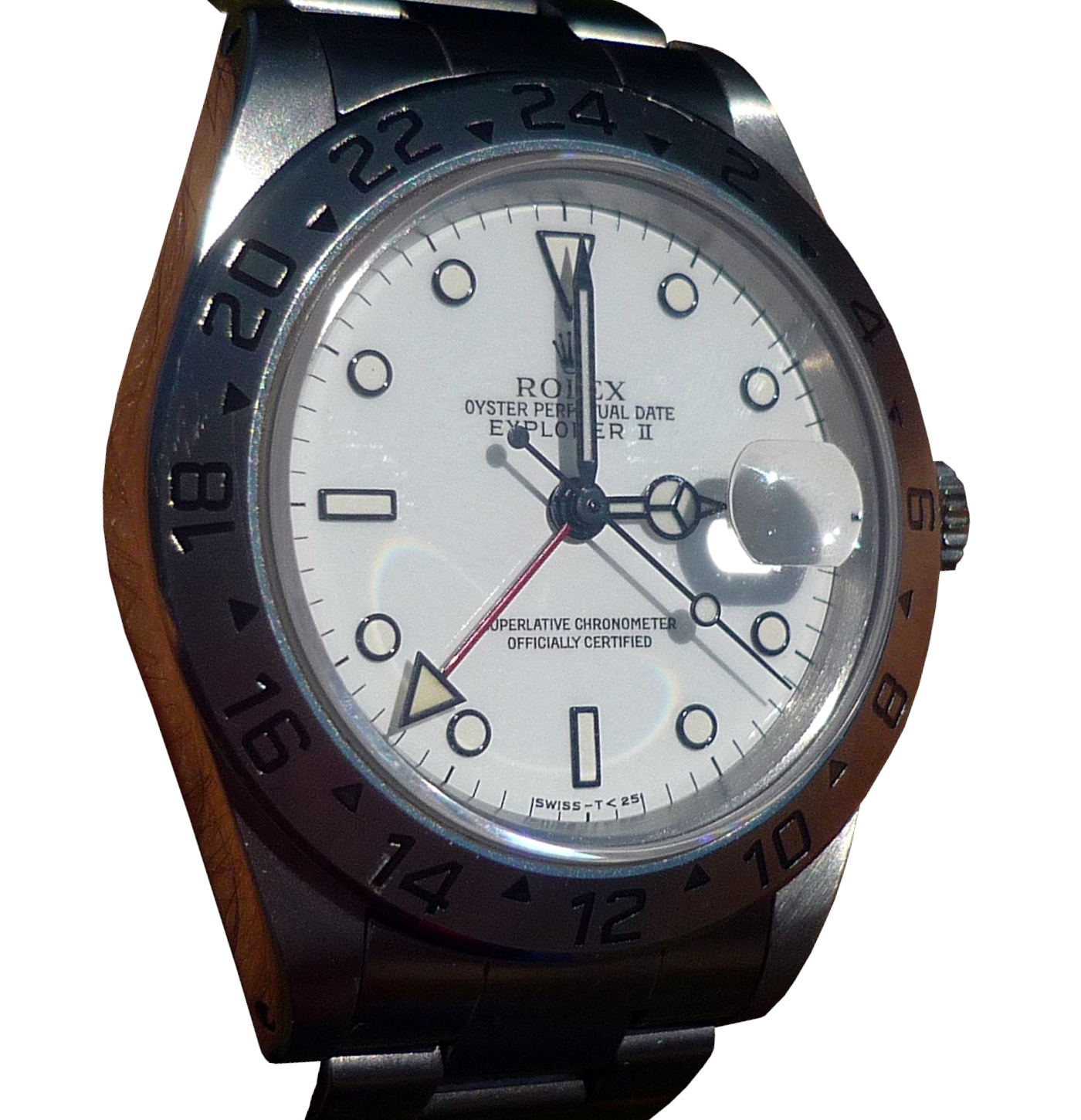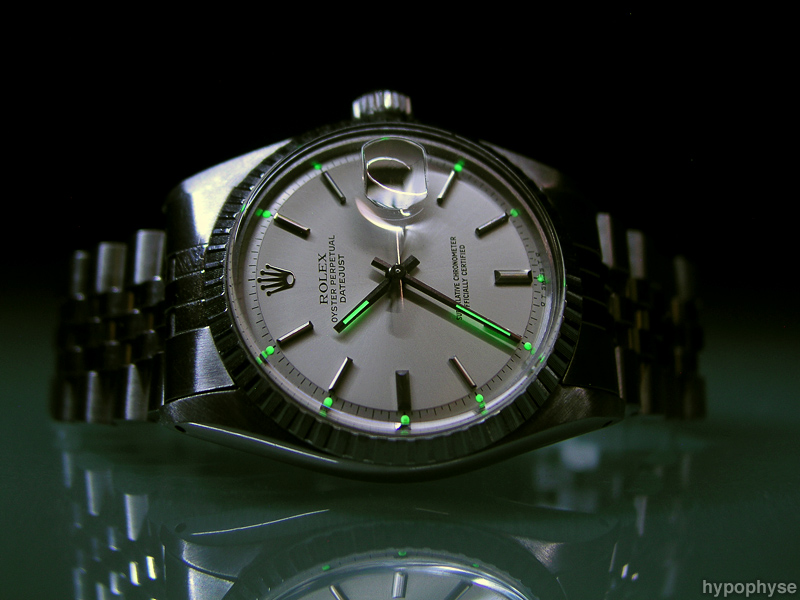
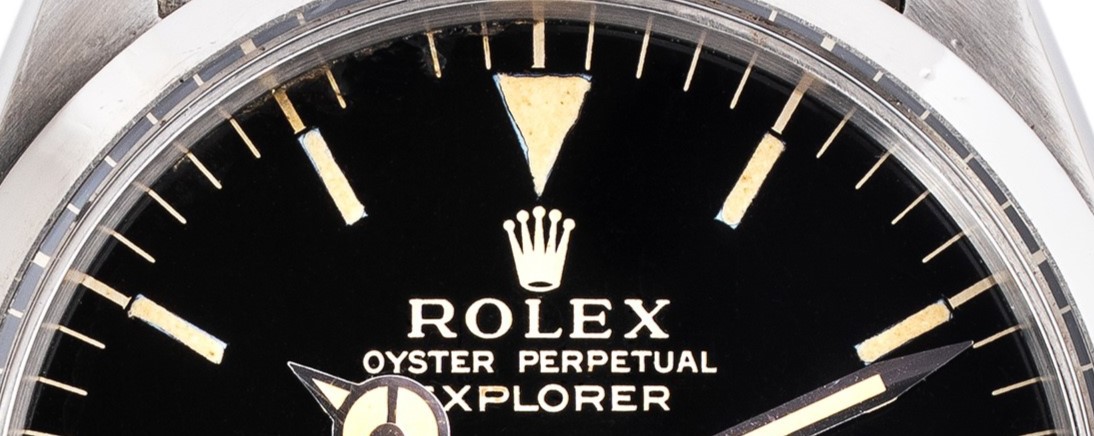
The long-running matte-dial Explorer produced from 1963 to 1989; vintage collectors treat this as the most correct-proportioned Explorer ever made.
Originality
Originality matters on this reference. An original dial and hands command a significant premium. Service replacements typically trade at a 20-40% discount to original examples.
Live pricing is coming soon. Get notified when it is available for this reference.
Not yet rated
Community + OSINT signals haven’t landed for this reference yet. We don’t publish a rating against zero signal: the number would mean nothing. Editorial body + caliber + market value still surface above; ratings appear once the signal corpus does.
Search pre-owned listings
Authentication
The Explorer 1016 ran 26 years with significant dial and hand variations. Dial originality is the central authentication and value question: refinished dials are common and trade at a heavy discount.
- Dial repainting is documented extensively on this reference; gilt dials (1962-1966) are especially targeted for artificial enhancement.
- The long production run (1963-1989) makes serial-to-dial-generation matching an important step.
- Case polishing has removed original surface geometry on a significant percentage of surviving examples.
| Area | What to check | What is correct | Red flag |
|---|---|---|---|
| dial | Gilt vs. matte dial for the stated era | Gilt era (approx. 1962-1966): gold-colored printing on glossy lacquer; matte era (1966+): white/silver printing on flat matte surface | Gilt printing in a case with a post-1966 serial; matte dial with no aging on a stated early-1960s example |
| dial | Tritium lume aging consistency | Tritium plots at 3, 6, and 9 should show consistent cream-to-tan patina matching the dial tone; natural variation between individual plots is authentic | Bright white lume plots on a stated pre-1970s dial; all plots identical in color (suggesting replacement) |
| hands | Mercedes hour hand lume generation and color | Lume color in the Mercedes hand cavity should match the dial plot aging tone; era-correct hands have correct lume material for the production year | Super-LumiNova (white) lume in a stated 1960s or 1970s example; lume color mismatch between hands and dial |
| case | Brushed lug top surfaces | Lug tops are brushed with visible directional grain; the transition to polished lug sides is crisp | Mirror-polished lug tops indicating case refinishing that has removed original brushing |
| caseback | Reference and serial placement | Reference 1016 between lugs at 12; serial between lugs at 6; solid caseback with correct EXPLORER engraving at center | Serial number outside the 1963-1989 production window; caseback engraving in incorrect typeface for the era |
| movement | Cal. 1560 or 1570 with no quickset date | The 1016 is a no-date reference; no quickset date function should be present; bidirectional rotor; runs at 19,800bph | Any quickset date function (means the movement has been replaced); unidirectional or loose rotor |
- Crystal replacement is very common on examples with decades of use; acrylic domes were original on many early examples.
- Crown replacement is documented; confirm correct profile for the production era.
- Bracelet replacement with Oyster or aftermarket bracelets is common; original bracelets are preferred by collectors.
Authentication guide
The Explorer 1016 ran from 1963 to 1989 -- a 26-year production run with significant dial and hand variations. Dial originality is the central authentication and value question. Outright fakes are less common than non-original parts or refinished dials.