GrailAtlasAn independent mechanical watch reference
Español

The 36mm two-tone Datejust 16234 offers the core Rolex package in a case that wears more cleanly than current Rolesor production; prices remain below $5,000 for clean examples.

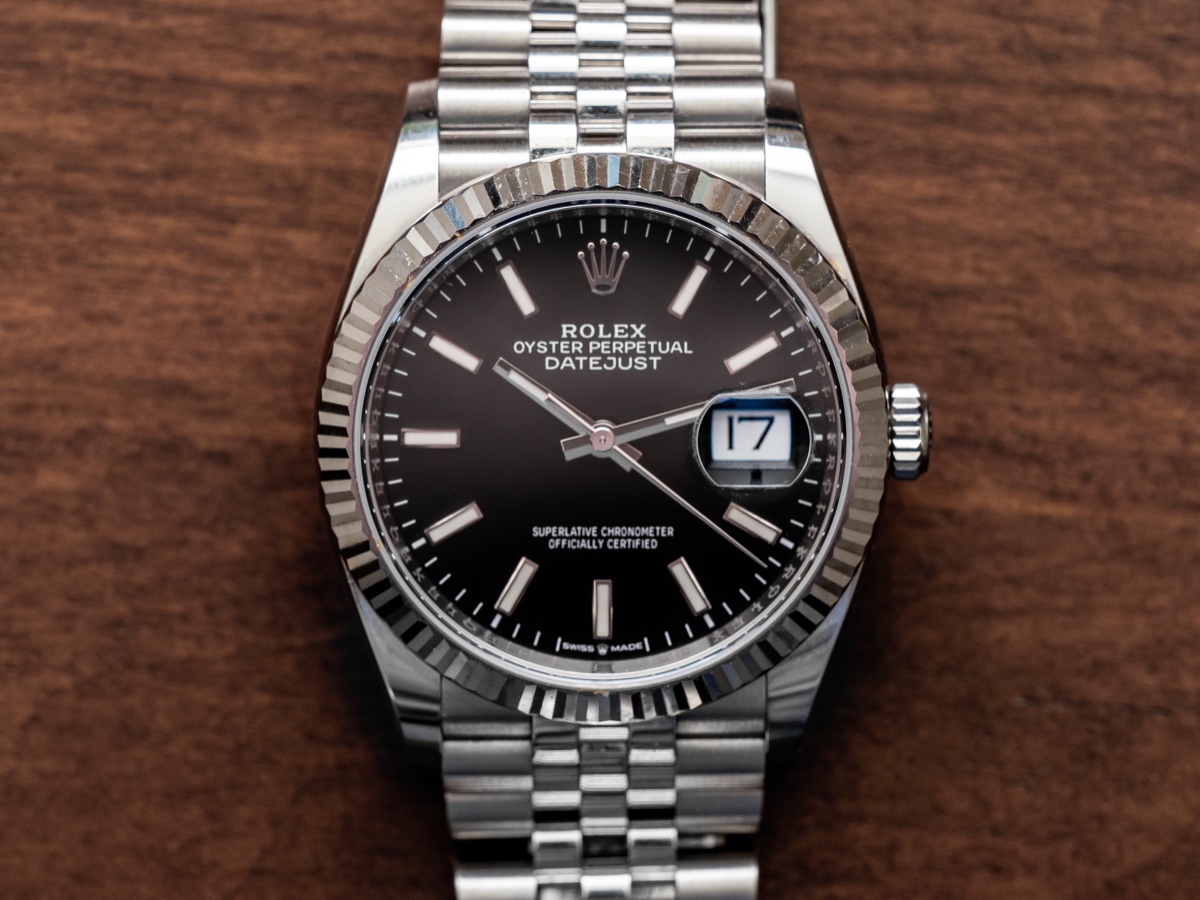
Uncommonbest value#4 in familyOfficial press photos

Originality

Originality matters on this reference. An original dial and hands command a significant premium. Service replacements typically trade at a 20-40% discount to original examples.

Condition affects price

Pre-owned watches trade across a wide condition spectrum. These ranges are typical for the secondary market.

New Old Stock
Unworn example retaining original packaging, tags, and warranty documentation.
+30–50% vs median
Unpolished
Worn but the case has never been polished; original brushed and polished surfaces are intact.
+15–25% vs median
Polished
Case has been professionally or amateur polished at some point; edge definition is softened.
-15 to -5% vs median
Recently Serviced
Movement has been recently serviced with documented service records; case condition varies.
At median
Project
Needs service, has dial or hand issues, non-original parts, or other remediation before daily wear.
-50 to -25% vs median

Full condition grading guide →

Market price

$3,500$5,500
varies by metal·2026 Q2
Price trend chart coming soon

The vintage-era Datejust 16234 in steel or two-tone trades well below current Rolesor production; buyers who want classic Rolex proportions find excellent value here.

Editorial estimate, 2026 Q2. Actual prices vary by condition, date, and box/papers status.

Also uses Rolex Cal. 3135
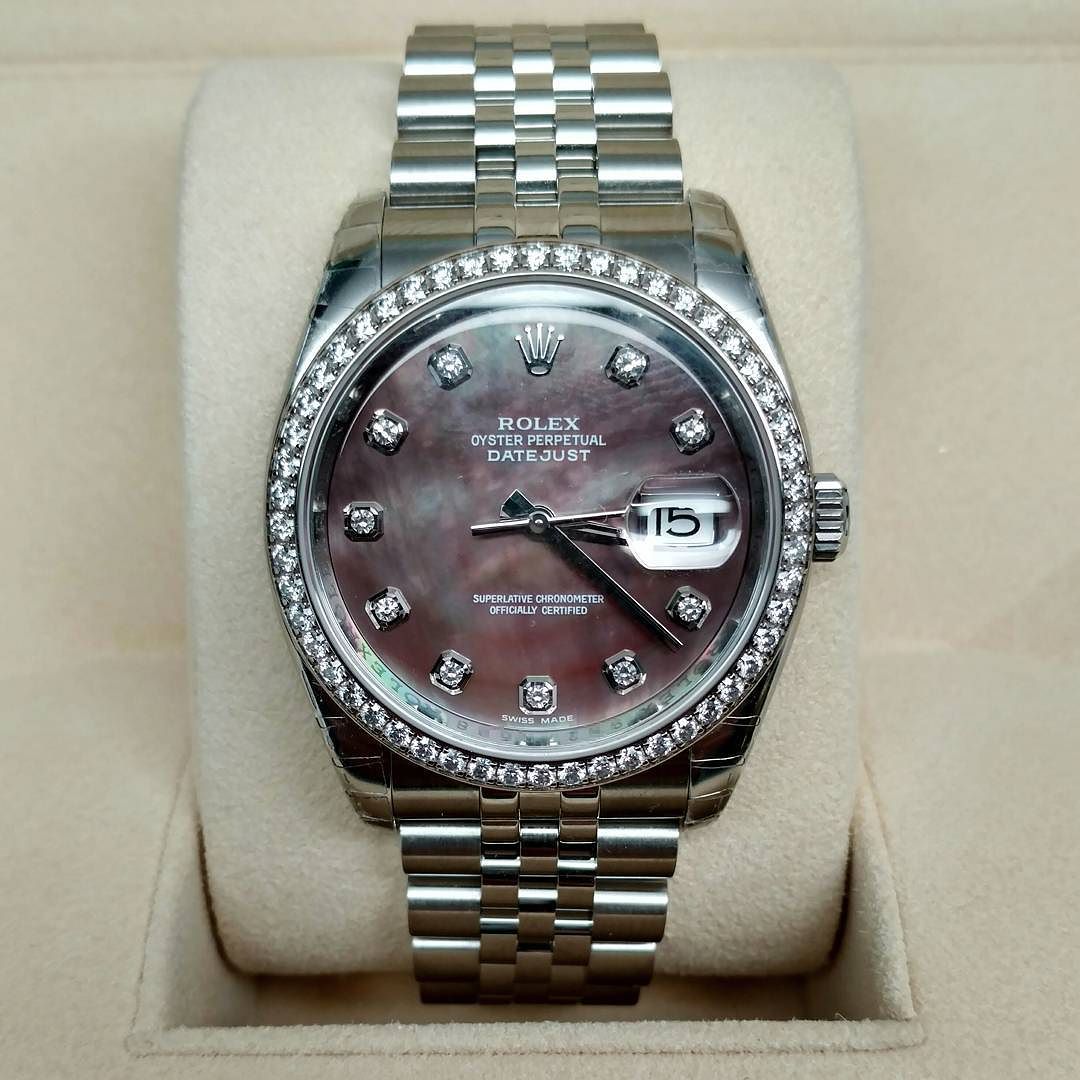
Rolex Datejust 36 (Steel Predecessor) Ref. 116200, silver dial, steel case
Rolex
Datejust
Rolex
Sea-Dweller
Small case: suits slender wrists (under 6.5 in / 16.5 cm)
36 mm case. A compact, elegant wear. Particularly at home on narrower wrists where larger cases can overhang.

Not yet rated

Community + OSINT signals haven’t landed for this reference yet. We don’t publish a rating against zero signal: the number would mean nothing. Editorial body + caliber + market value still surface above; ratings appear once the signal corpus does.

Search pre-owned listings

Chrono24
eBay (sold listings)
WatchBox

Authentication

The 16234 is a common Datejust configuration and broadly faked at lower price points. Authentication focuses on dial originality and caliber confirmation.

Known issues in the market
  • Aftermarket dials with diamond or custom indices are frequently swapped in and misrepresented as factory original.
  • The two-tone version is particularly targeted for case swaps and dial replacements.
  • Service hands (non-original Rolex replacement hands) are very common on mid-century through 1990s Datejusts.
AreaWhat to checkWhat is correctRed flag
dialIndex printing or applied marker typeFactory dials use applied baton markers or applied Roman numerals depending on reference; printing is crispAftermarket diamond settings with uneven prong heights; non-factory dial markings; text font inconsistency
handsHand generation matchingHands should match the production era of the case; alpha hands on some, stick hands on others, both legitimate depending on production dateMixed-generation hands; service hands with slightly different lume color than dial plots; non-Rolex hand profiles
movementCal. 3135 with quickset dateCal. 3135 has bidirectional quick-set date via crown at 2:15 position; Parachrom hairspring in later examplesNon-quickset date mechanism on a stated late-production 16234; non-Rolex movement
crystalCyclops date magnifier2.5x date magnification; sapphire crystal; subtle blue-green AR coating tint; Rolex coronet at 6 on crystal (certain generations)Mineral crystal; weak magnification not achieving 2.5x; no AR coating; incorrect tint color
Common legitimate replacements
  • Dial replacement with aftermarket dials is the most significant authenticity concern for this reference.
  • Crystal is a routine replacement; confirm sapphire with cyclops.
  • Bracelet and clasp are frequently replaced over the lifespan of a 1990s Datejust.
Expert resources: Watchrecon and Rolex Forums Datejust threads document known genuine versus aftermarket dials. The Rolex serial number date guides help match expected dial variants to production windows. Chrono24 authenticated listings provide visual comparison for period-correct examples.

Authentication guide

Last reviewed June 2026

The 16234 is a long-running Datejust configuration produced across multiple decades. Aftermarket dial swaps are the most significant authenticity concern; factory versus aftermarket diamond dials are a major value driver.

Known reproduction risks

toggle
MEDIUM

Aftermarket or custom dial configurations misrepresented as Rolex factory production.

  • Diamond indices with uneven prong heights -- Rolex diamond dials have factory-precision settings with uniform prong geometry
  • Non-standard dial colors or decorations not found in Rolex factory production for this reference
  • Applied markers showing adhesive seepage at the marker feet under magnification
LOW

Outright replicas of the Datejust at budget price points.

  • Coronet at 12 that is flat or printed rather than applied and three-dimensional
  • Cyclops magnification that is weak -- genuine Rolex cyclops achieves 2.5x; replicas often show 1.5x or less
  • Fluted bezel with incorrect tooth count or depth on Rolesor variants

Dial variants by era

toggle
EraDescriptionIdentifiers
1988 to 2011 (baton indices)Classic applied baton hour markers on a variety of dial colors. White, silver, and champagne are the most common.
  • Applied gold or rhodium-plated baton markers with flat tops
  • Rolex coronet applied above 12, three-dimensional and casting a shadow
  • "Datejust" text in period-correct font for the production year
  • Cyclops date magnifier over the date window at 3 o'clock
1988 to 2011 (Roman numeral variants)Applied Roman numeral indices on some dial configurations.
  • Applied gold Roman numerals at each hour position
  • Correct Roman numeral proportions for the Rolex production standard
  • Coronet applied above 12 identical to baton variants

Service part flags

toggle
Dial

Original: Applied markers are a defining originality feature. Rolex applied markers are set with precise index foot depth and consistent height. Factory diamond dials use stones in specific settings produced by Rolex.

Replacement tells
  • Aftermarket diamond settings with uneven prong heights or inconsistent stone sizes -- Rolex factory diamond dials use uniform, precision-set stones
  • Dial printing text with an incorrect font weight or character spacing for the production era
  • Applied markers that sit at inconsistent heights or show adhesive at the dial surface
  • Custom aftermarket dials with non-standard colors, stones, or text configurations that Rolex never produced
Hands

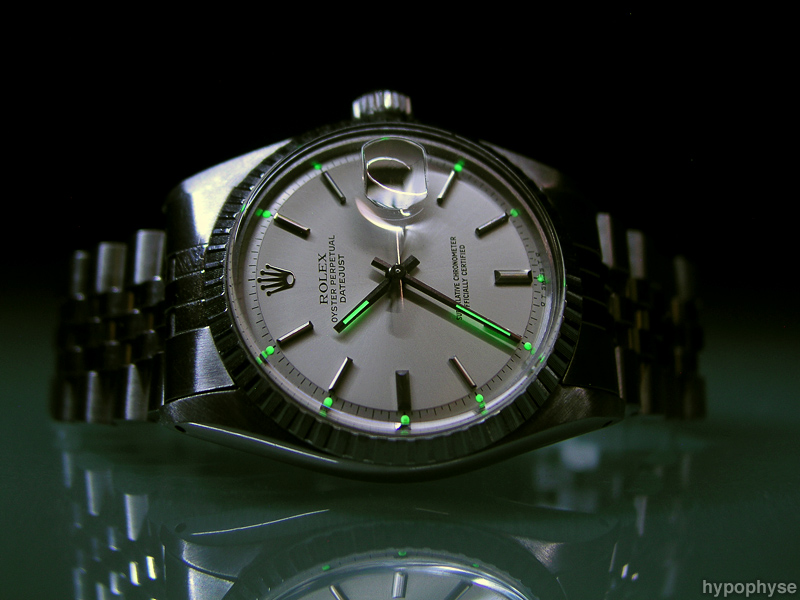
Original: Alpha, stick, or baton hands depending on the production era. Lume generation should match the production year: tritium (cream-to-tan aging) on pre-1998 examples, Super-LumiNova (green glow) from 1998 onward.

Replacement tells
  • Service hands with brighter white lume on a pre-1998 dial that retains original tritium patina -- the lume mismatch is immediately visible
  • Mixed-generation hands where the hour hand is from a different Datejust generation (alpha on a stick-hand era dial)
  • Non-Rolex hand profiles with slightly different silhouette proportions
Crystal

Original: Sapphire crystal with a 2.5x cyclops magnifier centered on the date window. Rolex AR coating shows as a subtle blue-green tint at certain angles. Some production eras featured the Rolex coronet at 6 o'clock on the crystal inner surface.

Replacement tells
  • Mineral crystal that scratches with a metal key (sapphire does not)
  • Cyclops magnifier not achieving 2.5x magnification -- the date numeral should be significantly enlarged
  • AR coating absent or a noticeably different color than the Rolex standard blue-green tint

Case back markings

toggle
1988 to 2011
  • Solid caseback -- no exhibition window on the standard 16234
  • "ROLEX OYSTER PERPETUAL DATE" text on the outer ring of the caseback
  • "DATEJUST" in the center band
  • Serial between the lugs at 6, reference (16234) between the lugs at 12
  • Two-letter date code on the inner clasp arm indicating production year

Movement tells

toggle
  • Cal. 3135 with quickset date: the date corrects instantly via the crown at position 2:15. The adjustment should be crisp with no grinding.
  • Later examples have the Parachrom hairspring (blue-violet color at the balance wheel). Early 16234 examples use a standard alloy spring.
  • The bidirectional Perpetual rotor should spin freely with no lateral play. A rattling or grinding rotor indicates worn bearings.
  • Cal. 3135 runs at 28,800bph. A significant rate deviation after regulation suggests worn pallets or a compromised escapement.
  • Non-Rolex donor movements (ETA 2836 is a common substitute) do not have the Parachrom hairspring and show different bridge architecture through an open caseback.
Sources: Rolex Forums -- Datejust authentication threads documenting factory vs aftermarket dials; Watchrecon -- Datejust production variant documentation.

You might also like

Rolex Datejust 36 Ref. 126200, silver dial, steel case
Rolex
Datejust
Ref. 126200
Rolex Datejust 41 (Fluted Bezel, Jubilee) Ref. 126334, silver dial, two-tone case
Rolex
Datejust
Ref. 126334
Rolex Lady-Datejust 28 Ref. 279174, silver dial, two-tone case
Rolex
Datejust
Ref. 279174
Rolex Datejust 36 (Steel Predecessor) Ref. 116200, silver dial, steel case
Rolex
Datejust
Ref. 116200
Rolex Datejust 41 Jubilee Ref. 126300, black dial, steel case
Rolex
Datejust
Ref. 126300
Rolex Datejust Perpetual (Vintage Steel) Ref. 1601, champagne dial, steel case
Rolex
Datejust
Ref. 1601

Buying guidance

← Back to Grail Atlas