GrailAtlasAn independent mechanical watch reference
العربية

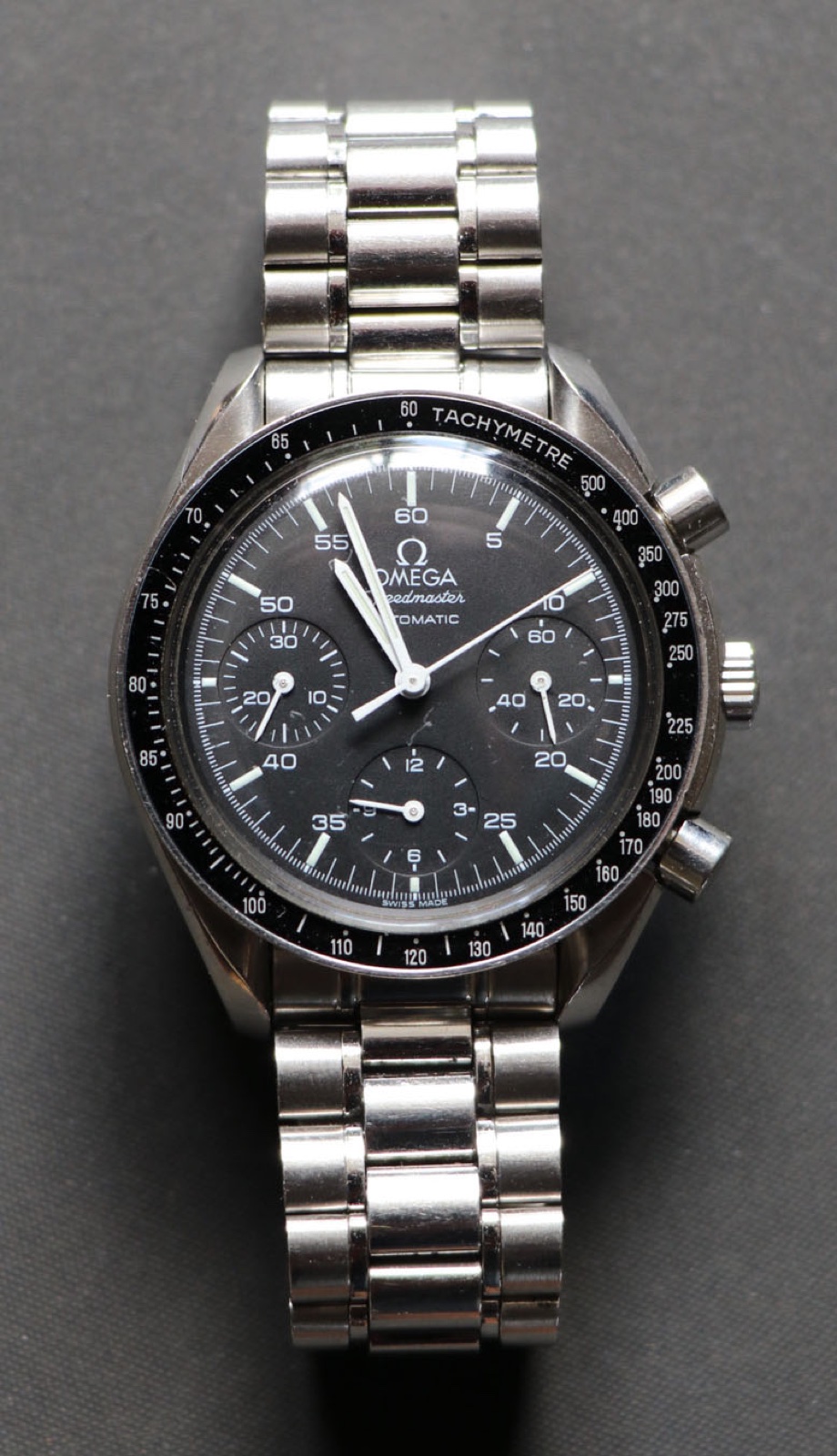
The manual-wind pre-Zenith Daytona; Paul Newman exotic-dial examples within this reference number are among the most valuable wristwatches in any auction.

Uncommon · ~13,000most sought#3 in familyOfficial press photos

Originality

Originality matters on this reference. An original dial and hands command a significant premium. Service replacements typically trade at a 20-40% discount to original examples.

Dial variants

Paul Newman exotic dial1969 to 1977Very rareLandmark
  • Art Deco-style subsidiary dial chapter rings with alternating blocks
  • Square-ish Arabic numerals on the inner registers instead of batons
  • Bold outer chapter ring with alternating block markers
  • Available in black or white "panda" color combinations

The Paul Newman dial is the most recognized premium dial variant in vintage watch collecting. Demand far exceeds supply and auction records are set regularly. Even a distressed example commands multiples of a standard-dial 6263.

Standard dial1969 to 1987UncommonSought
  • Clean subsidiary dials with baton markers and no chapter ring blocks
  • Thin tachymeter scale on the outer bezel
  • Black or silver/white dial backgrounds in production

The standard 6263 without the exotic dial is still a serious vintage piece. It is far more attainable than the Newman variant while retaining the hand-wind Cal. 727/722 movement and the period-correct case.

Sigma dial1969 to 1979UncommonSought
  • Tiny sigma (lowercase) symbols flanking "SWISS MADE" at 6 o'clock
  • Indicates solid gold applied indices rather than gold-capped
  • Appears on both standard and exotic dials

Sigma dials are not a separate look but a quality marker: the Greek letter confirmed solid gold markers when a buyer could not inspect directly. They appear across various vintage Rolex references and add a modest premium in the collector market.

Live pricing is coming soon. Get notified when it is available for this reference.

Movement tier: unclassified · caliber Valjoux Cal. 727: manual-wind column-wheel chronograph, 18,000bph, 45h PR, 17j; lateral clutch; used in Rolex Daytona 6263 and 6265 · 45h power reserve
Versatile size: fits most wrists (6–7.5 in / 15–19 cm)
37 mm case. The sweet spot for the broadest range of wrist sizes. Neither too dainty nor too bold.

Not yet rated

Community + OSINT signals haven’t landed for this reference yet. We don’t publish a rating against zero signal: the number would mean nothing. Editorial body + caliber + market value still surface above; ratings appear once the signal corpus does.

Search pre-owned listings

Chrono24
eBay (sold listings)
WatchBox

Authentication

Cal. 727 (Valjoux 72 base) signed correctly under the caseback and an untouched black acrylic bezel insert authenticate the vintage 6263

Known issues in the market
  • Exotic "Paul Newman" and panda dials command significant premium and are the most frequently faked dial variants
  • Acrylic bezel insert is original and should not be replaced with a later metal insert; replacement massively reduces value
  • Tropical dials (brown-patinated) command premiums and are sometimes artificially induced on standard dials
  • Pump pushers must be original and correct for the Valjoux-based chronograph
AreaWhat to checkWhat is correctRed flag
dialDial authenticity including Paul Newman and panda variantsPrinted sub-register chapter rings on Paul Newman variants; correct font for "Daytona" and "Rolex"; applied indexes with correct luminous material for era (tritium on vintage); sub-dial print consistent with documented variantSub-register chapter rings added to a standard dial (conversion); dial text inconsistent with documented Daytona font; luminous material inconsistent with production era; added "Paul Newman" markings on a plain dial
caseBlack acrylic bezel insert and pump pushersBlack acrylic (plastic) tachymeter bezel insert; pump pushers at 2 and 4 o'clock; correct case diameter (37mm); Oyster case without crown guards; "Rolex Oyster" on solid lugsMetal or ceramic bezel insert (post-vintage replacement); screw pushers instead of pump type; case with crown guards; re-case from a different Daytona generation
movementCal. 727 (Valjoux 72 base)"Rolex Cal. 727" on movement; Valjoux 72 base architecture; column wheel chronograph; manual-wind (no rotor); "Swiss Made" and correct Rolex movement finishingRotor present (Cal. 727 is manual-wind); non-Rolex movement signing; Cal. 4030 (later quartz or El Primero-based Daytona); column wheel missing
Common legitimate replacements
  • Acrylic bezel insert replacement is the most value-destroying common replacement; verify insert is original acrylic.
  • Leather and metal bracelets are both period-correct; bracelet reference numbers should match documented 6263 fittings.
Expert resources: Eric Ku, John Goldberger, and authorised Rolex vintage specialists are the definitive authentication resources. Antiquorum and Phillips vintage Rolex auction catalogs document genuine dial variants with photography.

Authentication guide

Last reviewed June 2026

The 6263 is the screw-pusher manual-wind Daytona powered by Valjoux 727, produced from 1969 to 1988. It is historically the most counterfeited Rolex reference, with genuine "Paul Newman" dial examples regularly exceeding $500,000 at auction.

Known reproduction risks

toggle
HIGH RISK

Outright replica 6263 watches targeting the Paul Newman dial variant specifically. This is the highest-priority counterfeit target in all of vintage Rolex and the broader vintage watch market.

  • Paul Newman dial sub-register printing that shows softness or bleeding at text edges under 10x loupe
  • Sub-register outlines that are not perfectly square or that show irregular edge weight
  • Decorative ring between the register and chapter ring that lacks crispness in the color demarcation
  • Case lug proportions inconsistent with known 6263 production -- the 6263 has specific lug taper and shoulder geometry that replicas rarely get exactly right
  • Case steel alloy that appears slightly different in color or finish quality compared to known originals

At any price point above $20,000, professional authentication from a recognized specialist (Eric Ku, John Goldberger network, or similar) is the standard expectation. Major auction house authentication is the ceiling.

HIGH RISK

Artificial "tropical" dials created by chemically treating or heat-treating standard black dials to produce a brown color shift.

  • Color shift that has a patchy or demarcated quality rather than a smooth, even transition
  • Sub-register aging that does not match the main dial field tone proportionally
  • Lume plot aging that contradicts the dial color (too light for a stated heavily-aged example, or vice versa)
  • Smell of chemical treatment when the caseback is opened, though this fades over time

Dial variants by era

toggle
EraDescriptionIdentifiers
1969 to 1988 (standard)Standard "Panda" or "reverse Panda" configuration -- white dial with black sub-registers or black dial with white sub-registers. Clean sans-serif printing throughout.
  • White or black dial with contrasting sub-registers at 3, 6, and 9 o'clock
  • "Daytona" in capitals below 12, "Cosmograph" on a second line
  • "Tachymetre" scale on the bezel (aluminum insert on the 6263)
  • Standard printed Arabic chapter ring at the outer dial edge
  • Lume plots at hour positions aging to cream or tan consistent with tritium of this period
1969 to ~1975 (Paul Newman / exotic)Paul Newman or "exotic" dial with art-deco sub-register font, square register outlines, and a decorative outer ring between the chapter ring and main dial field. Extremely rare and extremely valuable.
  • Sub-register numerals in art-deco typeface (distinctly different from standard Daytona registers)
  • Square (rather than round) sub-register outlines
  • Decorative printed ring between the main dial field and the outer chapter ring -- the "Singer" ring on certain variants
  • Contrasting color fill within the decorative ring area
  • Text sharpness under 10x loupe: genuine Paul Newman dials show crisp sub-register borders with no softness at text transitions
Natural tropicalDials that have naturally aged from black or white to brown or chocolate tones due to UV exposure, chemical reaction, or humidity over decades. Highly prized by collectors.
  • Even, gradual tonal shift from the original color toward brown or chocolate
  • Aging consistent across the entire dial surface without patches or demarcation lines
  • Sub-register color aging at a proportional rate to the main dial field
  • Lume plots that have aged in proportion to the dial tone

Service part flags

toggle
Pushers

Original: Two screw-lock pump pushers at 2 and 4 o'clock with a knurled ring that must be unscrewed before pressing. This is the defining physical difference between the 6263 (screw pushers) and the earlier 6241 (square pump pushers). Pushers should screw down smoothly and lock without play.

Replacement tells
  • Square pump pushers instead of screw-lock rounds -- this indicates a 6241 or incorrect part
  • Screw rings that do not lock down fully or show stripped threads
  • Pusher tube diameter inconsistent with the case (non-OEM replacements often fit slightly loose)
  • Corrosion or pitting at the pusher tube junction with the case band
Crown

Original: Screw-down Oysterlock crown with the Rolex coronet. Correct crown screws down smoothly against the case tube and locks with firm resistance. The stem length is specific to the 6263 case depth.

Replacement tells
  • Crown that does not screw down or that has inconsistent thread engagement
  • Crown sized for a different Daytona generation (too large or too small for the tube)
  • Coronet engraving that is flat or poorly defined
Movement

Original: Valjoux 727 -- a manually wound Swiss ebauche (not an in-house Rolex caliber). The movement should be clearly marked "Valjoux 727" on the bridge. It runs at 18,000bph and has a column-wheel chronograph mechanism.

Replacement tells
  • Any movement that is not Valjoux 727 -- ETA 7750 or other automatic movements are wrong for this reference
  • Rotor present in what should be a manually wound movement (the 6263 does not have an automatic rotor)
  • Movement not marked "Valjoux 727" on the bridge plate
  • Running frequency inconsistent with 18,000bph -- the Valjoux 727 has a slower, deliberate beat compared to modern movements
Crystal

Original: Acrylic crystal with specific profile for the 6263 case. The tachymeter bezel insert is aluminum with a matching profile. Original crystals show surface scratching consistent with age.

Replacement tells
  • Sapphire crystal on a stated original 6263 (the 6263 is an acrylic-crystal reference)
  • Crystal profile that does not sit flush with the bezel edge

Case back markings

toggle
1969 to 1988
  • Caseback is smooth on the outer face with no engravings -- no text, no coronet, no model name
  • Reference 6263 and serial number are stamped between the lugs in the standard Rolex position (6 o'clock lug for serial, 12 o'clock lug for reference)
  • Caseback is tightly sealed -- do not open without a proper Rolex case-back tool; the thread engagement is precise and an incorrect tool will damage the threads
  • Inner caseback has manufacturing marks consistent with Swiss production

Movement tells

toggle
  • The Valjoux 727 is a manual-wind movement. The crown must be wound daily for approximately 20 to 30 full turns to achieve a full wind. An automatic rotor inside the case is an immediate indicator of movement replacement.
  • The column-wheel chronograph mechanism produces a lighter, smoother pusher activation feel than later cam-operated designs. Heavy or gritty pusher feel suggests a worn column wheel or incorrect replacement parts.
  • Full power reserve for the Valjoux 727 is approximately 45 hours. Time from full wind to stop as a cross-check.
  • The seconds hand at chronograph start should depart smoothly with no jump or hesitation. Excessive jump on start indicates column-wheel wear.
  • A properly running 727 beats at 18,000bph -- a noticeably slower tick cadence than modern 28,800bph movements. The difference is audible to a trained ear.
Sources: Phillips Watches -- Daytona auction archives and specialist research; Rolex Forums -- Vintage Daytona authentication subforum; John Goldberger -- Rolex Daytona reference book (collector standard).

You might also like

Rolex Cosmograph Daytona (Ceramic Bezel, White) Ref. 116500LN, white dial, steel case
Rolex
Cosmograph Daytona
Ref. 116500LN
Rolex
Cosmograph Daytona
Ref. 16520
Rolex
Cosmograph Daytona
Ref. 116515LN
Rolex
Cosmograph Daytona
Ref. 126500LN
Omega Speedmaster Reduced Ref. 3510.50, black dial, steel case
Omega
Speedmaster
Ref. 3510.50
Heuer Carrera (first generation) Ref. 2447, black dial, steel case
Heuer
Carrera
Ref. 2447

Buying guidance

← Back to Grail Atlas