Pre-owned watches trade across a wide condition spectrum. These ranges are typical for the secondary market.
Full condition grading guide →
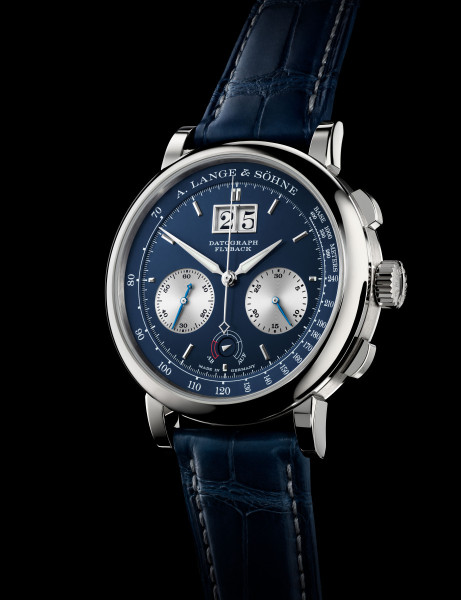
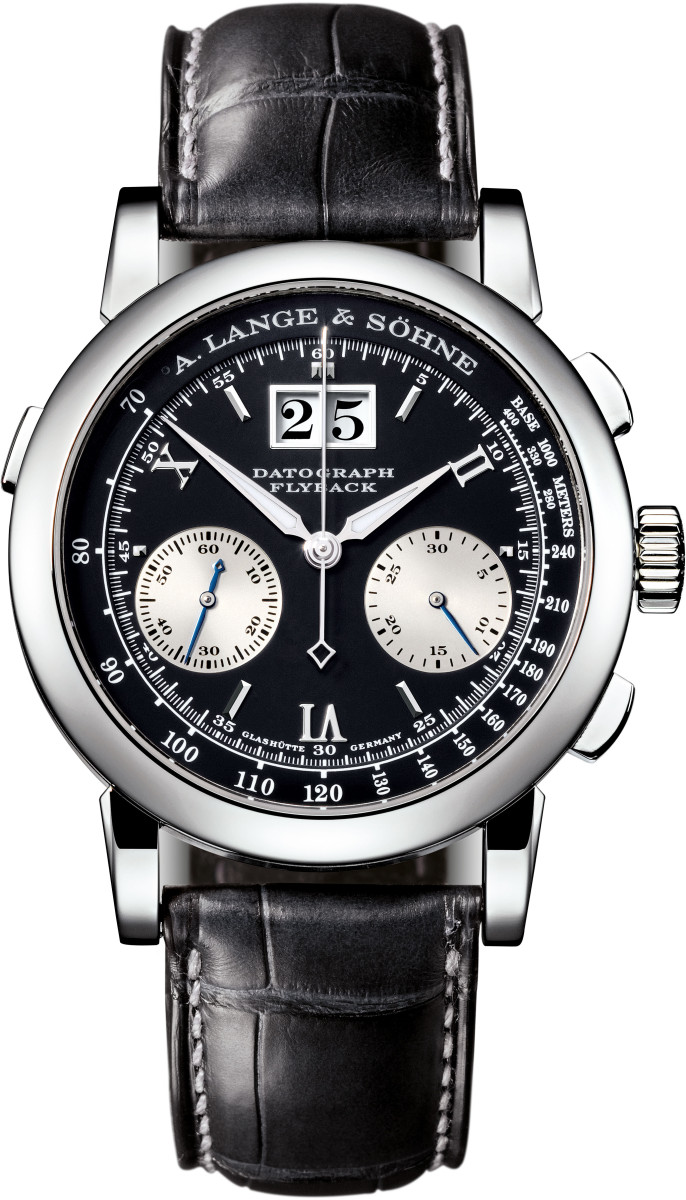
The first-generation Datograph in platinum or white gold is a landmark collector piece; early production examples with the L951.1 caliber are considered the purest expression of the design and command premiums over later references.
Editorial estimate, 2026 Q2. Actual prices vary by condition, date, and box/papers status.
Community + OSINT signals haven’t landed for this reference yet. We don’t publish a rating against zero signal: the number would mean nothing. Editorial body + caliber + market value still surface above; ratings appear once the signal corpus does.
The Datograph is one of the most important German chronographs; German silver movement with Glashütte ribbing and the correct outsize date mechanism are the primary authentication anchors.
| Area | What to check | What is correct | Red flag |
|---|---|---|---|
| movement | German silver three-quarter plate via caseback | Exhibition caseback shows warm grey-brown German silver (maillechort) three-quarter plate; Glashütte stripes (parallel lines) at consistent spacing on all bridges; "A. LANGE & SÖHNE GLASHÜTTE I/SA" on movement; "CAL. L951.1" text | Cool silver or white bridges (nickel-silver substitutes or Swiss movement); irregular or shallow stripe spacing; absence of Lange signatures; Cal. L951.1 text absent |
| movement | Blued steel screws | All movement screws are thermally blued (vivid blue-violet color); color is uniform across all screws; polished screw heads with beveled edges | Black-oxidized, chrome, or unblued screws; uneven bluing color between screws; screw heads without edge beveling |
| movement | Outsize date two-disc mechanism | Outsize date at 1 o'clock (characteristic Lange position) uses two overlapping discs; tens disc on left, units disc on right; discs are visible at aperture edge under loupe | Single-disc date mechanism (standard date, not outsize date); date at 3 or 12 o'clock (wrong position for Datograph); date aperture without the two-disc design visible at the edge |
| movement | Flyback function and column wheel | Single pusher at 10 o'clock resets and restarts the chronograph in one action (flyback); column wheel visible through caseback; flyback reset is instantaneous with crisp pusher feel | Standard two-pusher chronograph behavior (stop-reset-restart); no column wheel visible; hesitation or delay in flyback reset |
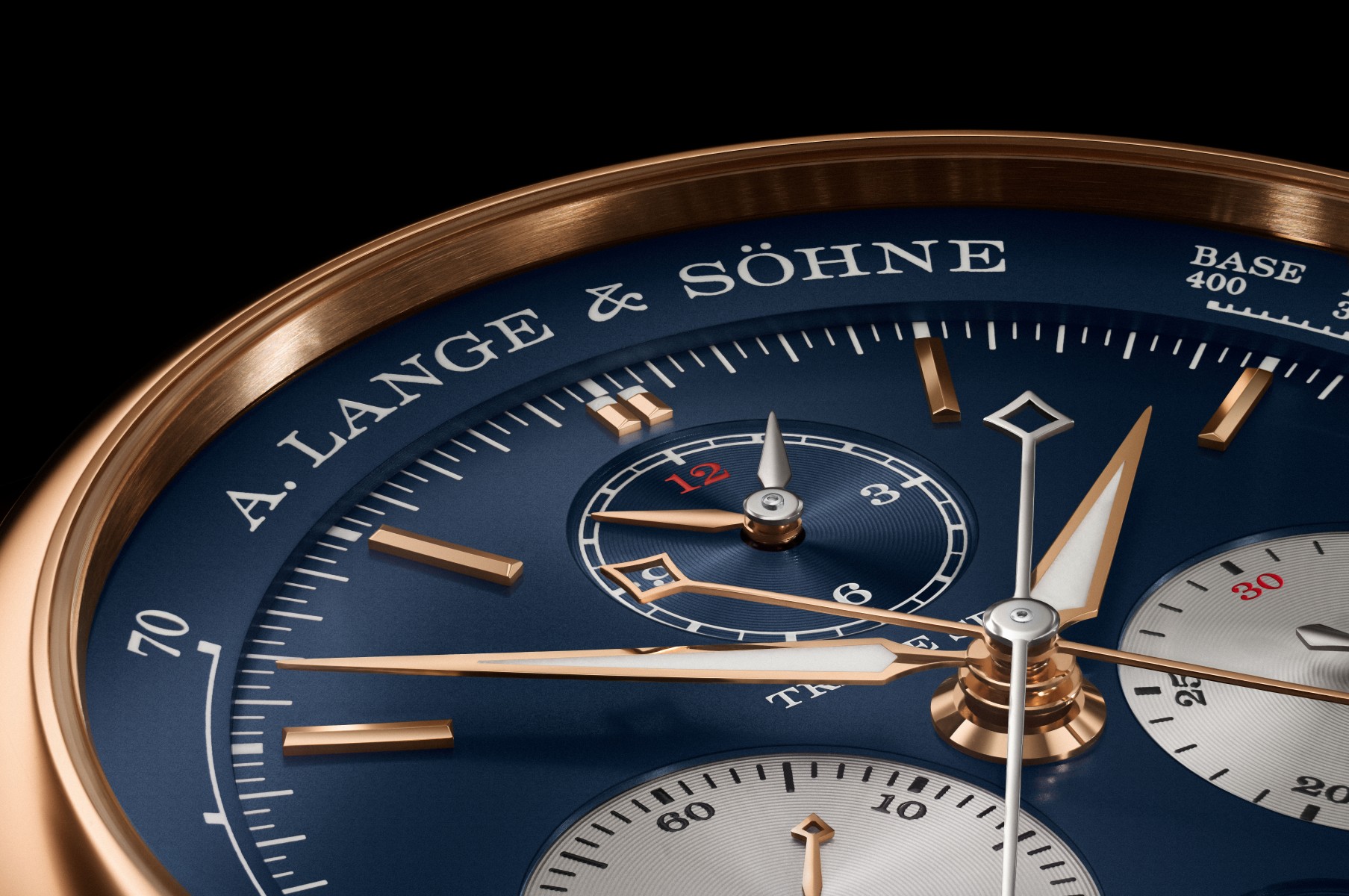
| dial | First-generation dial absence of power reserve | Three sub-registers only (30-minute counter at 12, subsidiary seconds at 6, small 12-hour counter in correct position); no power-reserve arc or indicator anywhere on the dial | Any power-reserve indicator present on the dial (indicates second-generation Up/Down ref. 405.035, not first-generation 403.035) |
| dial | Lange dial font and text quality | "A. LANGE & SÖHNE" at 12 in the specific Lange serif font; "GLASHÜTTE I/SA" below; "DATOGRAPH" above outsize date aperture; all text crisp and consistent weight under loupe | Incorrect font weight; "GLASHÜTTE I/SA" absent or misspelled; any text with blurred edges under loupe; "DATOGRAPH" text absent |
The first-generation Datograph is one of the most important flyback chronographs ever made. The column-wheel lateral-clutch chronograph with Lange outsize date commands premium prices and strong collector attention, making dial condition and movement finishing the decisive factors.