GrailAtlasAn independent mechanical watch reference
العربية
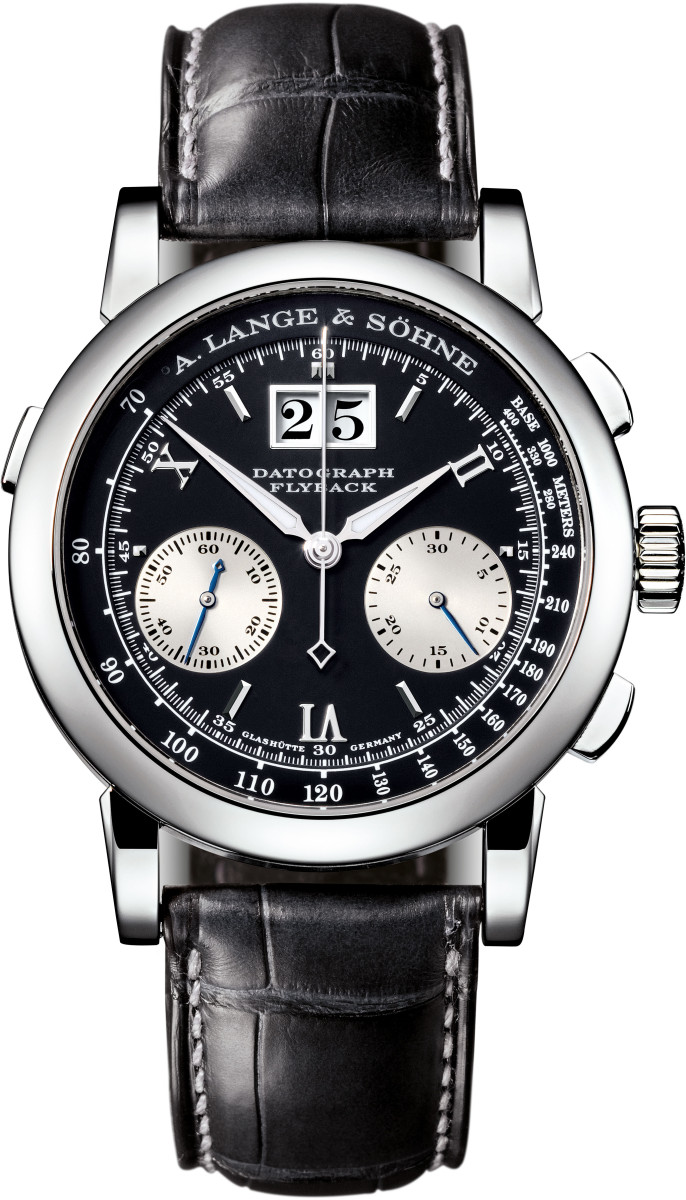
Uncommon#2 in familyOfficial press photos

Condition affects price

Pre-owned watches trade across a wide condition spectrum. These ranges are typical for the secondary market.

New Old Stock
Unworn example retaining original packaging, tags, and warranty documentation.
+30–50% vs median
Unpolished
Worn but the case has never been polished; original brushed and polished surfaces are intact.
+15–25% vs median
Polished
Case has been professionally or amateur polished at some point; edge definition is softened.
-15 to -5% vs median
Recently Serviced
Movement has been recently serviced with documented service records; case condition varies.
At median
Project
Needs service, has dial or hand issues, non-original parts, or other remediation before daily wear.
-50 to -25% vs median

Full condition grading guide →

Market price

$55,000$85,000
gold·2026 Q2
Price trend chart coming soon

The first-generation Datograph in platinum or white gold is a landmark collector piece; early production examples with the L951.1 caliber are considered the purest expression of the design and command premiums over later references.

Editorial estimate, 2026 Q2. Actual prices vary by condition, date, and box/papers status.

Movement tier: unclassified · caliber A. Lange & Söhne Cal. L951.1: manual-wind flyback chronograph, 18,000bph, 36h PR, 40j; column-wheel, outsize date; flagship Datograph caliber · 36h power reserve
Versatile size: fits most wrists (6–7.5 in / 15–19 cm)
39 mm case. The sweet spot for the broadest range of wrist sizes. Neither too dainty nor too bold.

Not yet rated

Community + OSINT signals haven’t landed for this reference yet. We don’t publish a rating against zero signal: the number would mean nothing. Editorial body + caliber + market value still surface above; ratings appear once the signal corpus does.

Search pre-owned listings

Chrono24
eBay (sold listings)
WatchBox

Authentication

The Datograph is one of the most important German chronographs; German silver movement with Glashütte ribbing and the correct outsize date mechanism are the primary authentication anchors.

Known issues in the market
  • Cal. L951.1 is a landmark Lange calibre with outsize date, flyback function, and column wheel; a watchmaker will immediately confirm or deny these three features in combination.
  • German silver movement bridges have a specific warm grey tone; nickel silver substitutes appear cooler or darker.
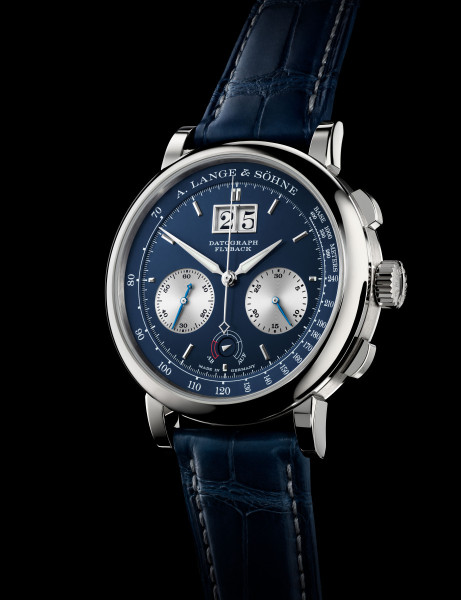
  • First-generation Datograph (ref. 403.035) has no power reserve indicator; a power-reserve display on the dial indicates the second-generation "Up/Down" variant (ref. 405.035), not the first-generation.
  • Glashütte stripes (Glashütte ribbing) are decorative machine-applied; the parallel line spacing and depth are consistent and uniform on genuine movements; irregular or shallow stripes indicate a non-genuine movement.
  • Blued steel screws are a fundamental Lange finishing element; any screws that appear black-oxidized, chrome-plated, or unblued are incorrect.
AreaWhat to checkWhat is correctRed flag
movementGerman silver three-quarter plate via casebackExhibition caseback shows warm grey-brown German silver (maillechort) three-quarter plate; Glashütte stripes (parallel lines) at consistent spacing on all bridges; "A. LANGE & SÖHNE GLASHÜTTE I/SA" on movement; "CAL. L951.1" textCool silver or white bridges (nickel-silver substitutes or Swiss movement); irregular or shallow stripe spacing; absence of Lange signatures; Cal. L951.1 text absent
movementBlued steel screwsAll movement screws are thermally blued (vivid blue-violet color); color is uniform across all screws; polished screw heads with beveled edgesBlack-oxidized, chrome, or unblued screws; uneven bluing color between screws; screw heads without edge beveling
movementOutsize date two-disc mechanismOutsize date at 1 o'clock (characteristic Lange position) uses two overlapping discs; tens disc on left, units disc on right; discs are visible at aperture edge under loupeSingle-disc date mechanism (standard date, not outsize date); date at 3 or 12 o'clock (wrong position for Datograph); date aperture without the two-disc design visible at the edge
movementFlyback function and column wheelSingle pusher at 10 o'clock resets and restarts the chronograph in one action (flyback); column wheel visible through caseback; flyback reset is instantaneous with crisp pusher feelStandard two-pusher chronograph behavior (stop-reset-restart); no column wheel visible; hesitation or delay in flyback reset
dialFirst-generation dial absence of power reserveThree sub-registers only (30-minute counter at 12, subsidiary seconds at 6, small 12-hour counter in correct position); no power-reserve arc or indicator anywhere on the dialAny power-reserve indicator present on the dial (indicates second-generation Up/Down ref. 405.035, not first-generation 403.035)
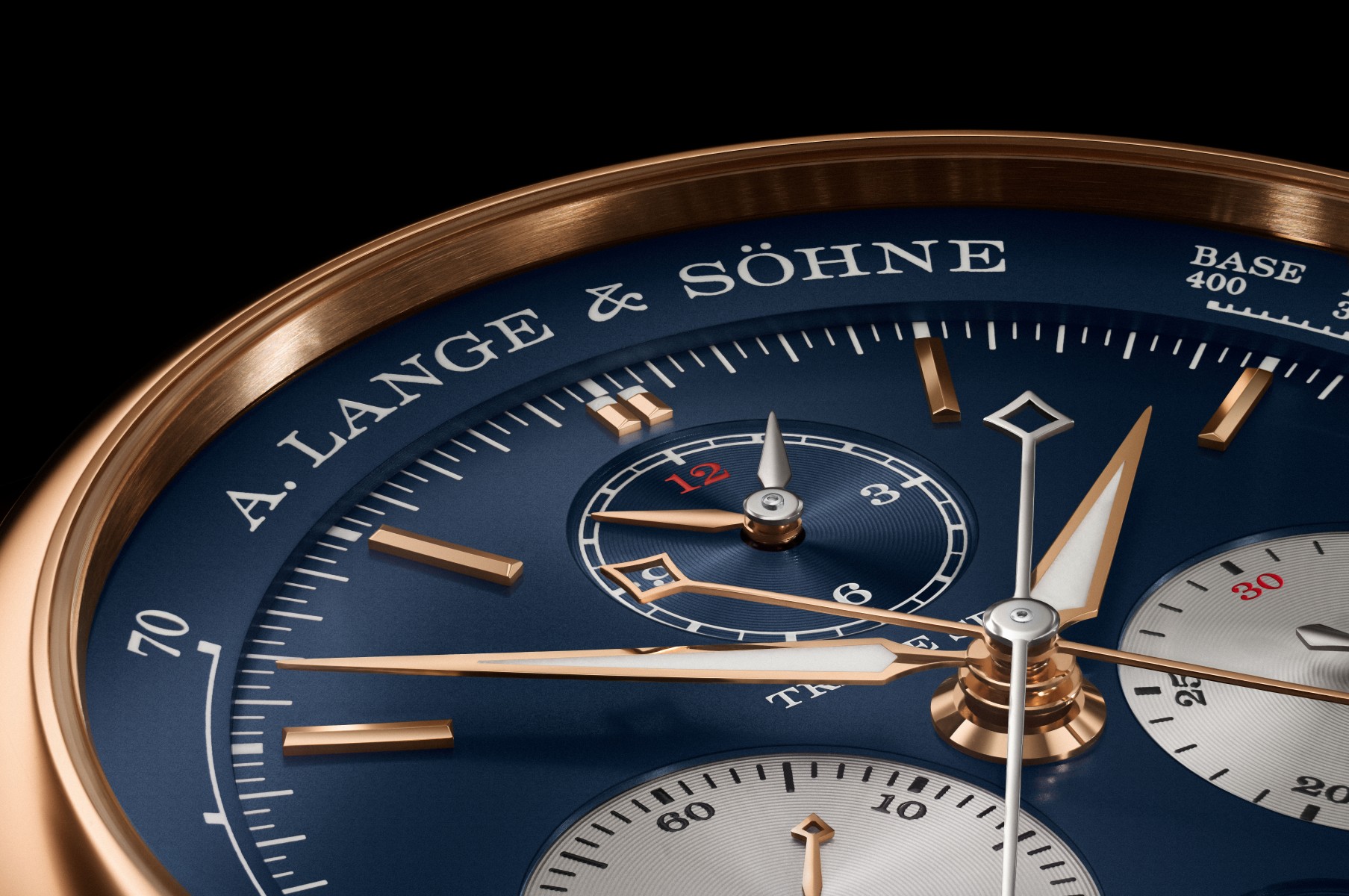
dialLange dial font and text quality"A. LANGE & SÖHNE" at 12 in the specific Lange serif font; "GLASHÜTTE I/SA" below; "DATOGRAPH" above outsize date aperture; all text crisp and consistent weight under loupeIncorrect font weight; "GLASHÜTTE I/SA" absent or misspelled; any text with blurred edges under loupe; "DATOGRAPH" text absent
Common legitimate replacements
  • Alligator leather straps are the most commonly replaced component; Lange-issued replacement straps are available through authorized dealers.
  • Caseback gaskets are replaced at service; a service history from Lange or authorized service center is strongly advisable given the movement complexity.
Expert resources: A. Lange & Söhne authorized dealers authenticate via serial. The Watchuseek Lange forum and TimeZone Lange section have extensive Datograph authentication resources. A qualified German watchmaker familiar with Lange movements can verify Cal. L951.1 in full.

Authentication guide

Last reviewed June 2026

The first-generation Datograph is one of the most important flyback chronographs ever made. The column-wheel lateral-clutch chronograph with Lange outsize date commands premium prices and strong collector attention, making dial condition and movement finishing the decisive factors.
Known reproduction risks

toggle
LOW

The Datograph first generation is not widely reproduced at meaningful scale. The movement finishing complexity makes convincing replicas prohibitively expensive to produce.

  • Any movement visible through the caseback that lacks the three-quarter plate architecture is not a Lange movement
  • Glashütte stripes that appear machine-applied (uniform, shallow, with radius bottoms) indicate a non-Lange movement
  • Dial silver that is too bright or too flat compared to genuine argenté silver

Primary risk on this reference is undisclosed dial refinishing or hand replacement during a past service, not outright reproduction.

Dial variants by era

toggle
EraDescriptionIdentifiers
1999 to 2012 (first generation, platinum and white gold)The original 403.035 in platinum with argenté dial. White gold variants (403.032) share the same dial architecture. Both use the same Cal. L951.1 column-wheel flyback movement.
  • Three-register layout: 30-minute counter at 6 o'clock, small seconds at 9 o'clock, outsize date at 12 o'clock
  • Argenté silver main dial with no applied chapter ring -- the minute track is printed directly onto the main dial surface
  • Pump pushers at 2 and 4 o'clock flanking the crown at 3 o'clock; the 2 o'clock pusher is flyback reset
  • Outsize date aperture at 12 o'clock with two-disc system; both numerals are the same font and size on genuine examples
  • "Datograph" text on early examples is thin and set just below the 12 o'clock position with consistent letter spacing

Service part flags

toggle
Dial

Original: Argenté solid silver dial with printed minute track and applied hour indices. The dial surface has a characteristic soft reflectance specific to Lange's silver dial chemistry. Applied "A. Lange & Söhne" text at 12 o'clock and "Datograph" below it are raised and cast a micro-shadow.

Replacement tells
  • Any lacquered or base-metal substitute dial will show a higher gloss than original argenté silver under raking light
  • Applied text that appears flat or printed rather than raised above the dial surface
  • Outsize date window edges that are not fully beveled on all four sides
  • Minute track spacing that is irregular under 10x magnification
Hands

Original: Blued steel hands on the main time display. The chronograph central seconds and 30-minute counter hand are also blued steel. Small seconds hand at 9 o'clock matches. All hands are hand-polished, showing a specular blue without any violet or purple shift.

Replacement tells
  • Hands with any violet or grey cast rather than a true deep specular blue
  • Inconsistent blue tone between the main hour/minute hands and the chronograph hands
  • Lume plots on the hand tips that are a different color or texture than the dial indices -- Datograph uses no lume on most variants
Crown and pushers

Original: Platinum or white gold crown and pump pushers. The pushers have a specific stroke depth and tactile resistance from the column wheel mechanism. The crown is signed with the "A. Lange & Söhne" script on the crown tip of later examples.

Replacement tells
  • Pushers with a spongy or two-stage feel rather than a crisp mechanical column-wheel engagement
  • Crown with no engraving or with incorrect font on the tip
  • Any surface color mismatch between crown and case -- platinum and white gold are visually distinct, especially after wear

Case back markings

toggle
1999 to 2012 (all first-generation production)
  • Exhibition sapphire caseback displaying Cal. L951.1
  • "A. Lange & Söhne" engraved on the three-quarter plate in Germanic script
  • "Glashütte i/Sa." engraved below the movement signature
  • Three-quarter plate in German silver (maillechort) with Glashütte stripe finishing -- parallel stripes are hand-polished to a flat mirror between each groove
  • Hand-engraved balance cock with floral scrollwork; each example is unique
  • Caliber number engraved on the movement, not applied as a sticker

Movement tells

toggle
  • The column wheel for the chronograph is visible through the caseback and should show clean hand-beveled jumper springs.
  • Glashütte stripes are hand-finished: each groove has a mirrored flat bottom, not a machine-radius finish. Under 10x magnification, genuine stripes have a consistent but non-mechanical appearance.
  • The hand-engraved balance cock shows deliberate tool-mark variability across examples; machine engraving produces perfectly uniform line depth.
  • After a factory service, Lange re-engages the caliber number and restamps the serial. An aftermarket service will often leave the caliber stamp worn.
  • The lateral clutch for the chronograph should engage with zero visible chronograph-hand displacement when the start pusher is pressed from a stopped position.
Sources: Lange & Söhne — Datograph specification archive; WatchUSeek Lange forum — Datograph reference thread; Revolution Magazine — Datograph twentieth anniversary retrospective.

You might also like

A. Lange & Söhne Datograph Up/Down Ref. 405.035, black dial, gold-white case
A. Lange & Söhne
Datograph
Ref. 405.035
A. Lange & Söhne Triple Split Ref. 424.038, grey dial, gold-white case
A. Lange & Söhne
Datograph
Ref. 424.038
A. Lange & Söhne
Datograph
Ref. 410.025
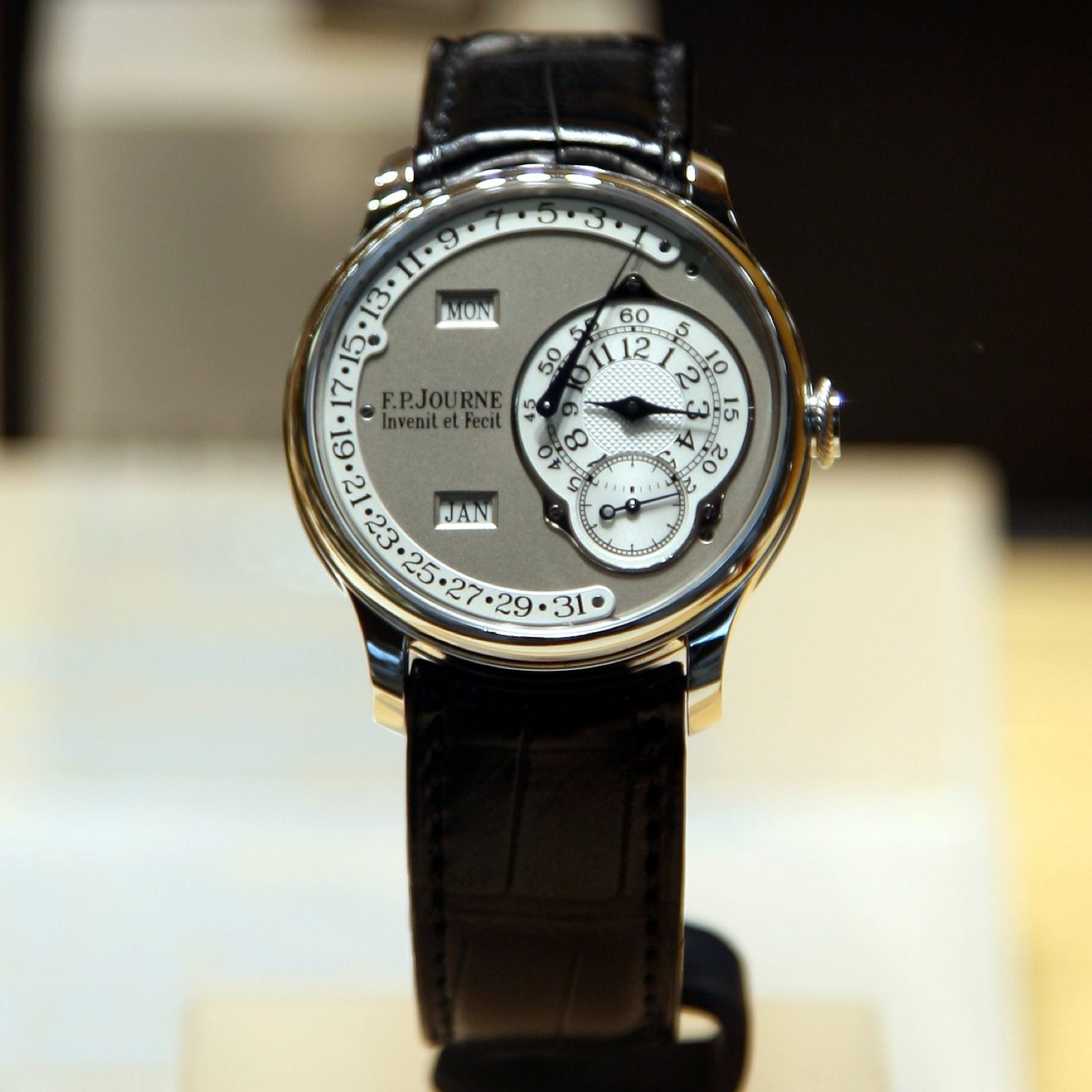
F.P. Journe Chronomètre Souverain Ref. CS-40-PT, silver dial, platinum case
F.P. Journe
Chronomètre Souverain
Ref. CS-40-PT
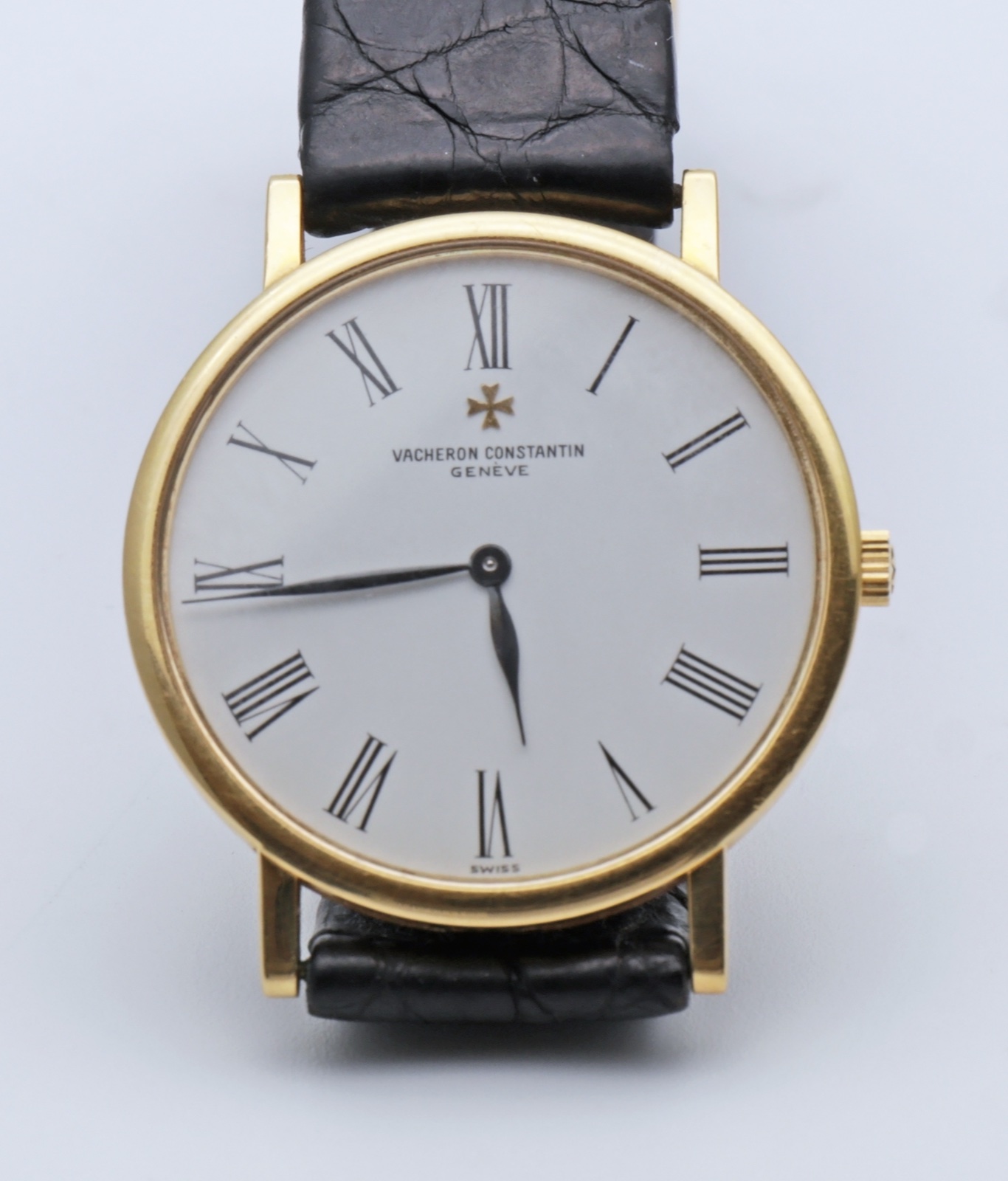
Vacheron Constantin Patrimony (manual-wind, ultra-thin) Ref. 81180/000G-9117, silver dial, gold-rose case
Vacheron Constantin
Patrimony
Ref. 81180/000G-9117
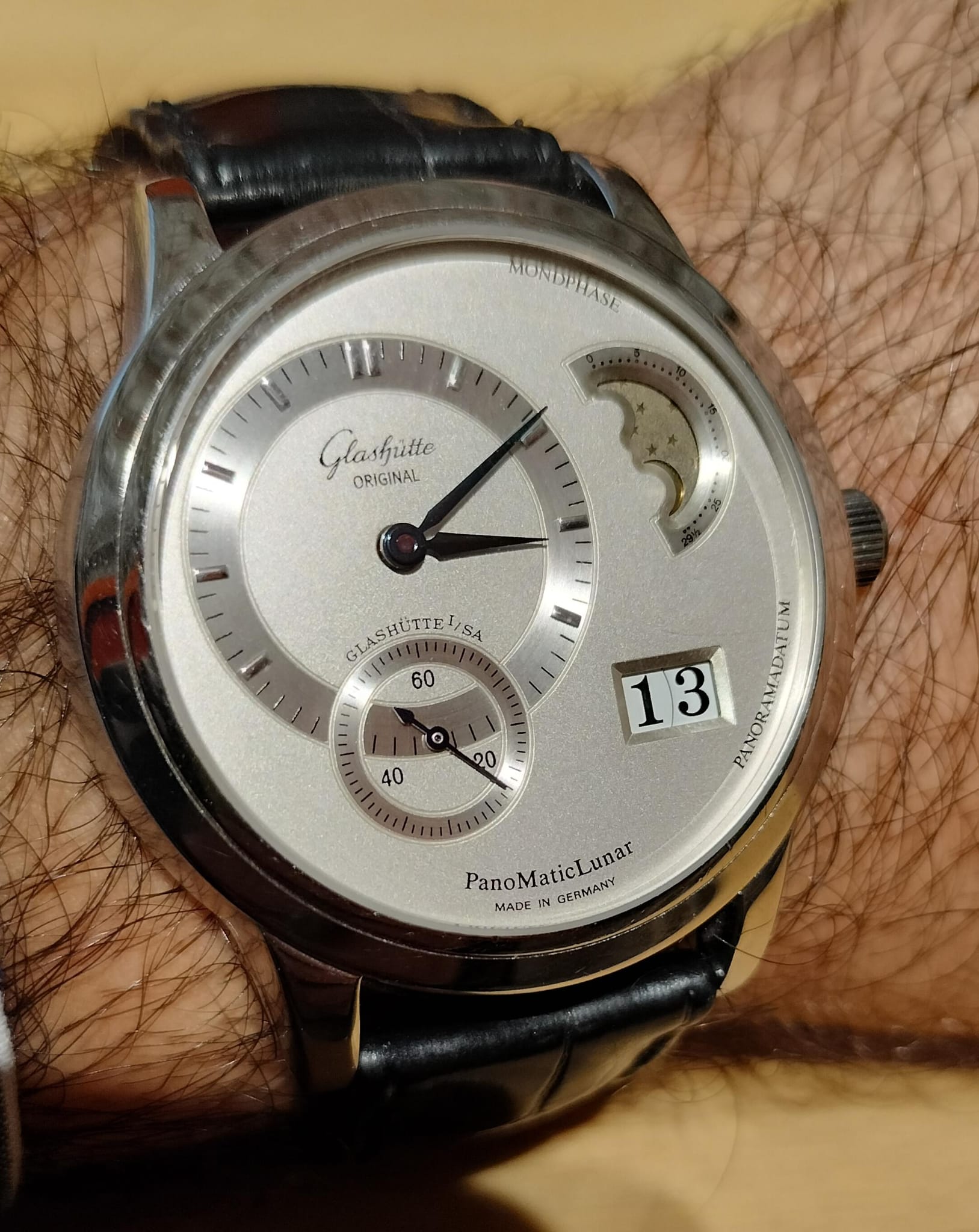
Glashütte Original PanoMaticLunar (Steel, Silver Dial) Ref. 1-90-02-42-32-61, silver dial, steel case
Glashütte Original
PanoMaticLunar
Ref. 1-90-02-42-32-61

Buying guidance

← Back to Grail Atlas