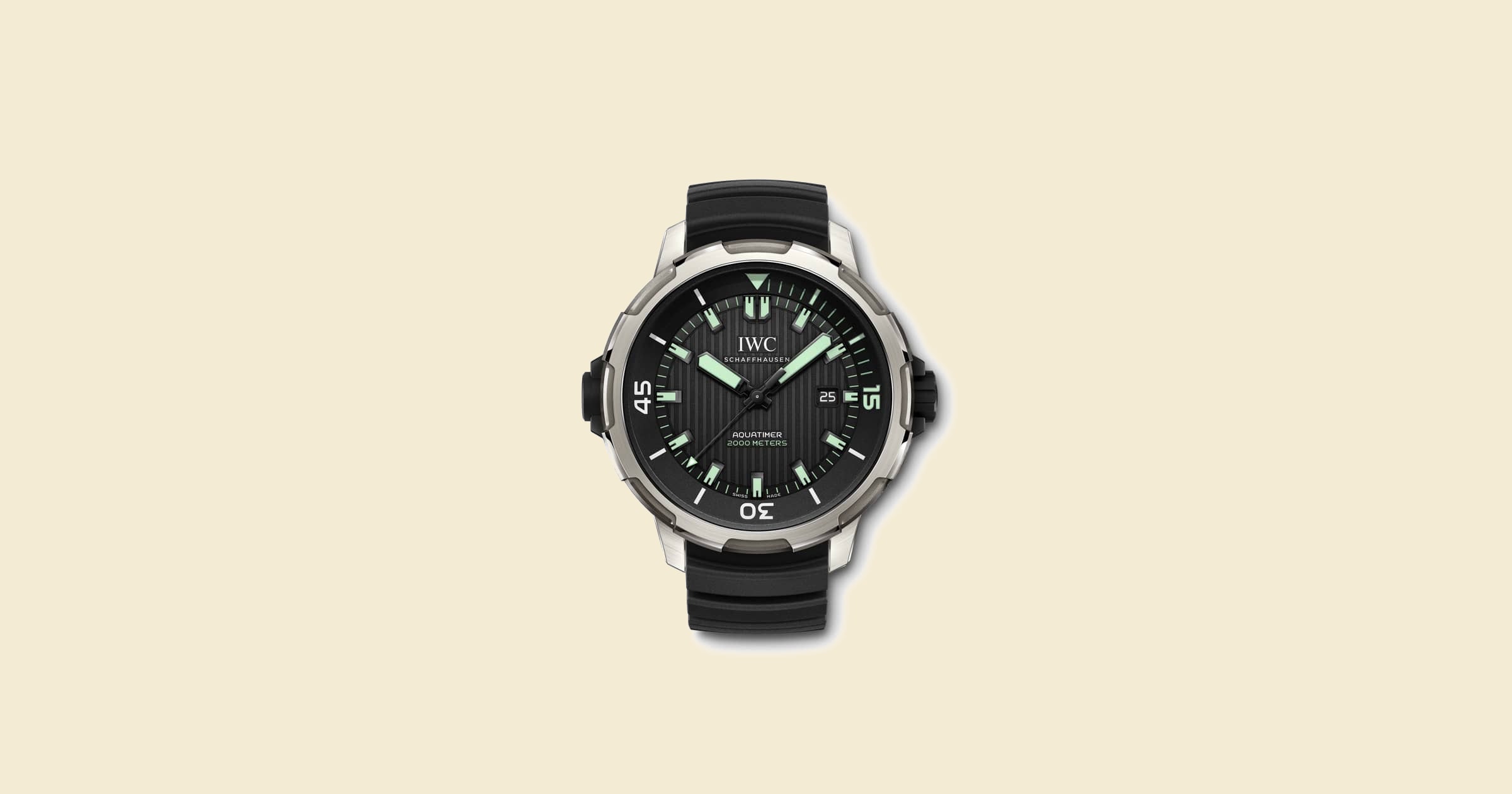
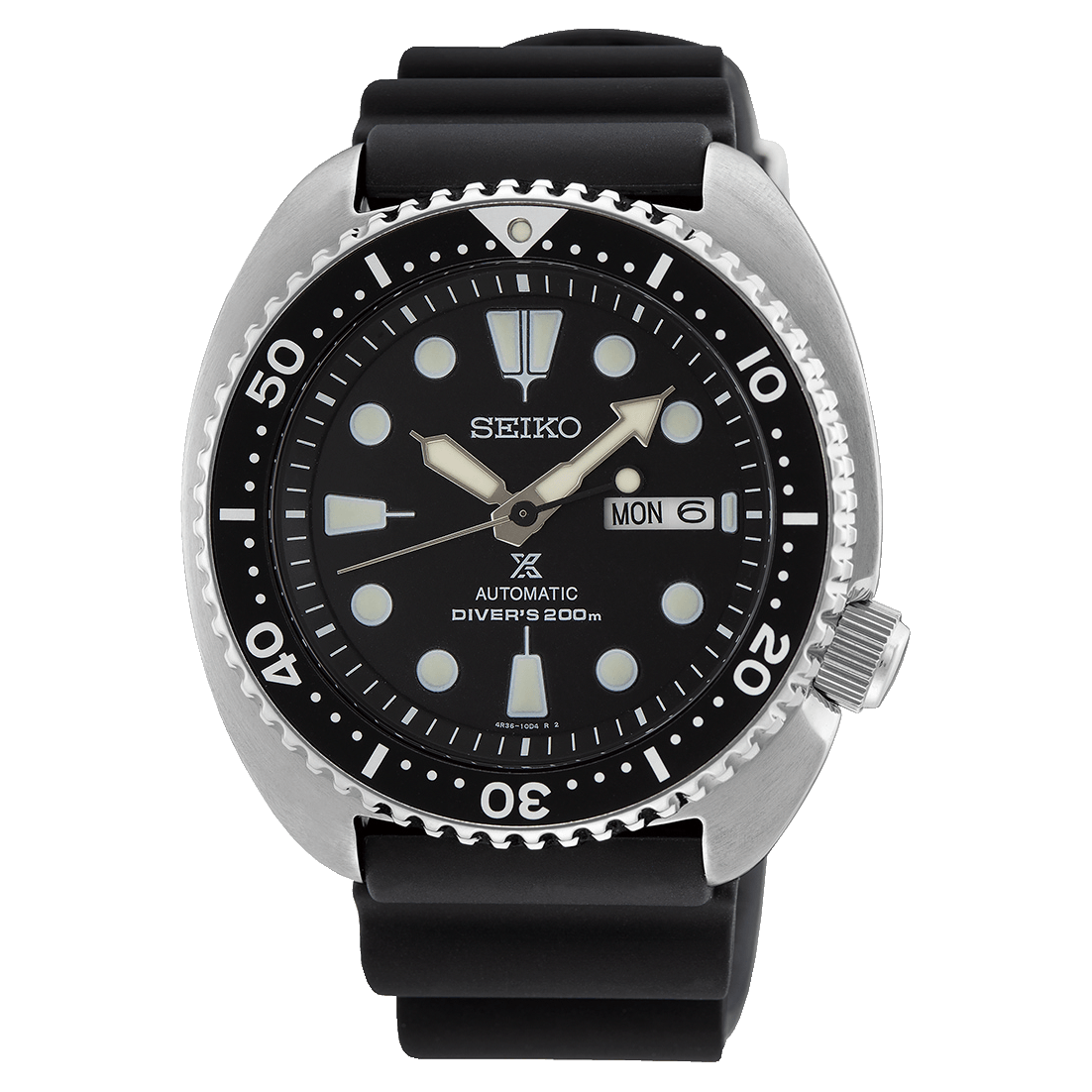
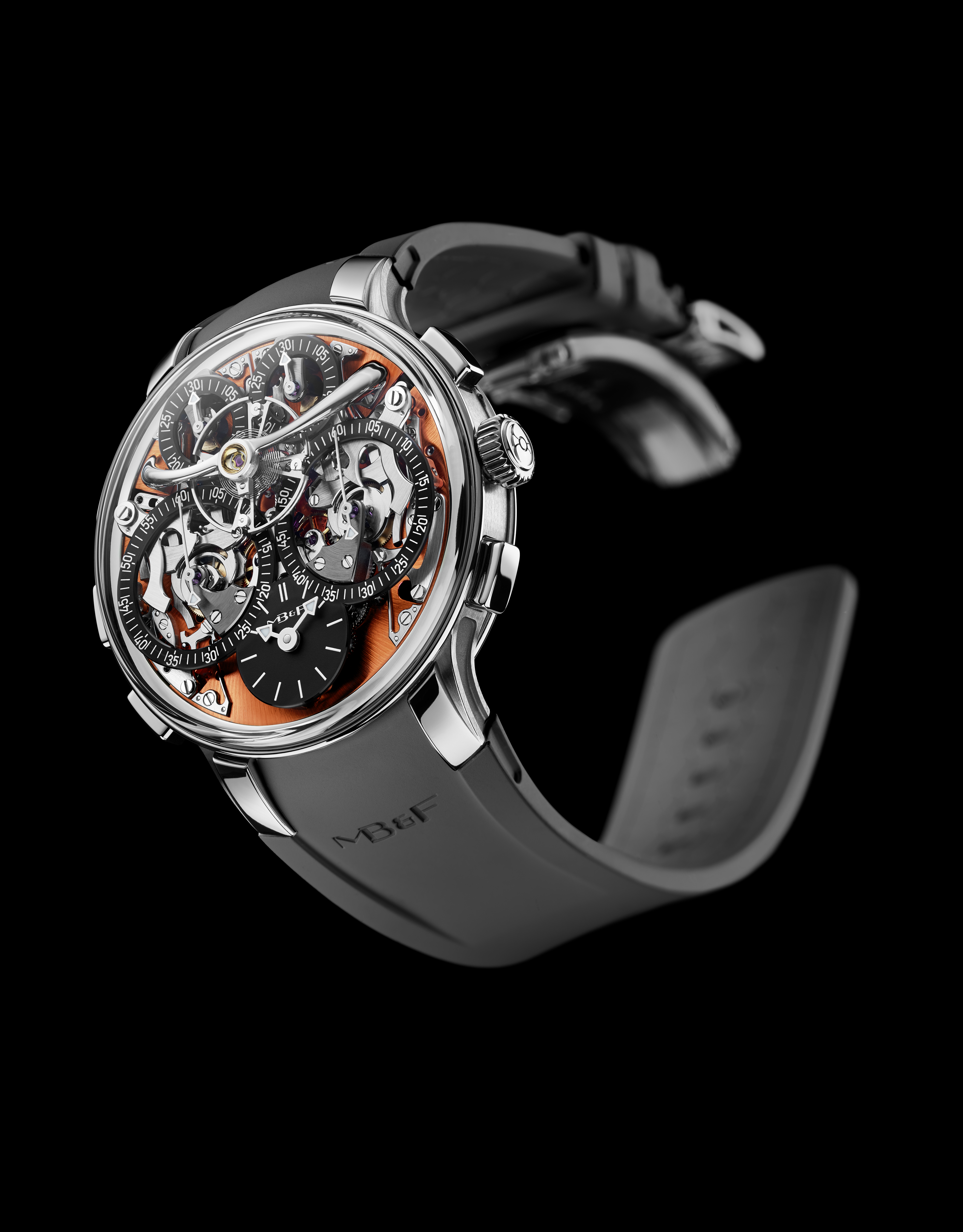
The Aquatimer 2000 is the dive watch IWC actually meant for the water. Rated to 2000 meters, built in titanium, and sized at 46mm, it targets saturation divers and serious underwater professionals rather than the lifestyle market. Discontinued in 2020, it is the last titanium 2000-meter watch IWC has made and the largest dive watch in the company's history, closing a line that runs back through the 1998 GST Aquatimer 2000 to the 1982 Porsche Design Ocean 2000.
What it is
IWC introduced the IW358002 at SIHH 2014 as the flagship of a full Aquatimer family refresh. The movement is the in-house caliber 80110, produced from 2005 to 2016: 30mm by 7.3mm, 28 jewels, 28,800 vph, 44 hours of reserve, with Pellaton pawl winding. Its wheel-train layout is close to the Valjoux 7750 that IWC engineers knew from the caliber 7900 family, but every major component is IWC-specific and the winding system is IWC's own.
The defining mechanical feature is the SafeDive bezel: a notched external bezel coupled through a sliding clutch to the 60-click timing ring inside the crystal, so the outer ring turns both ways while the inner ring only advances counter-clockwise. That combines an internal bezel's protection from silt and seawater with the gloved-hand operability of an external one. The titanium case kept weight manageable at 46mm and 20.5mm thick.
IWC retired the line in 2020 without a direct replacement at 2000m, though the depth rating itself goes back to the 1982 Ocean 2000 and was carried by the GST Aquatimer 2000 ref. 3536 before this generation.
Buying notes
The inner bezel coupling mechanism is specific to IWC and requires factory service if the clutch wears or slips. Check that the inner bezel clicks positively and does not drift when the outer ring is rotated, since a worn clutch is a service bill the seller rarely flags. The titanium case scratches readily and deep gouges from actual dive use are common; inspect under good light and decide whether a refinished case or honest wear marks matter to your collection.
Crown and case-back gaskets should be verified as recently serviced before any water use regardless of what the seller says, since gaskets age on the shelf as well as in service. The 80110 caliber is serviceable by any competent independent watchmaker, but IWC will ask for complete disassembly plus pressure testing, so budget accordingly.
Market read
Pre-owned IW358002 examples currently trade from roughly $3,600 for a bare watch up to just under $7,000 for a documented full set, depending on service history, box-and-papers completeness, and case condition. IWC listed the reference around $9,500 in the United States at launch and closer to $11,000 by 2017, so the discount off retail is steep for a titanium watch with an in-house movement. The reference shipped on a rubber strap only, with an extra-long wetsuit version available, so any metal bracelet on a listing is aftermarket and should be priced as such.
The watch is not chased by speculators, which means pricing is rational and negotiable, particularly on examples with heavy case wear that suit a buyer who actually plans to use it.
Service expectations
The caliber 80110 carries an IWC-recommended service interval of approximately five years, with factory service running $600 to $900 depending on parts and the service center's region. The movement went out of production in 2016, so parts flow through IWC rather than the generic ebauche supply chain; a competent independent can service the going train, but budget for IWC-sourced components. IWC will not re-certify water resistance unless the work is done in-house or by an authorized center, and for a watch rated to 2000 meters, pressure testing after any service is not optional.
The SafeDive clutch and the internal bezel are separate from the movement service and are IWC-specific work.
Editorial copy is AI-drafted from primary sources and reviewed by Grail Atlas before publication. Where the text is uncertain about a fact, it says so. Email
corrections@grailatlas.com if something reads wrong. Signals on this page (community, OSINT) are clearly separated from the editorial sections.