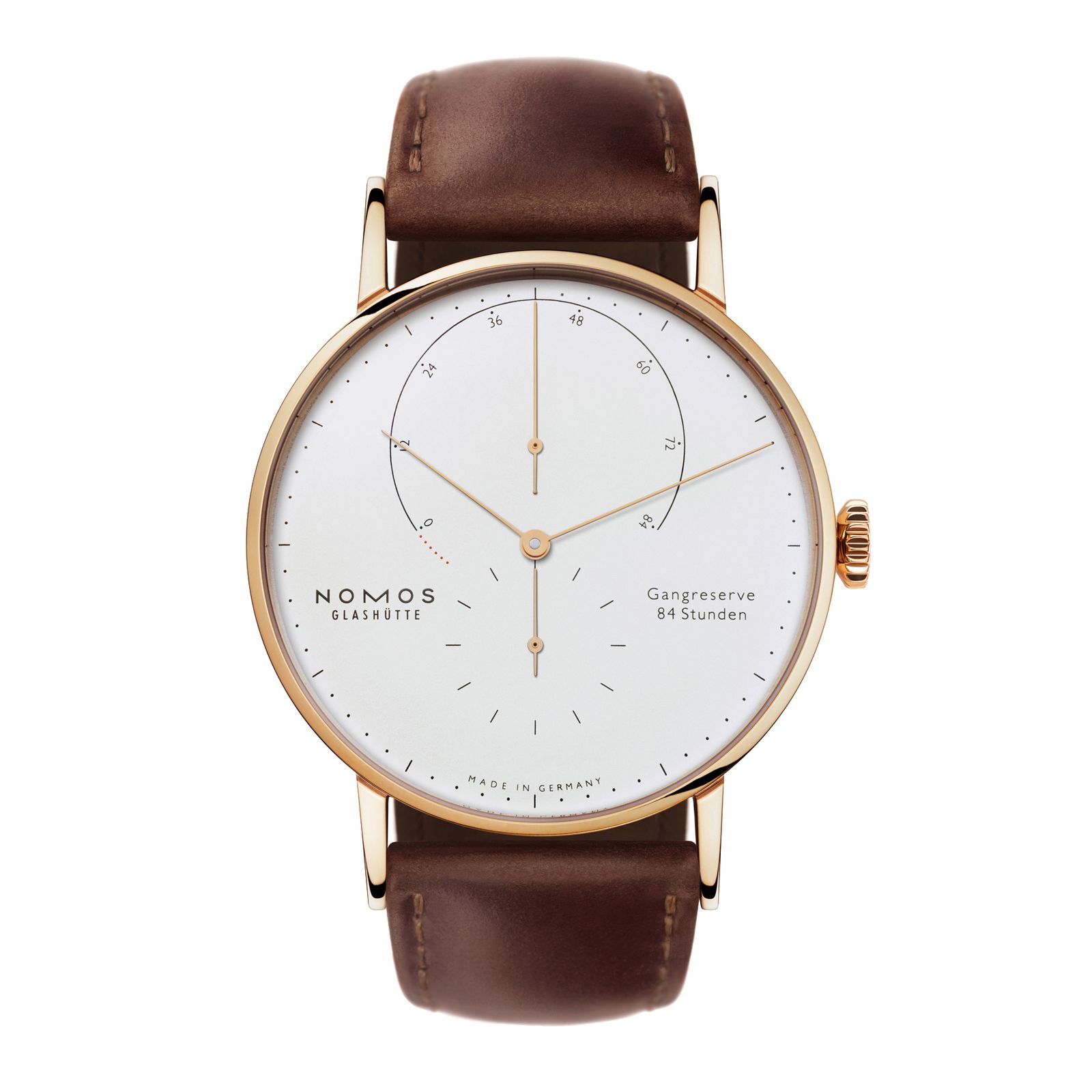
Dial variants
- Sunburst or guilloched center with clean sector layout
- Microtor movement visible through display caseback if present
- Original Polerouter text arched across dial without the later "Sub" suffix
- Thinner case and earlier lug profile than sub-references
The first Polerouter generation launched as an SAS Airline souvenir and used one of the world's first micro-rotor automatics. Sector dials in good condition without dial restoration are genuinely scarce and attract dedicated UG collectors.
- Cleaner applied baton markers replacing the sector layout
- Polerouter or Polerouter Sub text depending on variant
- Date function added to later sub-references
- Slightly larger case diameter on some later runs
The later Polerouter production covers the period when UG refined the micro-rotor and added complications. These are more available than first-gen sector dials but remain collectible micro-rotor pieces at a fraction of comparable Swiss manufacture prices.
Condition affects price
Pre-owned watches trade across a wide condition spectrum. These ranges are typical for the secondary market.
Full condition grading guide →
Market price
The Polerouter is a classic vintage microrotor piece with wide spread by condition; service history, original dial, and correct hands are the key factors separating the bottom from the top of the range.
Editorial estimate, 2026 Q2. Actual prices vary by condition, date, and box/papers status.
Not yet rated
Community + OSINT signals haven’t landed for this reference yet. We don’t publish a rating against zero signal: the number would mean nothing. Editorial body + caliber + market value still surface above; ratings appear once the signal corpus does.
Search pre-owned listings
Authentication
The Polerouter is a vintage reference with significant dial repainting activity. The slim profile and UG microtor make it a collector's watch, but many examples in the market have had dial work done.
- Dial repaints are very common on Polerouter examples; refinished dials trade at a substantial discount.
- The Cal. 215 microtor is delicate and many examples have non-original service parts.
- Lume plot replacement on aging tritium examples is documented.
| Area | What to check | What is correct | Red flag |
|---|---|---|---|
| dial | Lacquer craze pattern authenticity | Original dials show specific lacquer aging patterns under magnification; hairline cracks in the lacquer follow a characteristic network pattern | Uniform smooth lacquer on a stated 1950s-1960s dial; lacquer craze patterns that appear forced or irregular |
| dial | Tritium lume aging on plots | Tritium plots cream-to-tan patina with consistent aging tone across all hour markers | Bright white lume on a vintage-era dial; inconsistent aging between individual plots suggesting replacement |
| movement | Cal. 215 microtor | Cal. 215 features the UG microtor rotor; ultra-thin construction; visible through a display caseback or confirmed by a watchmaker | Non-UG caliber in a Polerouter case; microtor absent or replaced with full-sized rotor |
| case | UG hallmarks and case engraving | Universal Geneve logo on dial and caseback; reference and serial in period-correct engraving style | Missing or added-afterward engravings; hallmarks inconsistent with Swiss gold purity marks for the stated case material |
- Crystal is routinely replaced on vintage Polerouters; acrylic domes were original on most examples.
- Crown replacement is common; confirm period-correct profile.
- Caseback gaskets are standard service replacements.
Authentication guide
The Polerouter is one of the earliest micro-rotor automatic watches, introduced in the 1950s. The Cal. UG 215 micro-rotor movement is the authentication anchor: the rotor is a small semicircle of heavy metal inset into the movement, visible through the caseback, rather than a full-size winding rotor.