The 1680 was the first Submariner to carry a date complication, introduced in 1965 with a bold red "Submariner" text on the dial that collectors now simply call the Red Sub. It is one of the most sought-after vintage Rolex references precisely because of the dial variations across its 14-year run, and because the early examples carry a visual energy that later production lost when the red text was quietly dropped.
What it is
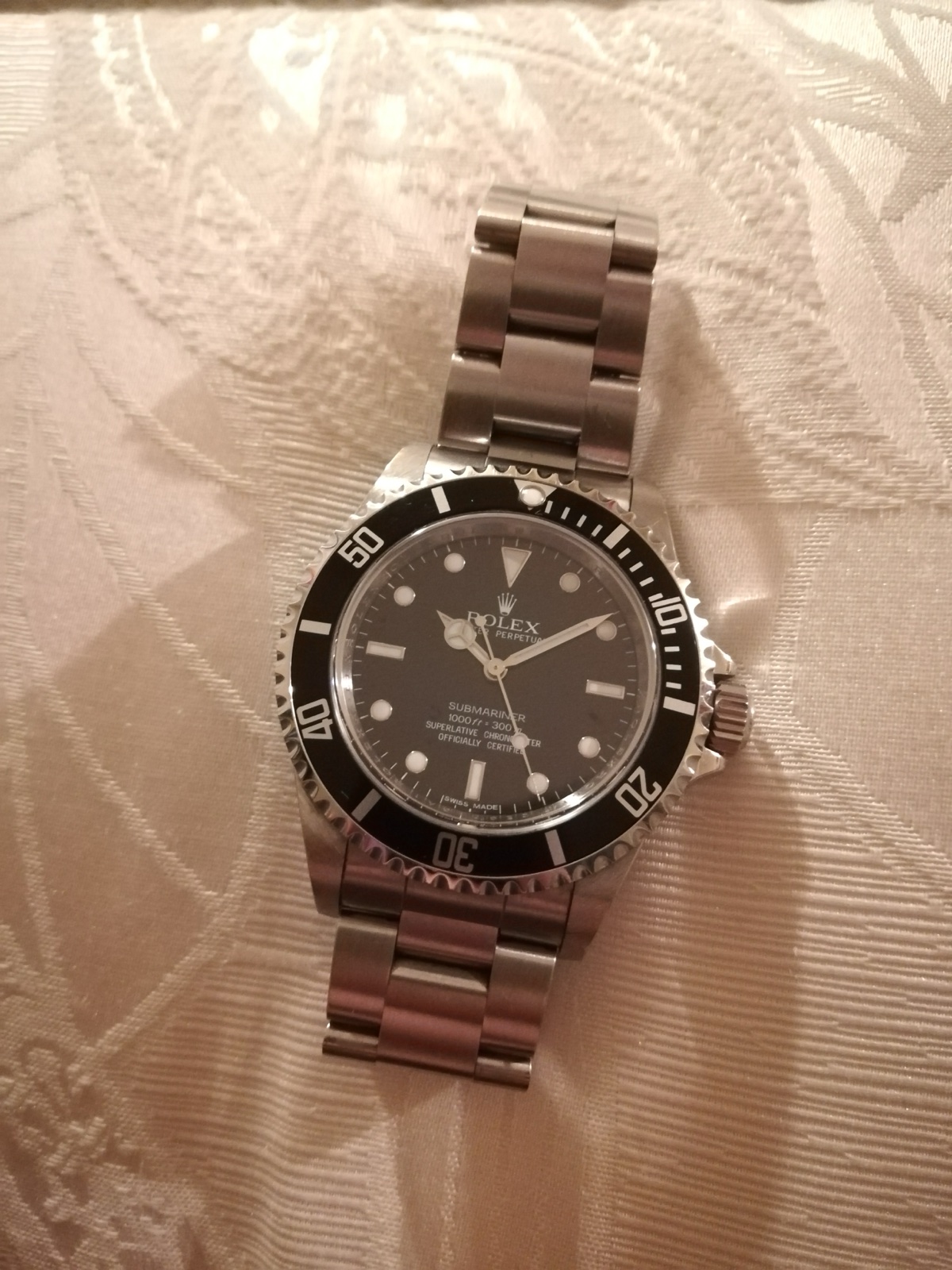
Rolex produced the 1680 from 1965 through 1979, powering it throughout with the caliber 1575, a date-equipped movement based on the 1560 family. The defining feature, red "Submariner" text at 12 o'clock, appeared on early dials and was phased out during production in favor of white text only, creating a clear collector hierarchy within the same reference number. Rolex and collectors have catalogued at least six major dial variants, Mark I through Mark VI, distinguished by differences in text color, coronet size, depth-rating language, and the presence or absence of the "Swiss Made" underline.
Later 1680s also saw a matte-to-glossy dial transition that tracks roughly with broader Rolex dial changes of the late 1970s.
Buying notes
The dial is the first thing to scrutinize: red text fades, checks, or flakes, and restoration is common, so prefer examples with documented provenance and consistent aging across all printed elements. Check the cyclops lens alignment and magnification; replacements are frequent on date models and a misaligned or under-magnifying lens is a red flag. Case condition matters enormously on these, over-polishing softens the lug chamfers and removes the crisp lines that define the generation, favor unpolished or lightly polished cases.
The bracelet should match the era: correct period bracelets are a 93150 or earlier riveted Oyster; a later folded-link or solid oyster bracelet from the 1980s is a mismatch worth flagging. Finally, confirm the caseback has not been opened by an uncertified shop, as improper servicing of vintage calibers is widespread.
Market read
Red-text examples, particularly Mark I and Mark II dials in honest unrestored condition, trade at a meaningful premium over white-text 1680s; the gap can be 30 to 60 percent depending on dial integrity. Tropical dials (those that have aged to a brown or chocolate tone) command the highest premiums of all, though authentication is difficult and fakes are not uncommon in that sub-category. White-text late-production 1680s are considerably more accessible and represent a real entry point into the reference without paying the red-text premium.
The overall market for this reference has been firm and largely independent of broader vintage Rolex softening, given how specifically collectors pursue it.
Service expectations
The caliber 1575 is a well-understood movement and parts availability is reasonable among experienced vintage Rolex specialists, though it requires a watchmaker comfortable with date-wheel timing and older quickset mechanisms. Service intervals of 7 to 10 years are appropriate; a recently serviced example with service records from a credible source adds real value because buyers can defer that cost and trust the running condition. Expect service costs in the $400 to $800 range from a qualified independent; avoid shops that cannot source period-correct parts or that default to modern replacements.
Editorial copy is AI-drafted from primary sources and reviewed by Grail Atlas before publication. Where the text is uncertain about a fact, it says so. Email
corrections@grailatlas.com if something reads wrong. Signals on this page (community, OSINT) are clearly separated from the editorial sections.