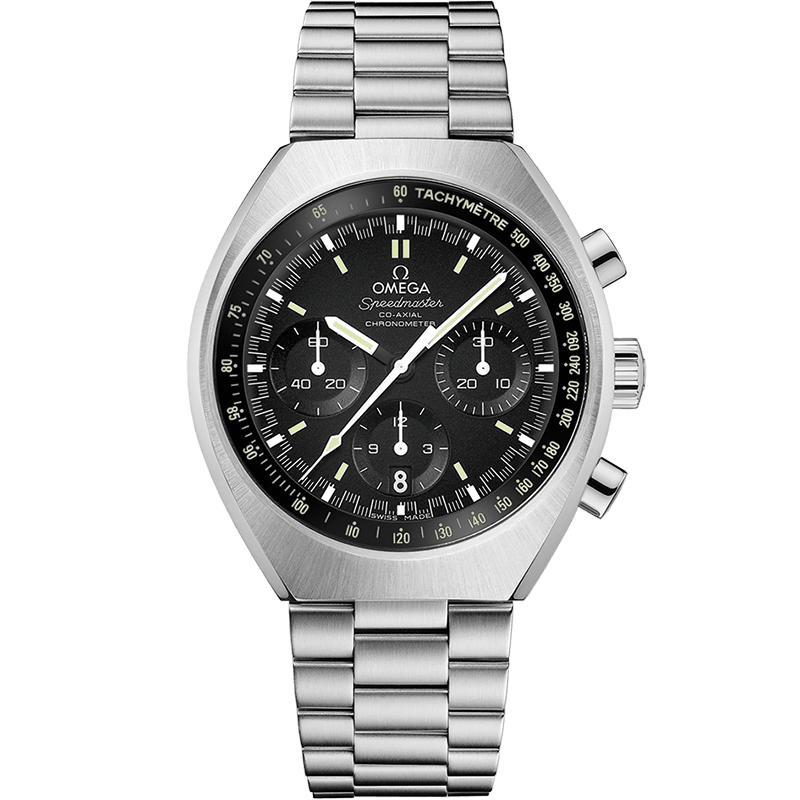
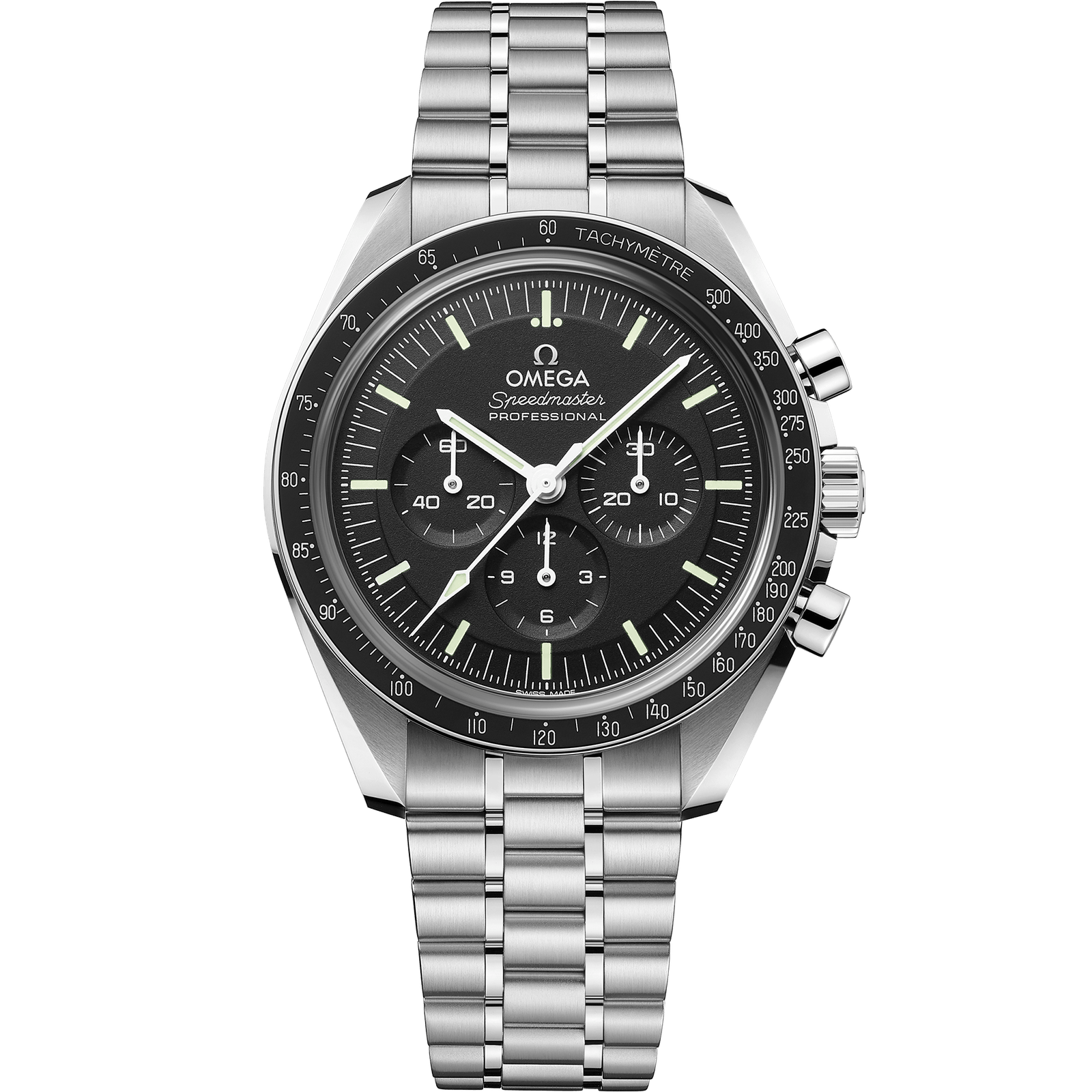
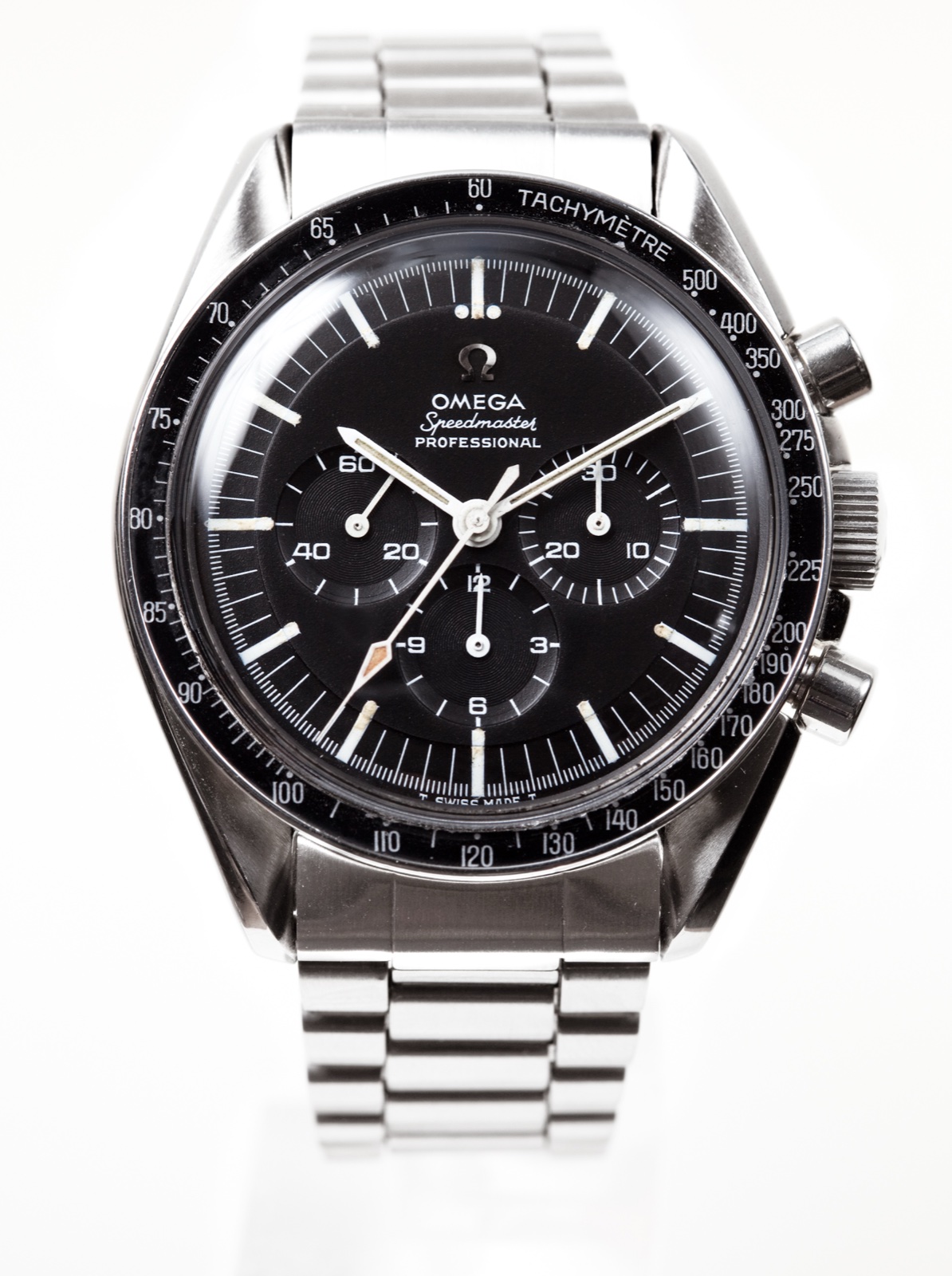
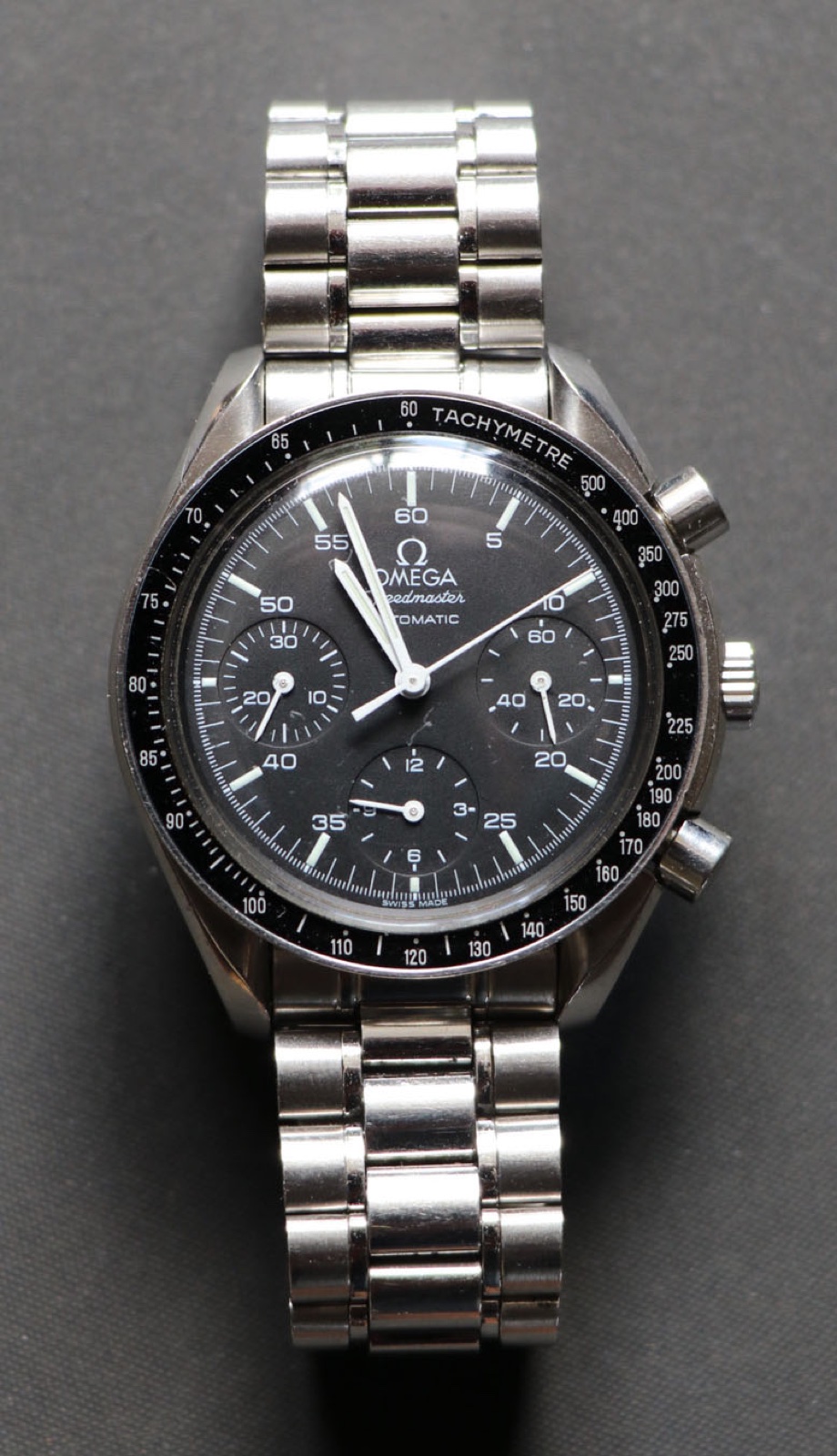
The 2014 Mark II re-issue brings back the cushion case that Omega introduced in 1969 as an alternative to the standard Moonwatch, and it does so with a self-winding movement rather than the original manual-wind caliber. For collectors who want a period-correct racing aesthetic, the tonneau-adjacent case shape and sector-style registers offer something genuinely different from the barrel of Speedy Professional variants on the market. Discontinued after 2020 and never heavily hyped, it sits in a quiet pocket of the Speedmaster catalog worth knowing.
What it is
The original Mark II debuted in 1969 as a tool watch variant aimed at motorsport and rally timing, distinguished by its cushion-shaped steel case and the same Valjoux-based movement lineage as other period chronographs. Omega shelved the line for decades before reissuing it in 2014 under reference 327.10.43.50.01.001, this time powered by the in-house Cal 3330, a column-wheel, vertical-clutch automatic rather than the manual-wind ancestor. The 42.4mm diameter and 100m water resistance were modernized updates, but the case silhouette and the race-sector subdial layout remained faithful to the original spirit.
Production ran from 2014 through approximately 2020 with no significant variant splits; there was a single reference in steel with a black tachymeter bezel and no precious-metal or limited-edition siblings in this line. Omega discontinued it quietly, without a replacement announcement.
Buying notes
The cushion case has four exposed lugs that take wear differently than a conventional bracelet lug; inspect the lug tops and sides under good light for polishing that has rounded the edges, which is hard to restore. The Cal 3330 uses a ceramic ball bearing in the co-axial escapement, and worn examples may show erratic rate rather than obvious stoppage, so insist on a timing machine printout before buying. The bracelet clasp on this reference has a known tendency to loosen over time; check that the push-button deployant closes with a firm click and does not rattle.
Crystal chips on the flat sapphire are not uncommon on unworn old-stock pieces due to storage; examine the chapter ring edge where the crystal meets the bezel insert. Water resistance seals degrade with age regardless of use, so budget for a pressure test if the watch has not been serviced in the last three to four years.
Market read
The Mark II re-issue has not attracted the speculation that drives Speedy Professional prices, and complete examples with bracelet typically trade in the $2,500 to $3,500 range in 2025, well below original retail. Box-and-papers copies carry a modest premium, perhaps $300 to $500 over naked watches, because provenance is thin on discontinued pieces that did not sell widely. The full bracelet is the critical missing-piece variable; an unbraceletted Mark II loses meaningful value because aftermarket options are limited.
No particular production year commands a premium within this reference; condition and completeness are the only real value drivers.
Service expectations
The Cal 3330 is a co-axial movement with a recommended service interval of eight to ten years under Omega's current guidance, though real-world collectors typically see seven to eight years before performance degrades. An authorized Omega service runs approximately $700 to $900 for a full chronograph overhaul, with independent watchmakers who stock co-axial parts coming in somewhat lower. Parts availability is currently good since the caliber was used across several Seamaster and Speedmaster lines, but confirm escapement components are in stock before committing to an independent service.
Editorial copy is AI-drafted from primary sources and reviewed by Grail Atlas before publication. Where the text is uncertain about a fact, it says so. Email
corrections@grailatlas.com if something reads wrong. Signals on this page (community, OSINT) are clearly separated from the editorial sections.