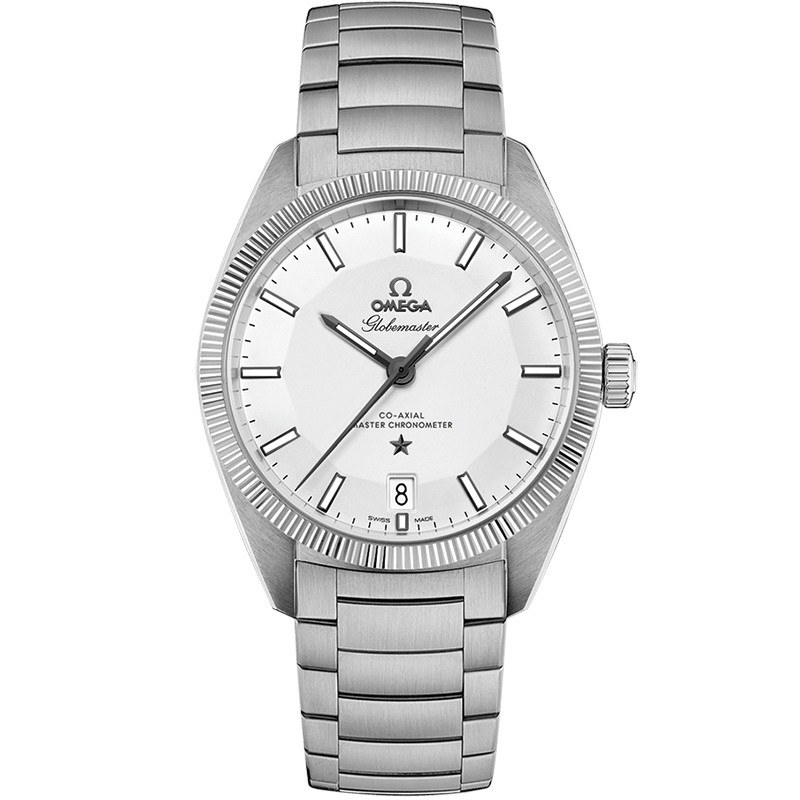
The Constellation 41mm in steel and yellow gold is Omega's integrated-bracelet sport-dresser, built around the Co-Axial Master Chronometer 8501 and wearing its identity in the "Griffes," the four claws at 3 and 9 that have distinguished every Constellation since 1982. It occupies an awkward-honest niche: close enough to the Royal Oak silhouette that comparisons are unavoidable, yet priced well below it and entirely its own thing once you spend time with it. For a collector who wants a certified Master Chronometer movement in a bracelet watch without paying Audemars money, this reference makes a serious case.
What it is
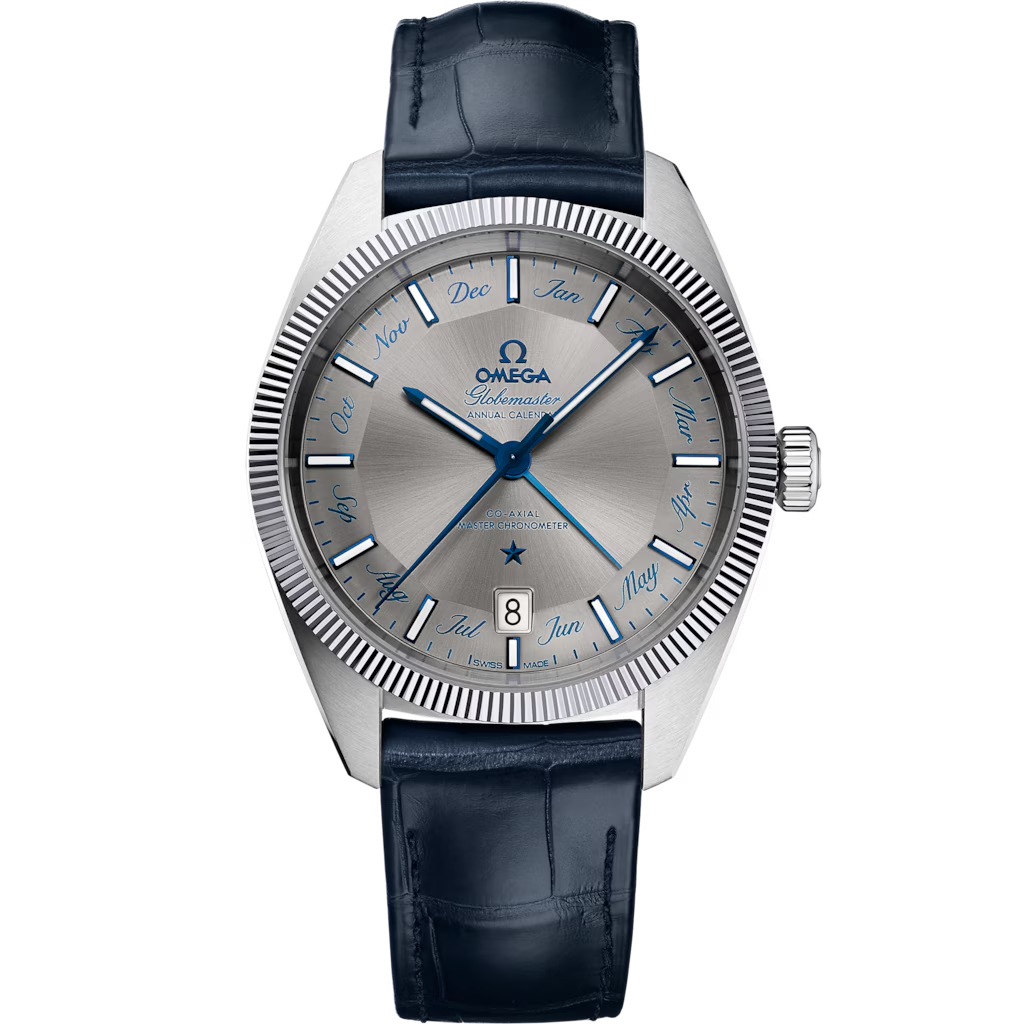
The modern Constellation lineup in this configuration launched around 2015, replacing the previous generation and standardizing on the 8501 family of Co-Axial movements, which carry METAS Master Chronometer certification for accuracy within 0/+5 seconds per day and magnetic resistance to 15,000 gauss. The 41mm case in steel with yellow gold trim (ref. 131.20.41.41.06.001) pairs with a matching integrated steel and gold bracelet; a full steel version and full gold versions exist in parallel. Omega also offers an annual calendar variant in this generation, adding a meaningful complication without dramatically changing the footprint.
The Griffes design itself dates to the early 1980s Constellation rebrand, so the claw motif carries genuine lineage even on this 2015-onward production run.
Buying notes
Inspect the bracelet closely, particularly the integrated links closest to the lugs: this style of bracelet shows wear at the inner surfaces of the links faster than it shows on the outside, and replacements are not cheap. The two-tone configuration means any case or bracelet polishing work risks blurring the steel-to-gold boundaries, so ask for service history and look for signs of aggressive refinishing. Check the Griffes themselves for dings or scratches; they are a finishing focal point and any damage reads immediately.
Confirm the watch carries a METAS certificate or that the seller can document original purchase, as the Master Chronometer certification is part of the value proposition and an un-certifiable movement (from improper service) is a real downside. The sapphire caseback lets you inspect the movement; look for any signs of moisture intrusion or amateur service work before buying pre-owned.
Market read
Pre-owned examples of this reference trade comfortably below retail, which sits around $8,000 to $9,500 depending on configuration; street prices in the secondary market for lightly worn pieces run roughly $5,500 to $7,000. The full steel version typically commands slightly less than the two-tone, which has found a more defined collector audience. Annual calendar variants carry a premium of several thousand dollars over base and are rarer in the secondary market.
This is not a watch that appreciates aggressively, but it holds value reasonably for Omega steel, and any significant retail correction would likely not hurt it worse than the broader market.
Service expectations
The caliber 8501 is a Co-Axial movement with a manufacturer-recommended service interval of 10 years, longer than most Swiss competitors and a genuine ownership advantage. Omega service through an authorized center runs roughly $600 to $900 for a full service on this caliber, depending on what parts are needed. Independent watchmakers comfortable with Co-Axial escapements can service it for less, though you will lose any remaining Omega service warranty.
Editorial copy is AI-drafted from primary sources and reviewed by Grail Atlas before publication. Where the text is uncertain about a fact, it says so. Email
corrections@grailatlas.com if something reads wrong. Signals on this page (community, OSINT) are clearly separated from the editorial sections.