GrailAtlasAn independent mechanical watch reference
Español

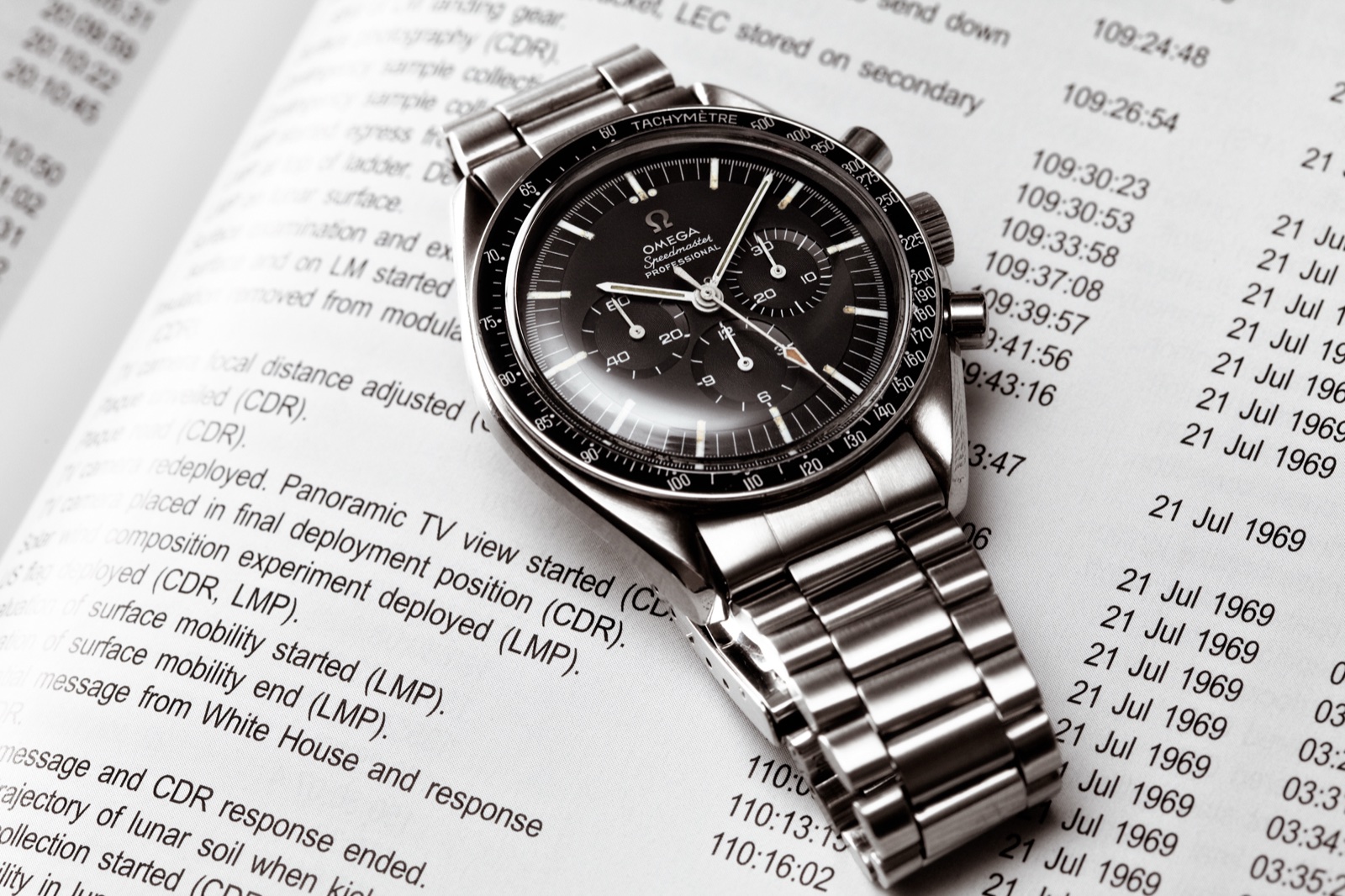
The reference NASA certified for Apollo missions; every subsequent professional Speedmaster traces its lineage here.

Uncommonlandmark#4 in familyOfficial press photos

Originality

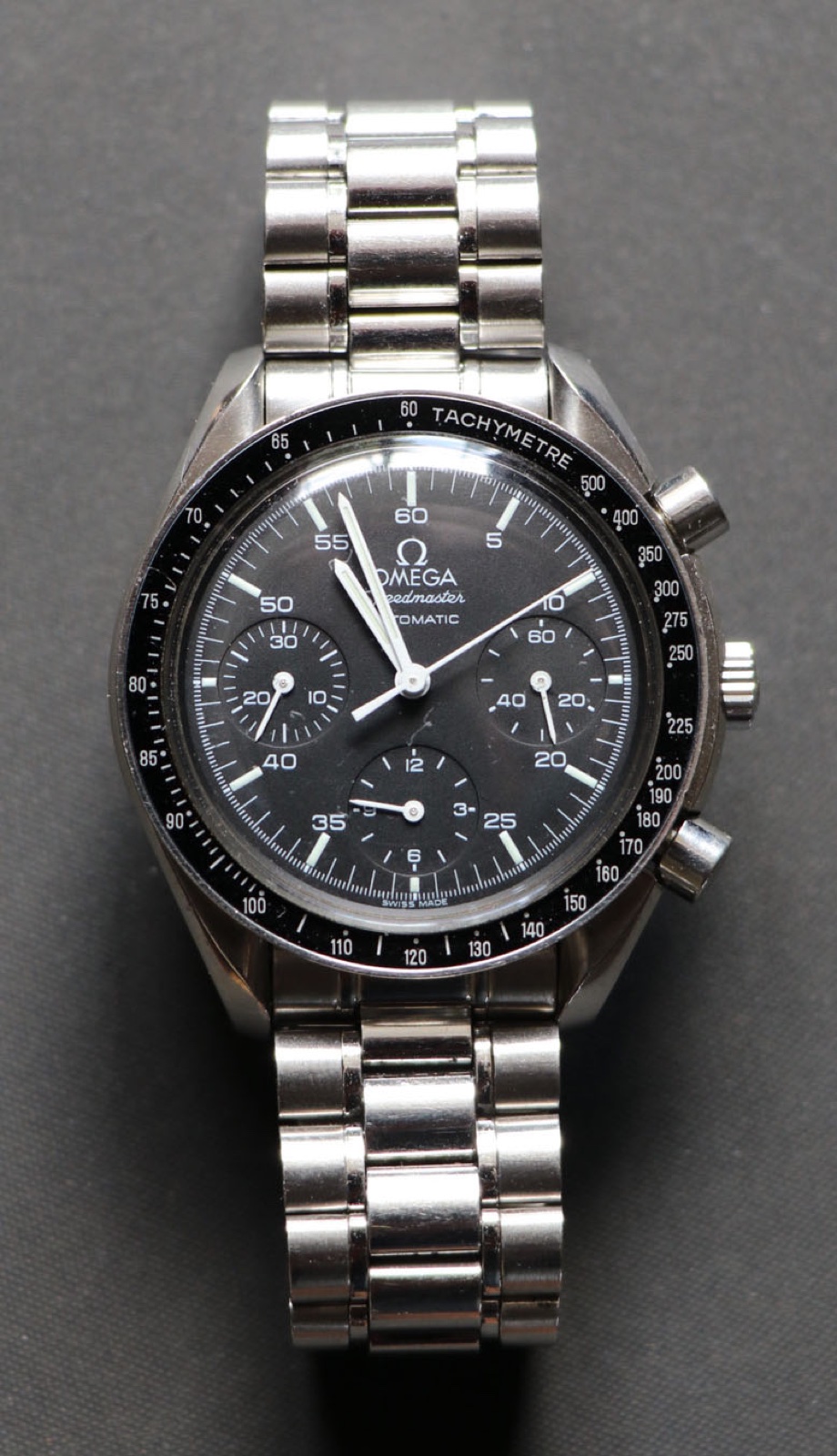
Originality matters on this reference. An original dial and hands command a significant premium. Service replacements typically trade at a 20-40% discount to original examples.

Dial variants

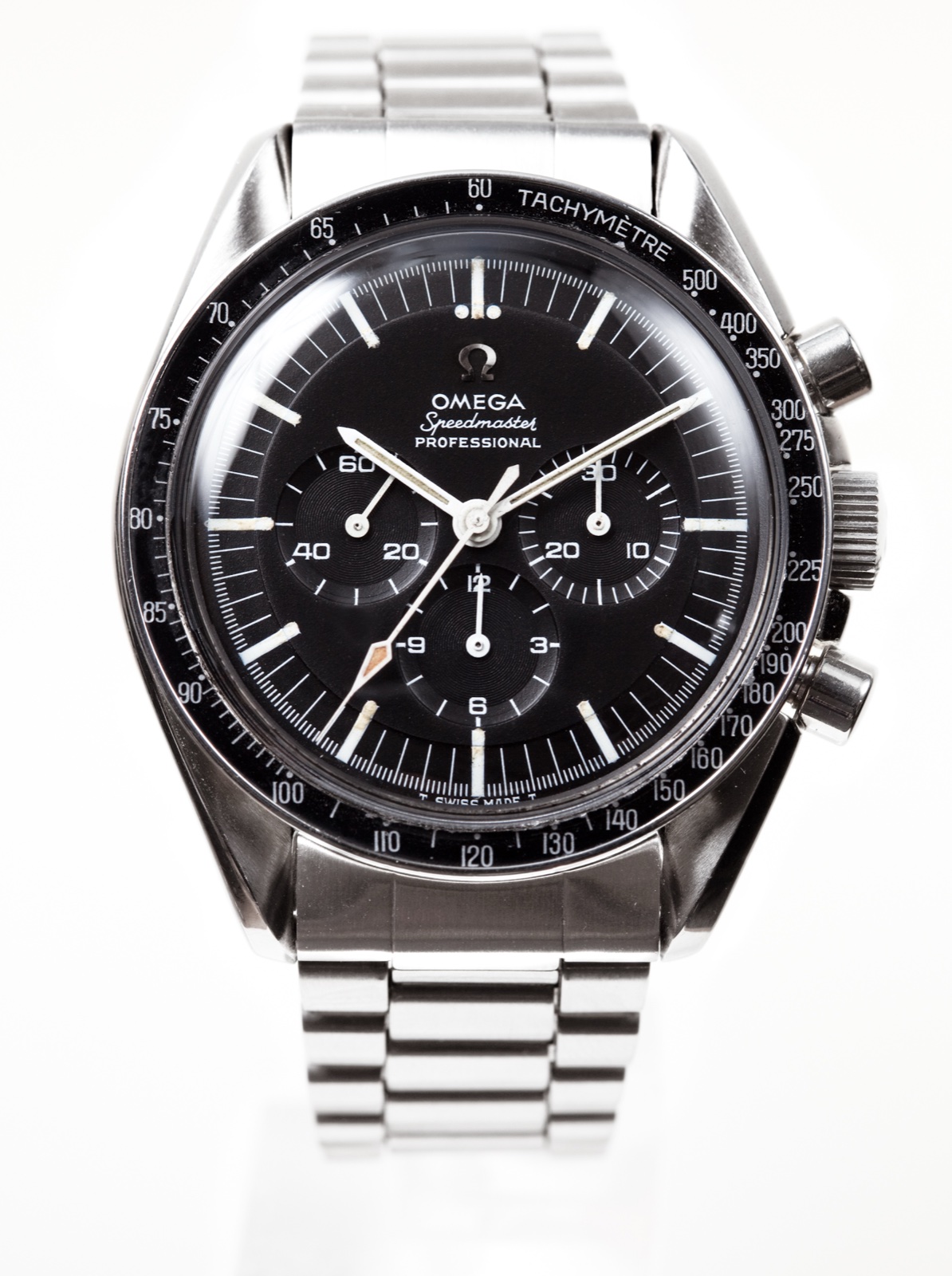
Cal. 861 standard dial1968 to 1988UncommonSought
  • Black dial with "SWISS MADE" at 6 o'clock and small "T<25" lume notation
  • Applied Omega logo (not printed)
  • Dot-over-90 tachymeter bezel introduced mid-run
  • Straight-lugged case from 1975 onward

The 145.022 caliber 861 is the workhorse Moonwatch that flew on Apollo missions. Dial printing evolved several times during the long run; early examples have "SWISS T<25" underprints and the pre-DON (dot over ninety) bezel.

Live pricing is coming soon. Get notified when it is available for this reference.

Movement tier: unclassified · caliber Lemania Cal. 321: manual-wind column-wheel chronograph, 18,000bph, 48h PR; lateral clutch, triple-hammer; same caliber used on Moonwatch NASA mission · 48h power reserve (2 days)

Also uses Lemania Cal. 321

Omega Speedmaster Professional (transitional caliber 321) Ref. 145.012, black dial, steel case
Omega
Speedmaster
Omega Speedmaster Moonwatch Calibre 321 (Steel) Ref. 311.30.40.30.01.001, black dial, steel case
Omega
Speedmaster
Medium-large: suits wrists 6.5 in+ (16.5 cm+)
42 mm case. Wears confidently on average to larger wrists. May overhang on slender builds.

Not yet rated

Community + OSINT signals haven’t landed for this reference yet. We don’t publish a rating against zero signal: the number would mean nothing. Editorial body + caliber + market value still surface above; ratings appear once the signal corpus does.

Search pre-owned listings

Chrono24
eBay (sold listings)
WatchBox

Authentication

The 145.022 is the reference that went to the Moon in 1969 and is among the most documented Speedmasters. Dial originality and Cal. 861 vs. 321 caliber confirmation are the primary authentication concerns.

Known issues in the market
  • Dials from this generation have been repainted to restore faded text; original dials show specific paint craze patterns under magnification.
  • Later Cal. 861 movements are sometimes presented as earlier Cal. 321 references; the movements are not interchangeable.
  • Tropical dials with brown patina are highly collected and attract artificial aging attempts.
AreaWhat to checkWhat is correctRed flag
dialT SWISS T radiation and tritium print"T SWISS T" printed at the base of the dial indicating tritium lume; tritium plots show cream-to-tan patina with ageRepainted dial with uniform white lume lacking tritium patina on a stated 1969-era example; missing T SWISS T designation
movementCal. 861 column wheel verificationCal. 861 uses a horizontal clutch with cam-actuated chronograph; Cal. 321 (earlier) uses column wheel; 145.022 can have either depending on production yearMovement caliber inconsistent with the stated production date of the watch
caseAsymmetric case shape and surface conditionPeriod-correct 145.022 case shows 42mm diameter with correct asymmetric lug geometry; brushed top, polished flanksOver-polished case removing original brushing; lug geometry inconsistent with known production examples
dialHesalite crystal era-correctnessHesalite (acrylic) crystal is correct for this generation; shows age-appropriate micro-scratchesSapphire crystal on a stated original 145.022; crystal replaced with wrong generation part
Common legitimate replacements
  • Crystal replacement from hesalite to sapphire is a documented modification that changes the character of the watch.
  • Service hands from Omega are correct parts but visually distinct from period originals.
  • Pushers are replaced at service and non-original pushers are common on aged examples.
Expert resources: SpeedmasterForum.com caliber identification guides document the Cal. 321 vs. 861 transition by serial number range. The Moonwatch Only book provides serial-range-to-dial variant mapping. Omega Extract of the Archives confirms factory specification for a specific serial number.

Authentication guide

Last reviewed June 2026

The 145.022 is the longest-running Speedmaster Professional reference, spanning the cal. 321 (to ~1968) and the replacement cal. 861 (through 1988). The column-wheel architecture of the 321 and the caliber-to-serial number correlation are the two things to confirm before anything else.

Known reproduction risks

toggle
HIGH RISK

Complete reproduction with generic lever escapement

  • Case engravings lack the depth and crispness of genuine Omega tooling
  • "FLIGHT-QUALIFIED" caseback text poorly spaced or missing the astronaut motif
  • Movement bridge architecture does not match cal. 321 or 861 layout
  • Lume plots inconsistent in size or applied without the period hand-application irregularities

The Speedmaster Professional is reproduced in volume. Serial-number-to-caliber correlation check is the most reliable single test -- Omega production records are well-documented.

HIGH RISK

Cal. 321 removed and replaced with cal. 861 in a high-value case

  • Serial number indicates pre-1968 production but the caseback shows a cal. 861
  • No column wheel visible in the movement -- the 321 has a column wheel, the 861 does not
  • Movement bridge finishing differs from what is documented for the stated caliber

The cal. 321 commands a premium over the 861. The reverse swap -- putting a less valuable movement into a high-value case -- is the documented concern.

MEDIUM

Dial refinishing or replacement

  • Printing looks perfectly uniform under 10x -- original period dials show hand-application irregularities in the applied text
  • Lume plots are bright white rather than cream on a watch with an aged case
  • Omega typeface weight or spacing differs from period-correct examples

Dial variants by era

toggle
EraDescriptionIdentifiers
1968 to ~1975 (cal. 861, early production)First generation of the 145.022 with the newly adopted cal. 861 replacing the 321. The "Speedmaster Professional" text was applied to the dial along with "Swiss Made" at the bottom. Acrylic crystal, aluminum bezel insert with tachymeter scale, pump pushers at 2 and 4.
  • "Speedmaster Professional" in two lines above 6 o'clock
  • Applied faceted baton indices with tritium lume -- period examples show natural aging
  • Acrylic crystal with no anti-reflective coating
  • Serial number in the 26-million to 38-million range corresponds to this generation
  • Aluminum tachymeter bezel insert -- original aluminum has a specific matte texture distinct from later replacements
1975 to 1988 (cal. 861, late production)Later 145.022 production with minor dial and case refinements. Some examples have the Omega logo redesigned. The cal. 861 continued unchanged throughout; the 145.022 reference was retired with the introduction of the 3590.50 in 1988.
  • Same tachymeter bezel and pump-pusher layout as early production
  • Serial range extends from 38-million to 55-million
  • Dial text layout unchanged but Omega logo may show updated typeface on later examples
  • Acrylic crystal standard throughout -- sapphire was not used on the 145.022

Service part flags

toggle
Caliber identity (321 vs 861)

Original: The cal. 321 was used in 145.022 examples produced before 1968. It has a column wheel for the chronograph control, a lateral clutch, and a triple-hammer striking mechanism. The 861 replaced it: no column wheel, horizontal clutch instead. The two calibers are visually distinct when the caseback is opened. Cross-reference the serial number against published Omega production records to verify which caliber should be present.

Replacement tells
  • Cal. 861 in a watch with a serial number in the range that should indicate a 321 -- the higher-value caliber has been swapped out
  • Cal. 321 in a late production 145.022 (post-1968 serial) -- a 321 transplant into a later case
  • Column wheel visible through the caseback on a watch sold as a cal. 861 example
  • Movement rotor or bridge finishing inconsistent with Omega caliber finishing standards
Aluminum bezel insert

Original: The 145.022 uses an aluminum tachymeter insert. Original aluminum has a specific matte surface and specific character depth on the numerals. Replacement inserts are available in reproduction quality and in service replacements -- the correct aluminum insert has a specific aging pattern on a vintage example.

Replacement tells
  • Bezel numerals look freshly stamped on a watch with otherwise aged patina
  • Bezel insert appears too uniform in color -- original aluminum shows graduated fading at the 12 o'clock pip area
  • Replacement insert in a different material than aluminum -- some reproductions use steel
Crystal

Original: Acrylic (hesalite) crystal on all 145.022 production. The crystal has a specific dome profile and is scratch-prone by nature. A perfectly unmarked acrylic crystal on a vintage watch has either been replaced or the watch has had very little use.

Replacement tells
  • Sapphire crystal on a 145.022 -- this is not period-correct and was never factory-fitted
  • Crystal profile inconsistent with the correct dome geometry for this reference
  • New acrylic crystal on a watch with otherwise heavily aged components -- a mismatch in wear states
Crown

Original: The 145.022 uses a non-screw-down crown with a step-down profile. The crown has Omega knurling and the Omega logo stamp. Period crowns show knurling wear consistent with use.

Replacement tells
  • Screw-down crown on a 145.022 -- incorrect for this reference
  • Generic Omega crown without the correct step-down profile
  • Crown knurling too deep or too fine for the period Omega standard

Case back markings

toggle
1968 to 1988
  • "FLIGHT-QUALIFIED BY NASA FOR ALL MANNED SPACE MISSIONS" engraved text
  • Astronaut figure and moon/earth motif in the caseback medallion
  • "OMEGA" and "SWISS MADE"
  • Case reference "145.022" and serial number
  • Caseback is solid stainless -- no display caseback on the 145.022

Movement tells

toggle
  • Cal. 321: wind the crown and listen. The 321 has a noticeably lower tick frequency than the 861 -- 18,000bph vs 21,600bph on some later calibers. The sound is distinctly slower and more deliberate.
  • Cal. 861 manual wind: winding resistance builds progressively from an unwound state. A movement that winds freely all the way through with no progressive resistance has a broken mainspring or ratchet issue.
  • The chronograph should start, stop, and reset cleanly. A sluggish seconds hand on start or a reset that leaves the seconds hand off zero indicates the chronograph mechanism needs service.
  • Period tritium lume on original dials and hands will show natural aging to cream or warm brown. A watch with bright white lume on an otherwise aged dial has replacement hands or a refinished dial.
Sources: Omega Museum and Speedmaster history; WatchUSeek Speedmaster forum.

You might also like

Omega Speedmaster Professional Ref. 310.30.42.50.01.002, black dial, steel case
Omega
Speedmaster
Ref. 310.30.42.50.01.002
Omega Speedmaster Professional (transitional caliber 321) Ref. 145.012, black dial, steel case
Omega
Speedmaster
Ref. 145.012
Omega Speedmaster Moonwatch Calibre 321 (Steel) Ref. 311.30.40.30.01.001, black dial, steel case
Omega
Speedmaster
Ref. 311.30.40.30.01.001
Omega Speedmaster Reduced Ref. 3510.50, black dial, steel case
Omega
Speedmaster
Ref. 3510.50
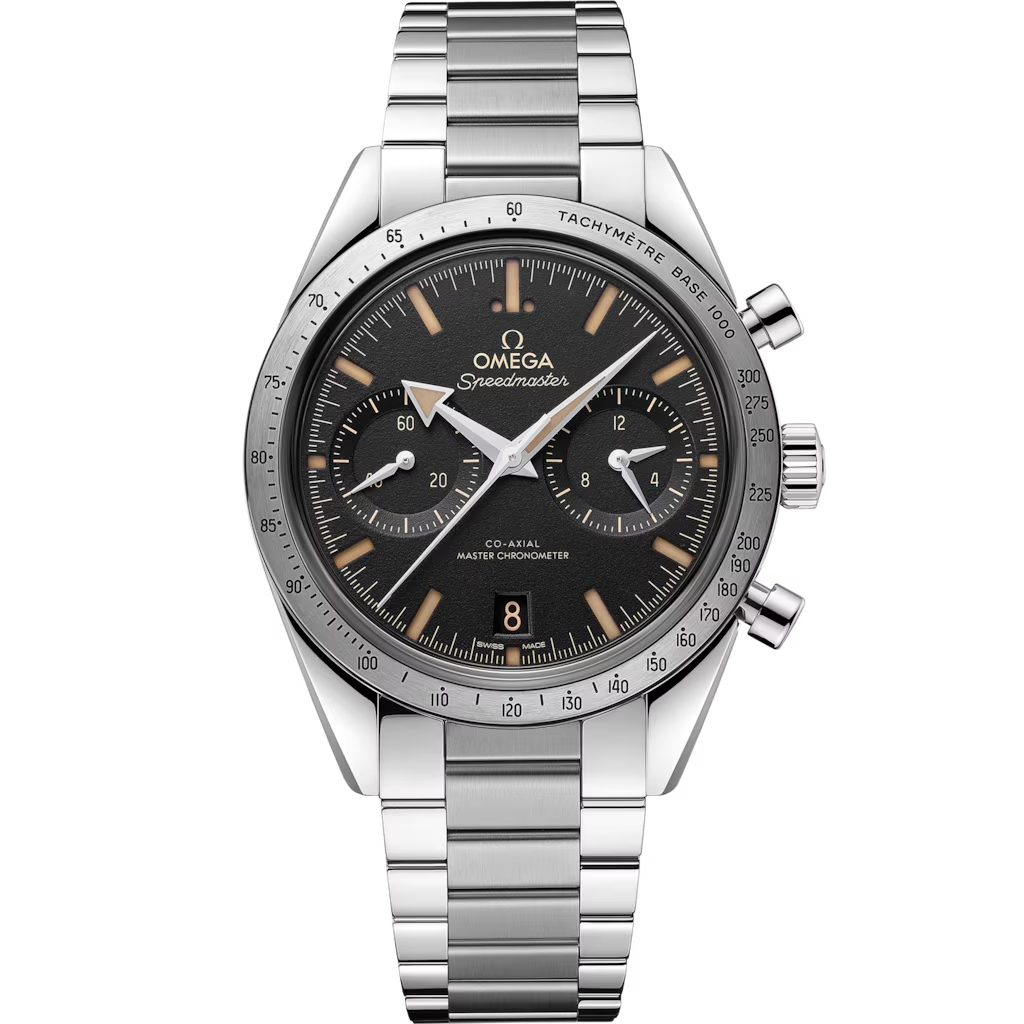
Omega Speedmaster '57 (Co-Axial Master Chronometer) Ref. 332.10.41.51.01.001, black dial, steel case
Omega
Speedmaster
Ref. 332.10.41.51.01.001
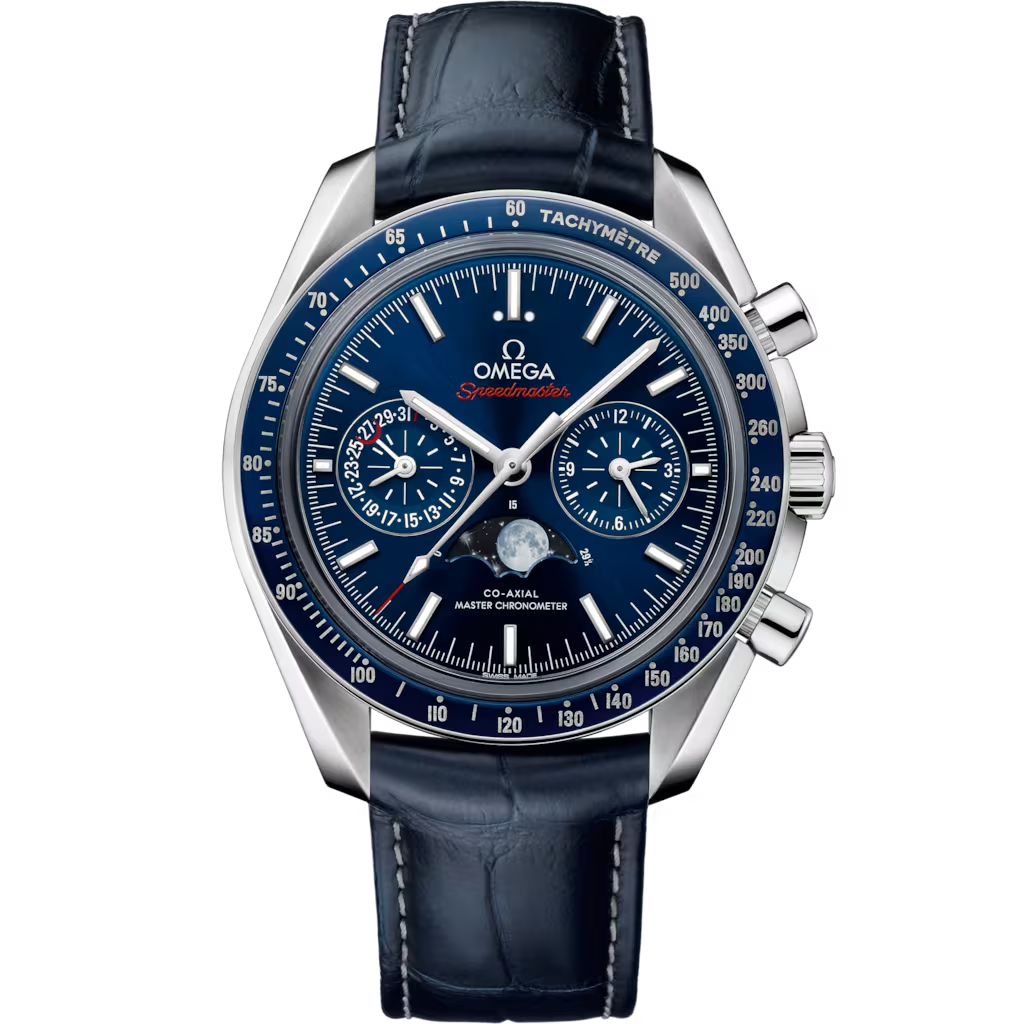
Omega Speedmaster Moonphase Chronograph (Master Chronometer) Ref. 304.33.44.52.03.001, blue dial, steel case
Omega
Speedmaster
Ref. 304.33.44.52.03.001

Buying guidance

← Back to Grail Atlas