GrailAtlasAn independent mechanical watch reference
简体中文
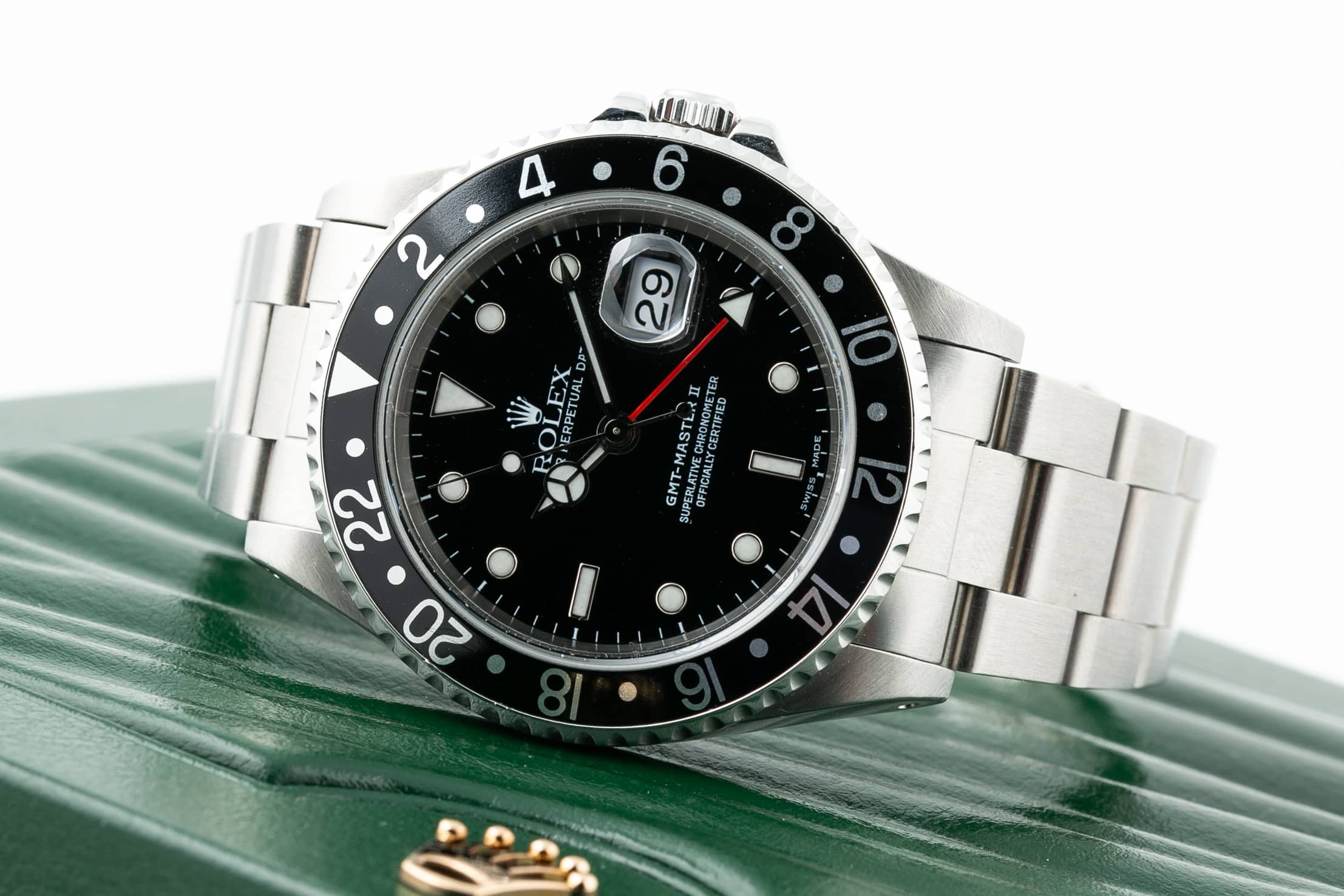
Uncommon#3 in familyOfficial press photos

Originality

Originality matters on this reference. An original dial and hands command a significant premium. Service replacements typically trade at a 20-40% discount to original examples.

Live pricing is coming soon. Get notified when it is available for this reference.

In-house manufacture caliber · caliber Rolex Cal. 3085: in-house automatic GMT, 19,800bph, 48h PR, 31j; used in GMT-Master 16700; predecessor to 3185; 24-hour hand independently set · 48h power reserve (2 days)
Medium-large: suits wrists 6.5 in+ (16.5 cm+)
40 mm case. Wears confidently on average to larger wrists. May overhang on slender builds.

Not yet rated

Community + OSINT signals haven’t landed for this reference yet. We don’t publish a rating against zero signal: the number would mean nothing. Editorial body + caliber + market value still surface above; ratings appear once the signal corpus does.

Search pre-owned listings

Chrono24
eBay (sold listings)
WatchBox

Authentication

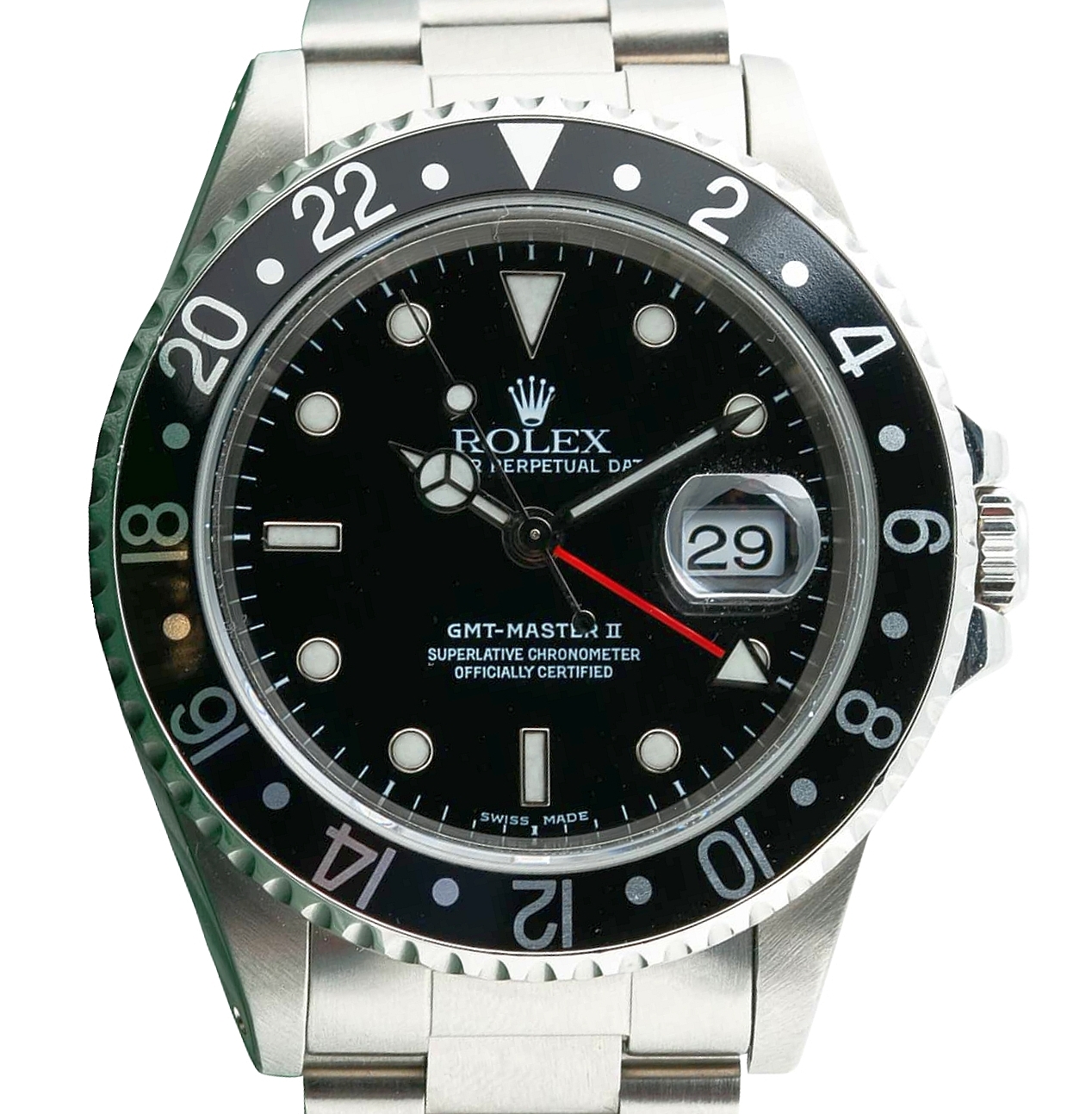
The vintage 16700 Coke GMT is a legitimate service-aged reference; the aluminium bezel insert fading pattern, Cal. 3085 movement, and absence of rehaut engravings are key authentication anchors.

Known issues in the market
  • Aluminium bezel inserts on the 16700 fade naturally; a perfectly vivid insert on a 25-year-old watch may indicate replacement, which is not a fake but should be disclosed.
  • Cal. 3085 is the correct movement; the later Cal. 3186 (used in 116710-generation references) is an incorrect swap that is detectable by a watchmaker.
  • Rehaut (inner bezel ring) engravings are absent on the 16700; the engraved rehaut was introduced with the 116710 generation; a rehaut with "ROLEX ROLEX" engravings indicates a wrong-generation case.
  • Gilt dial variants from early 16700 production (circa 1988) are high-value; their rarity makes misrepresentation as ordinary sigma-dial examples a known issue.
  • The 16700 has an aluminium insert, not ceramic; a ceramic insert indicates the watch has been converted or the bezel replaced with a later-generation part.
AreaWhat to checkWhat is correctRed flag
caseRehaut inner ring absencePlain polished metal rehaut (inner bezel ring) with no engravings; serial number engraved between the lugs at 6 o'clock (not on the rehaut)"ROLEX ROLEX" repeated text on the rehaut; any engraving on the rehaut ring indicating a later-generation case
caseBezel insert material (aluminium)Aluminium bi-color insert with red upper half and black lower half; slightly raised surface vs. the bezel ring; surface shows patina and micro-scratches consistent with ageCeramic insert (smooth, scratch-resistant surface); glossy vivid color inconsistent with claimed age; insert that sits flush rather than slightly proud
movementCal. 3085 movement identityCal. 3085 at 19,800bph; 48-hour power reserve; quick-set date function; three-piece caseback reveals movement to a watchmaker; "Rolex" signed rotorCal. 3186 (wrong generation; identified by Paraflex shock absorbers); Cal. 3135 (non-GMT, missing the GMT complication); any non-Rolex movement
dialDial text and printing generation"Swiss Made" at 6 with standard Rolex font; sigma symbol on some dials indicating solid gold indexes; early gilt dials have a warm yellow tint to text and luminous materialText font that matches current-generation Rolex printing; no sigma symbol on claimed sigma-dial example; "Swiss" without "Made" (very early pre-16700 format)
crownTriplock crown sealThree dots on crown face consistent with 16700 water resistance rating; crown screws down smoothly; no modern Twinlock crown (two dots) substitutedTwo-dot Twinlock crown (incorrect for this reference); crown that cross-threads or feels loose
braceletOyster bracelet and clasp generationCorrect-generation Oyster bracelet with flip-lock clasp; solid end links; clasp references should be consistent with 1988-2000 production; some stretch on original bracelets is expectedGlidelock clasp (introduced post-16700; modern upgrade); wrong clasp generation; hollow-sounding center links indicating aftermarket bracelet
Common legitimate replacements
  • Aluminium bezel inserts are frequently replaced on this reference due to fading; replacement is not fraudulent but the original insert color is a condition factor.
  • Bracelets on vintage Rolex references are commonly replaced with correct-generation OEM parts; an original, unstretched bracelet commands a meaningful premium.
  • Service history including seal replacements and gasket work is expected and normal on a 25-35 year old reference.
Expert resources: VintageRolex.org and the TimeZone vintage forum are the primary collector resources for 16700 authentication. A Rolex-authorized watchmaker can identify Cal. 3085 and verify service history.

Authentication guide

Last reviewed June 2026

The 16700 ran from 1989 to 1999 on Cal. 3175 and is the last GMT-Master before the ceramic-bezel GMT-Master II era. Parts substitution, especially bezel inserts and bracelets, is the primary authentication risk. Outright fakes are less common than mixed-parts examples.
Known reproduction risks

toggle
MEDIUM

Mixed-parts examples with non-original bezel inserts, particularly Pepsi inserts swapped from one variant to another or new-old-stock inserts presented as original.

  • Bezel insert aging inconsistent with the case and bracelet wear level
  • Insert color fading pattern that does not match the asymmetric Pepsi aging pattern on original examples
  • Insert fit that shows any play or gap at the bezel edge
LOW

Outright replica 16700 watches. Less common than parts substitution given the price point relative to the manufacturing investment required.

  • Case lug geometry that does not match known 16700 production proportions
  • Serial stamping depth or character spacing inconsistent with genuine Rolex production from this era
  • Movement that is not Cal. 3175 (incorrect GMT function or incorrect date quickset mechanism)

Dial variants by era

toggle
EraDescriptionIdentifiers
1989 to 1999 (Pepsi)Black dial with red/blue aluminum Pepsi bezel. The most common and most desirable 16700 variant.
  • Black dial with white applied hour markers
  • Red/blue aluminum bezel insert -- red occupies the AM hours (roughly 6 to 18 on the 24-hour scale), blue the PM hours
  • "GMT-Master" text on the dial, no "II" designation
  • "Superluminova" lume in plots and hands on later examples; tritium on earliest 1989 to ~1991 production
  • "Swiss Made" or "T Swiss T" at 6 o'clock depending on production year
1989 to 1999 (black bezel)Black dial with all-black aluminum bezel. Less common than Pepsi; commands a slight premium among collectors who prefer the cleaner look.
  • Black dial with black aluminum bezel insert throughout
  • Otherwise identical to the Pepsi variant in case and movement
  • Bezel insert aging: black inserts can fade to a dark gray in heavily worn examples
1989 to 1999 (Coke -- rare)Black/red "Coke" bezel configuration: black outer ring with red fill in the AM hour section. Significantly rarer than Pepsi.
  • Bezel with black outer portion and red fill for the AM hours -- not the full red/blue split of the Pepsi
  • Same black dial and case as the standard variants
  • Original "Coke" bezels are well-documented; any claimed Coke insert should be compared against verified examples

Service part flags

toggle
Bezel insert

Original: Aluminum insert with 24-hour scale and color fill applied. The red section of Pepsi inserts fades more aggressively than the blue section due to the dye chemistry used by Rolex at this production period. Original inserts on heavily worn cases show noticeable red-section fading while the blue retains more of its depth.

Replacement tells
  • Uniformly bright red and blue on an insert mounted on a 25+ year old, heavily worn case -- original inserts age asymmetrically
  • Replacement bezel from a different GMT variant (BLNR colors on a stated Pepsi, for example)
  • Insert that shows re-inking to restore faded sections -- look for color that sits slightly proud of the aluminum surface
  • Coke insert claimed on a watch where the serial range predates that production configuration
Crown

Original: Two-dot Twinlock winding crown -- two dots visible on the side of the crown itself, not the tube face. This is the correct crown for the 16700; the Triplock (three dots on the crown side) arrived on later GMT-Master II variants.

Replacement tells
  • Triplock crown (three dots on the crown side) on a 16700 -- incorrect for this reference
  • Crown size inconsistent with the case tube diameter
  • Crown that does not screw down fully against the case with correct resistance
Bracelet

Original: Oyster bracelet with solid center links appropriate for the production era. The 16700 was produced with several bracelet references during its run; original bracelets have stampings inside the clasp consistent with the production year.

Replacement tells
  • Bracelet with clasp stampings that postdate the watch serial by more than two or three years (bracelets were occasionally replaced at service, but large date gaps suggest aftermarket sourcing)
  • Folded link center links on a watch from a period when solid centers were standard
  • End-link fit that is loose against the case horn -- original end links seat flush
  • Clasp inner stampings referencing a bracelet reference not listed in known 16700 production pairings

Case back markings

toggle
1989 to 1999
  • Plain caseback outer face with no engravings
  • ROLEX OYSTER PERPETUAL DATE GMT-MASTER on the inner face
  • Reference 16700 stamped between lugs at 12 o'clock
  • Serial number stamped between lugs at 6 o'clock
  • Production serials fall in the E through W prefix range (approximately); any serial far outside this window warrants investigation

Movement tells

toggle
  • The 16700 uses Cal. 3175 -- a quickset date automatic with the GMT complication. The date quicksets by pulling the crown to the first position and rotating, separate from the GMT hand setting.
  • The GMT function on the 3175 sets the GMT/reference time hand and bezel as a linked pair. The local hour hand adjusts independently in one-hour increments at crown position 2.
  • Cal. 3175 runs at 19,800bph. A movement beating at 28,800bph is not correct for this reference.
  • A correctly serviced 3175 holds accuracy to within +/- 10 seconds per day. Significant drift suggests worn pallets or a tired mainspring.
  • The GMT hand should track the 24-hour bezel accurately. A GMT hand that loses its correlation with the 24-hour scale over the course of a day indicates setting-mechanism wear.
Sources: Rolex Forums -- GMT-Master subforum authentication threads; Watchuseek -- GMT-Master 16700 reference data threads; Bob's Watches -- 16700 buying guide reference.

You might also like

Rolex GMT-Master II (pre-ceramic, aluminium bezel) Ref. 16710, black dial, steel case
Rolex
GMT-Master
Ref. 16710
Rolex GMT-Master II "Root Beer" (two-tone) Ref. 16713, black dial, two-tone case
Rolex
GMT-Master
Ref. 16713
Rolex GMT-Master II "Pepsi" (Cerachrom) Ref. 126710BLRO, black dial, steel case
Rolex
GMT-Master
Ref. 126710BLRO
Rolex
GMT-Master
Ref. 126710BLNR
Rolex
GMT-Master
Ref. 126720VTNR
Omega Speedmaster Professional Pre-Moon (caliber 321) Ref. 145.022, black dial, steel case
Omega
Speedmaster
Ref. 145.022

Buying guidance

← Back to Grail Atlas