Originality matters on this reference. An original dial and hands command a significant premium. Service replacements typically trade at a 20-40% discount to original examples.
Live pricing is coming soon. Get notified when it is available for this reference.
Community + OSINT signals haven’t landed for this reference yet. We don’t publish a rating against zero signal: the number would mean nothing. Editorial body + caliber + market value still surface above; ratings appear once the signal corpus does.
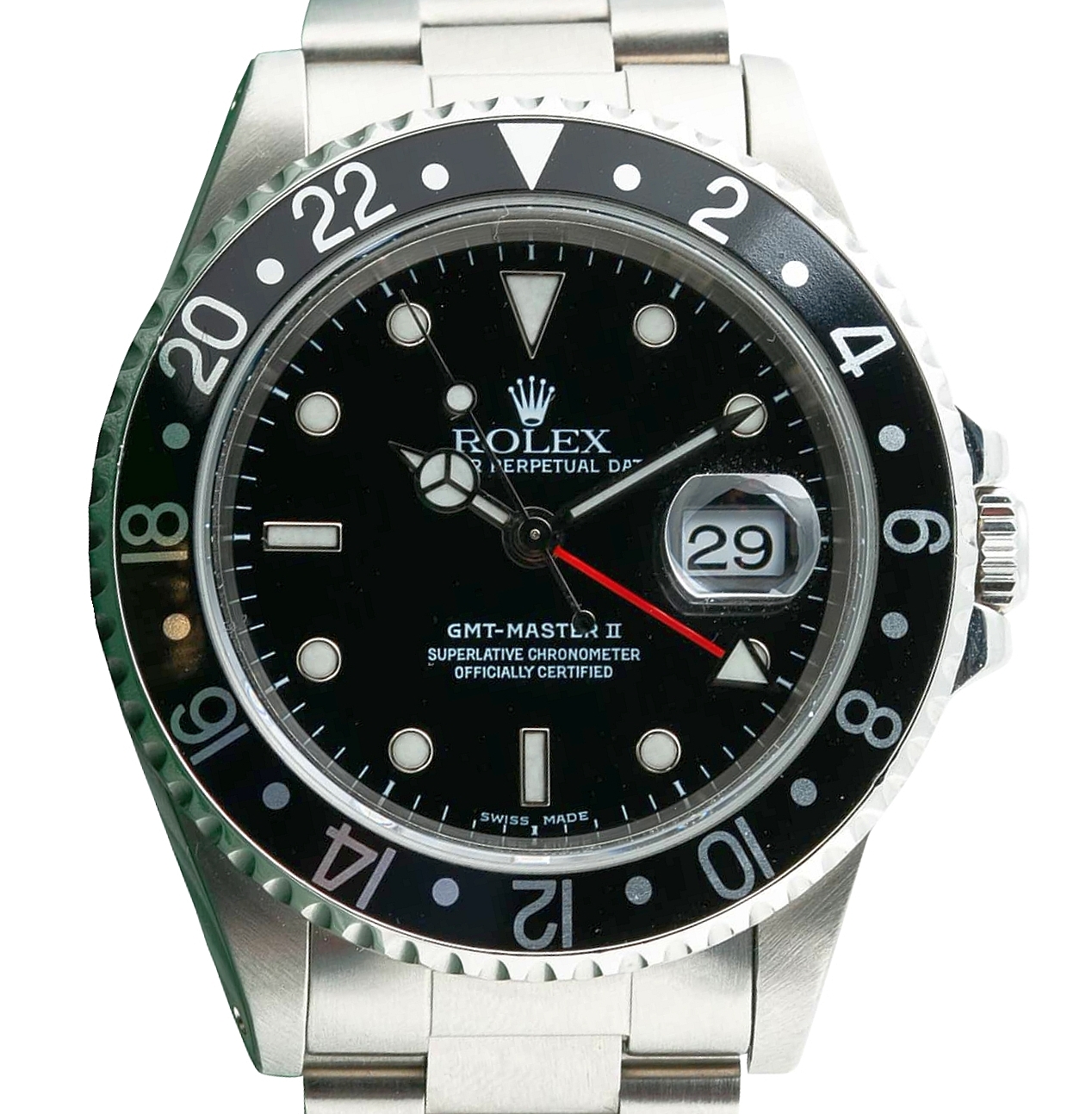
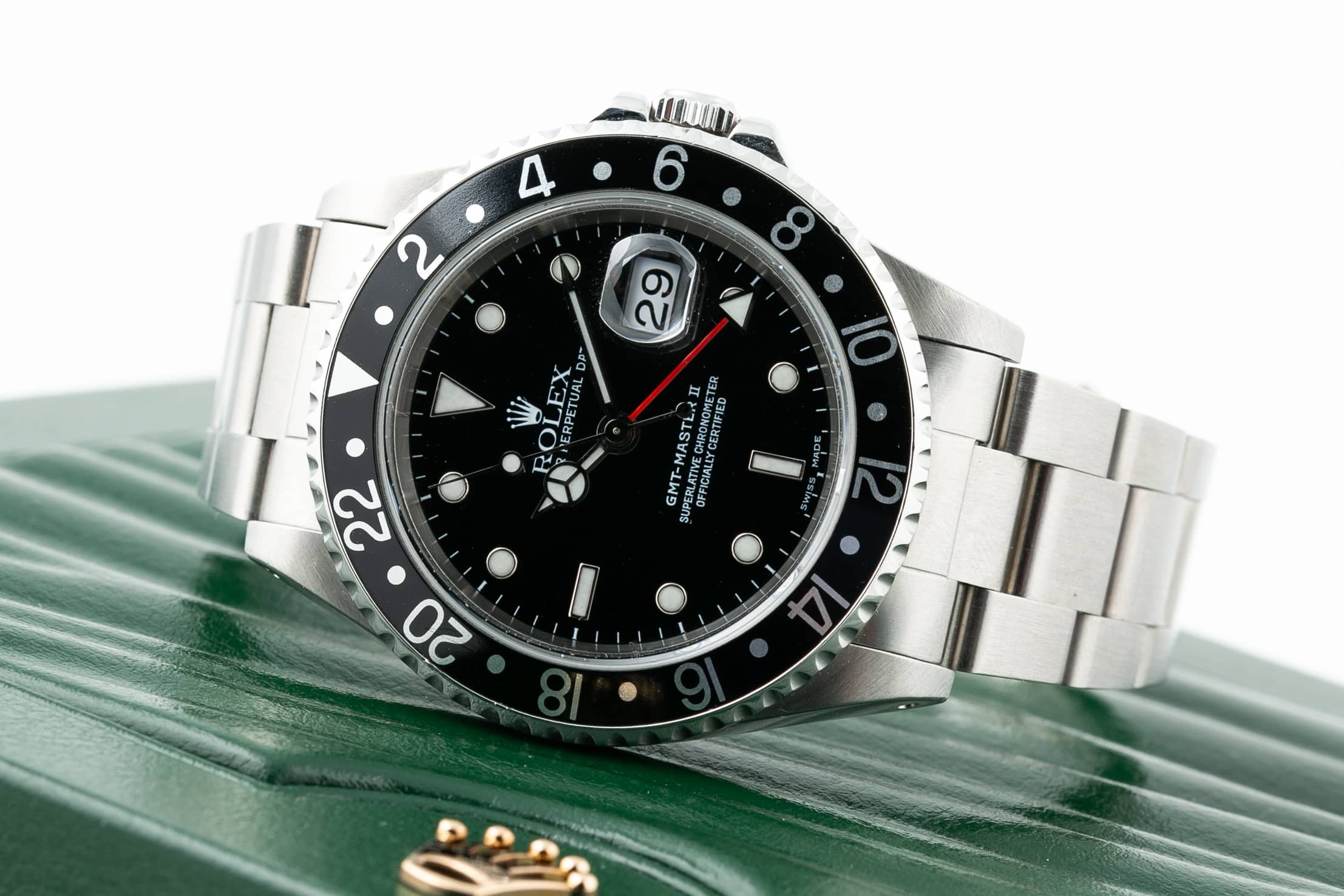
The vintage 16700 Coke GMT is a legitimate service-aged reference; the aluminium bezel insert fading pattern, Cal. 3085 movement, and absence of rehaut engravings are key authentication anchors.
| Area | What to check | What is correct | Red flag |
|---|---|---|---|
| case | Rehaut inner ring absence | Plain polished metal rehaut (inner bezel ring) with no engravings; serial number engraved between the lugs at 6 o'clock (not on the rehaut) | "ROLEX ROLEX" repeated text on the rehaut; any engraving on the rehaut ring indicating a later-generation case |
| case | Bezel insert material (aluminium) | Aluminium bi-color insert with red upper half and black lower half; slightly raised surface vs. the bezel ring; surface shows patina and micro-scratches consistent with age | Ceramic insert (smooth, scratch-resistant surface); glossy vivid color inconsistent with claimed age; insert that sits flush rather than slightly proud |
| movement | Cal. 3085 movement identity | Cal. 3085 at 19,800bph; 48-hour power reserve; quick-set date function; three-piece caseback reveals movement to a watchmaker; "Rolex" signed rotor | Cal. 3186 (wrong generation; identified by Paraflex shock absorbers); Cal. 3135 (non-GMT, missing the GMT complication); any non-Rolex movement |
| dial | Dial text and printing generation | "Swiss Made" at 6 with standard Rolex font; sigma symbol on some dials indicating solid gold indexes; early gilt dials have a warm yellow tint to text and luminous material | Text font that matches current-generation Rolex printing; no sigma symbol on claimed sigma-dial example; "Swiss" without "Made" (very early pre-16700 format) |
| crown | Triplock crown seal | Three dots on crown face consistent with 16700 water resistance rating; crown screws down smoothly; no modern Twinlock crown (two dots) substituted | Two-dot Twinlock crown (incorrect for this reference); crown that cross-threads or feels loose |
| bracelet | Oyster bracelet and clasp generation | Correct-generation Oyster bracelet with flip-lock clasp; solid end links; clasp references should be consistent with 1988-2000 production; some stretch on original bracelets is expected | Glidelock clasp (introduced post-16700; modern upgrade); wrong clasp generation; hollow-sounding center links indicating aftermarket bracelet |
The 16700 ran from 1989 to 1999 on Cal. 3175 and is the last GMT-Master before the ceramic-bezel GMT-Master II era. Parts substitution, especially bezel inserts and bracelets, is the primary authentication risk. Outright fakes are less common than mixed-parts examples.