↓12.1%eBay asking prices. Condition and box/papers status not filtered.
Down 12% over the past 90 days
Based on eBay sales, last 12 months
Condition affects price
Pre-owned watches trade across a wide condition spectrum. These ranges are typical for the secondary market.
New Old Stock
Unworn example retaining original packaging, tags, and warranty documentation.
$33,199–$38,307
+30–50% vs median
Unpolished
Worn but the case has never been polished; original brushed and polished surfaces are intact.
$29,369–$31,923
+15–25% vs median
Polished
Case has been professionally or amateur polished at some point; edge definition is softened.
$21,707–$24,261
-15 to -5% vs median
Recently Serviced
Movement has been recently serviced with documented service records; case condition varies.
$25,538
At median
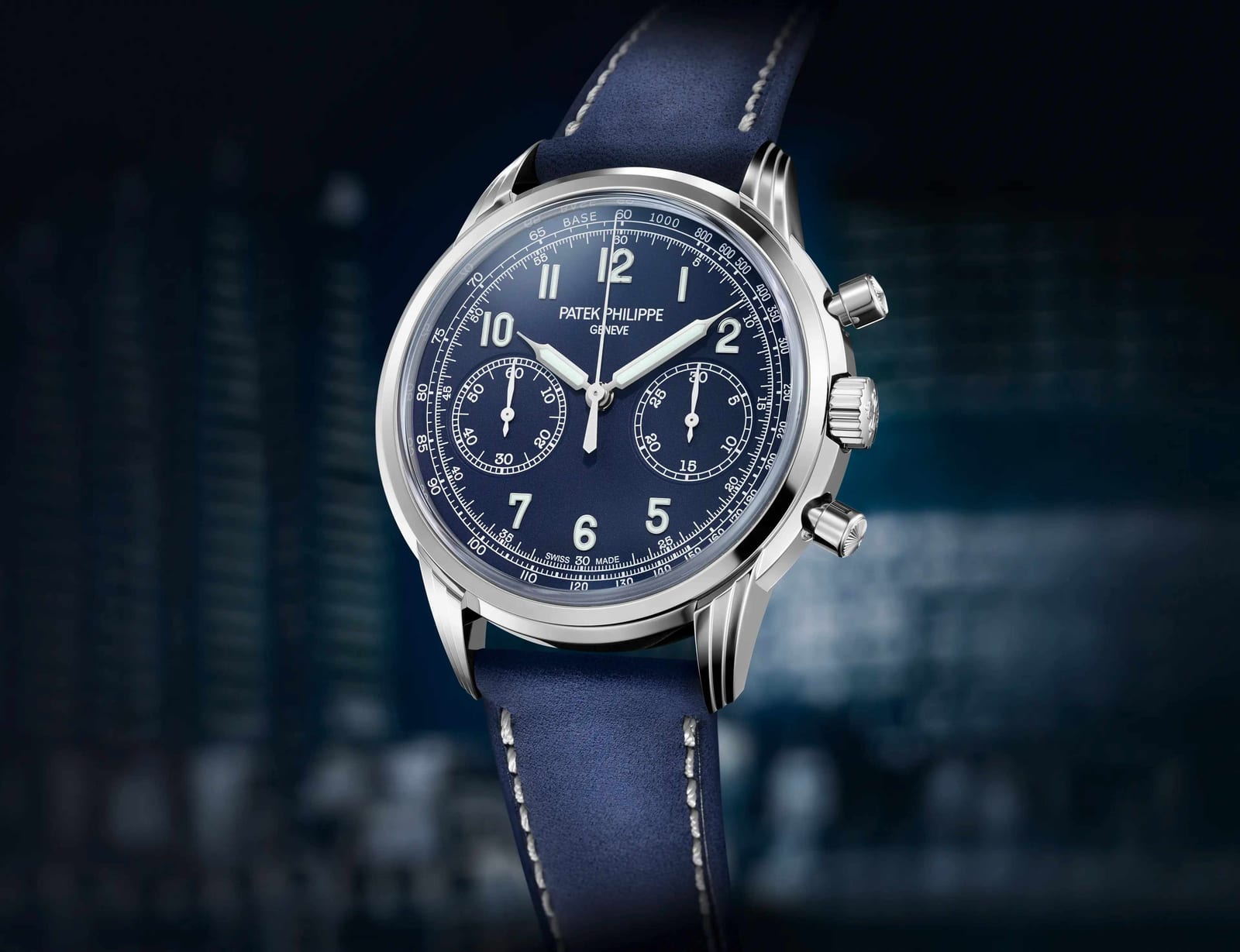
Movement tier: unclassified · caliber Patek Philippe Cal. 324 S C -- in-house automatic, 28,800bph, 45h PR, 29j; Gyromax balance, Spiromax hairspring
Versatile size: fits most wrists (6–7.5 in / 15–19 cm)
38 mm case. The sweet spot for the broadest range of wrist sizes. Neither too dainty nor too bold.
Not yet rated
Community + OSINT signals haven’t landed for this reference yet. We don’t publish a rating against zero signal — the number would mean nothing. Editorial body + caliber + market value still surface above; ratings appear once the signal corpus does.
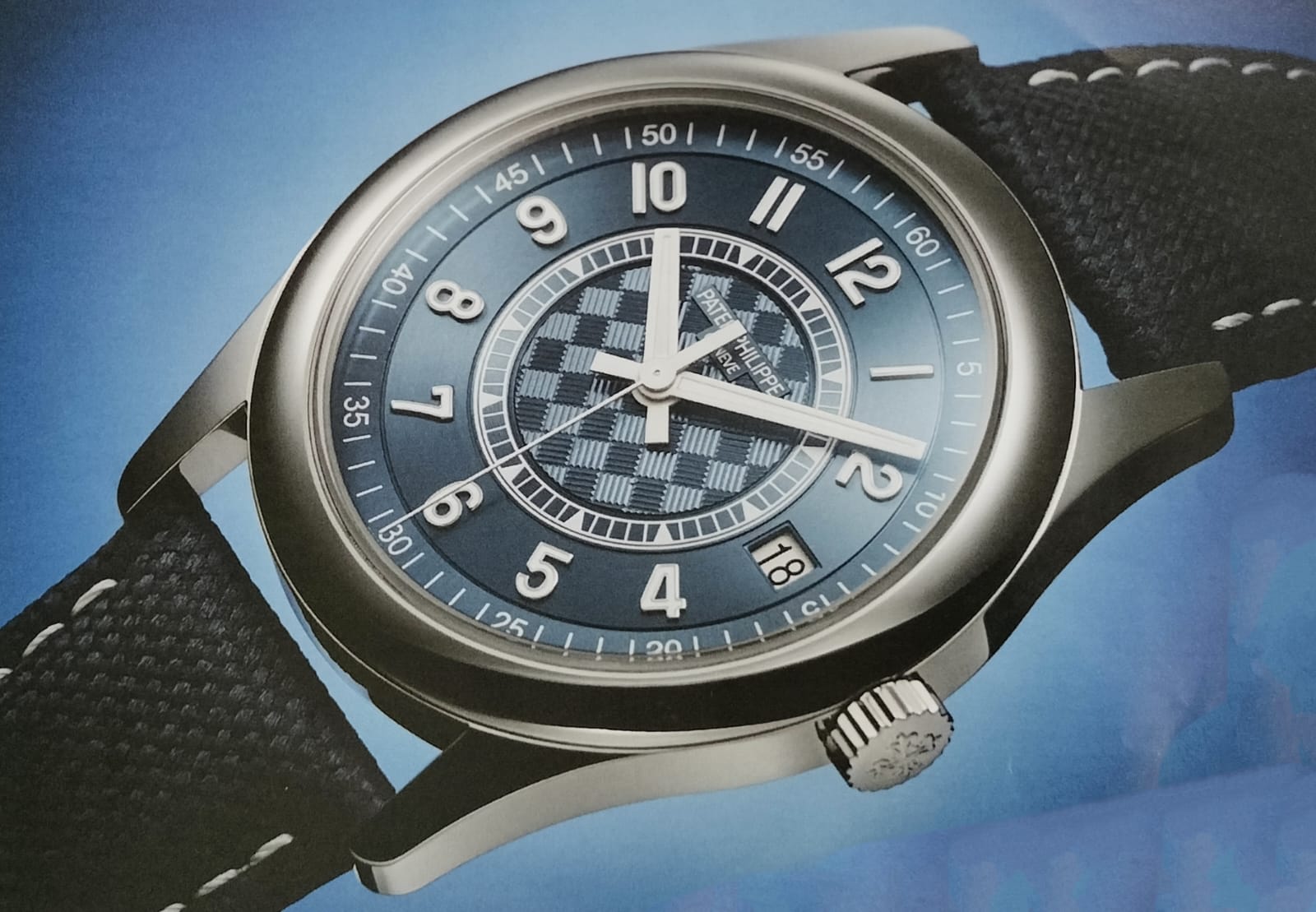
The 5153G is a white gold Officer-case Calatrava with a hinged inner and outer caseback, manual-wind Cal. 215, and Breguet-style blued hands. Its double-caseback construction is the primary authentication tell fakes cannot replicate cheaply.
Known issues in the market
The double-caseback (hinged outer hunter-style caseback plus inner protective caseback) is rarely replicated correctly; most fakes use a single hinged or solid caseback.
White gold authenticity matters: the case should carry hallmarks appropriate to the target market and should not show yellow through the finishing over time.
Applied gold indices on the genuine dial stand physically proud of the lacquer surface; fakes frequently print indices flat.
Area
What to check
What is correct
Red flag
caseback
Double-caseback hunter construction
Outer hinged caseback opens to reveal a second hinged inner protective caseback; both hinges are clean and firm with no play; movement visible only after opening both
Single caseback only (inner caseback missing entirely); loose or sloppy hinge action; caseback that snaps rather than hinges
case
White gold hallmarks and case weight
Correct gold purity hallmarks for the market (18k in most markets); case feels appropriately heavy for white gold; no yellow visible through worn edges
Missing or incorrect hallmarks; case weight inconsistent with white gold; yellow color visible at worn spots indicating plating over base metal
Authentication guide
Last reviewed June 2026
The 5153G combines a classic Calatrava dress case with the officer's hinged caseback and a hobnail guilloche bezel. The Cal. 240 micro-rotor and hinged caseback architecture are difficult to replicate at scale, making this one of the lower-risk Patek references to authenticate.
Known reproduction risks
toggle
LOW
The Cal. 240 micro-rotor architecture and hinged officer's caseback make high-quality reproductions economically impractical. The white gold cost and the pantograph-engraved bezel add further barriers. The 5153G attracts a careful collector audience rather than a prestige signal audience, which further reduces reproduction incentive.
Hobnail bezel: cast vs. pantograph-engraved is detectable under a loupe at the pyramid apex sharpness
The officer's caseback should open smoothly with a thumbnail; any resistance or requirement for a tool indicates a non-hinged back
Through the open caseback: the micro-rotor should be clearly off-center. A centered full rotor is the immediate tell for an incorrect movement.
Case material: the 18k white gold case is distinctly heavier than a steel or silver case of the same size
The 5153G is among the safer Patek references to source through private channels due to the low reproduction incentive. Standard checks apply, but the complication architecture itself provides strong authentication.
Indices physically applied and standing proud of the white lacquered dial; edges are sharp and vertical when viewed at an angle
Printed indices that lie flat on the dial surface; rounded or irregular index edges when viewed at a low angle
hands
Breguet-style blued steel hands
Even, deep blue across the full hand; bluing is consistent with no streaks or banding; Breguet open-tip profile with correctly rounded hour and minute hands
Spray-painted or uneven bluing; banding or streaks visible on hand surface; incorrect hand profile not matching Breguet specification
dial
Roman numeral printing and guilloché center
Roman numerals in correct Patek weight and style; engine-turned guilloché pattern at center visible as mechanical hatching, not printed
Incorrect numeral weight or style; center guilloché looks printed (uniform under a loupe rather than showing faceted mechanical texture)
crown
Onion crown with Calatrava cross engraving
Characteristic onion-shaped manual-wind crown; Calatrava cross engraved on crown face, sharp under a loupe; pull-and-wind operation only (no screw-down)
Missing or blurred Calatrava cross; screw-down crown (wrong for this manual-wind reference)
movement
Cal. 215 finishing through open caseback
Manual-wind movement with no rotor; Cal. 215 bridges show Geneve stripes; blued screws; perlage on plates; you can hear the click of the manual-wind ratchet through the case before opening
Strap replacement is common; confirm correct Patek strap with Patek folding clasp bearing Calatrava cross.
Crystal replacement after impact; confirm correct Patek sapphire.
Expert resources: Patek Philippe boutiques provide authentication. For purchases above $50,000, major auction house specialists (Christie's, Phillips, Sotheby's) are strongly advisable. The hinged caseback construction is difficult to evaluate without in-person inspection.
Era
Description
Identifiers
2003 to present
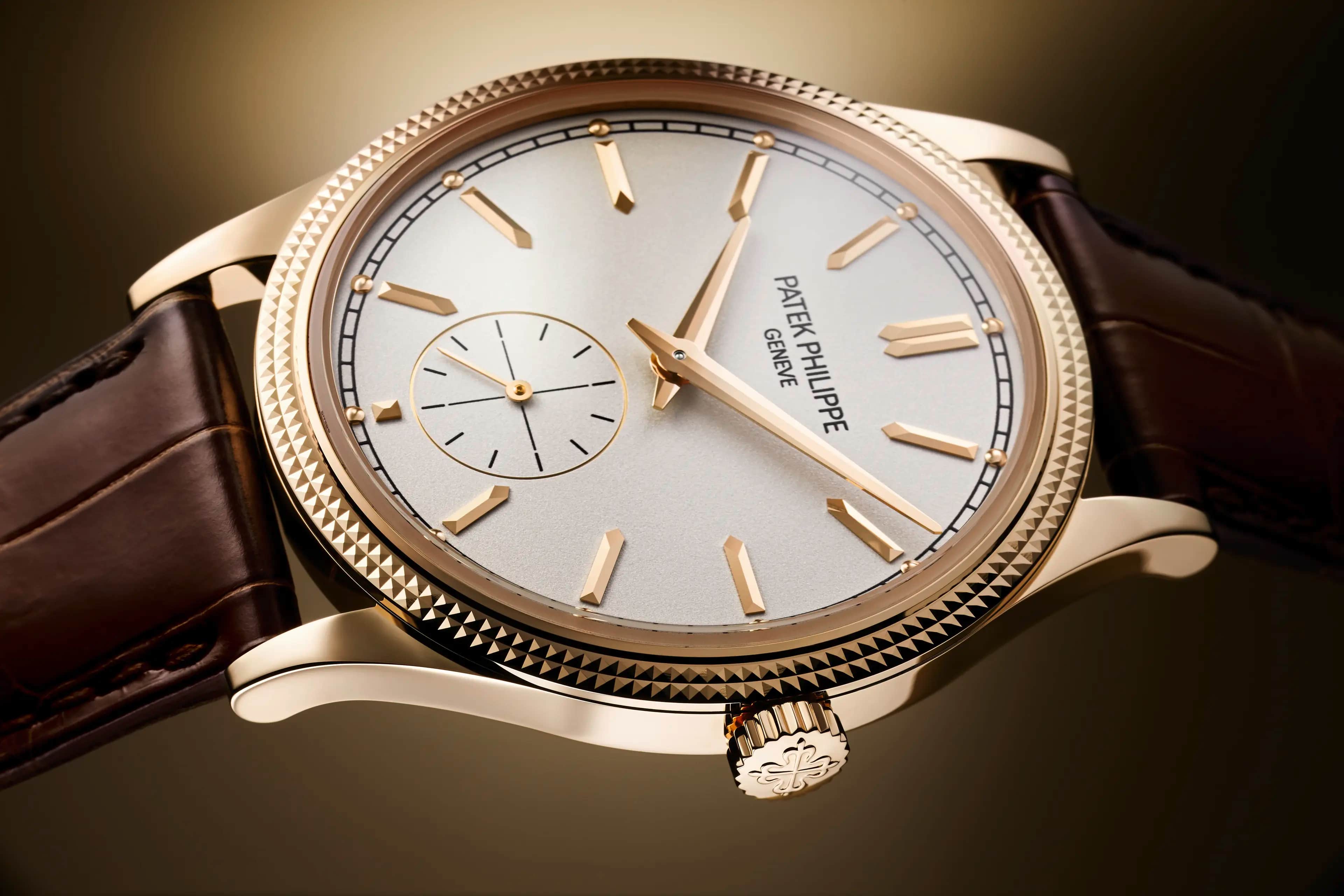
White or silver-opaline dial with applied white gold baton markers and Breguet-style hands. The hobnail guilloche (clou de Paris) pattern is on the bezel, not the dial.
Clean white or silver-opaline dial surface with applied white gold markers
Breguet-style open-tipped hands in white gold
No numerals on the dial; applied baton markers at all hour positions
"PATEK PHILIPPE" in gold text at 12 o'clock, "GENEVE" below it
Calatrava cross logo between the two text lines
Hobnail guilloche bezel with pyramid pattern visible around the case perimeter
Service part flags
toggle
Hobnail guilloche bezel
Original: The clou de Paris pattern is hand-engraved via pantograph. Each pyramid point should be sharp and consistent. The pyramid apexes should catch light as discrete points, not as a blurred or softened texture.
Replacement tells
Pyramid apexes are rounded or soft rather than crisp points; this indicates a cast bezel rather than an engraved one
The pattern spacing is irregular; rows of pyramids do not align precisely to a geometric grid
The bezel surface has a slight sheen inconsistency where the engraving tool changed depth
Officer's hinged caseback
Original: The caseback is hinged at one side and opens with a thumbnail notch. It is not screwed. Through the open caseback, the Cal. 240 is fully visible including the off-center 22k gold micro-rotor.
Replacement tells
Caseback is screwed rather than hinged; a thumbail notch should be visible on the edge of a genuine officer's case
The hinge feels loose or has play; genuine hinges have a precise, positive action
The caseback is difficult to open without a tool; genuine hinged casebacks are designed for fingernail access
Strap and clasp
Original: Crocodile leather strap with a white gold Calatrava cross deployant clasp. The clasp has the Calatrava cross cutout and "PATEK PHILIPPE" engraved on the inner face.
Replacement tells
Clasp is a standard pin buckle rather than a deployant
Clasp material is not white gold; test with a UV light source (white gold does not fluoresce)
Calatrava cross cutout on clasp is punched rather than laser-cut, with rough edges visible under magnification
Inner face of clasp does not have "PATEK PHILIPPE" engraving
Case back markings
toggle
2003 to present
Hinged caseback (not screwed); thumbnail notch on the case edge at the hinge opening point
Cal. 240 visible through the open caseback: 22k gold off-center micro-rotor, not a full peripheral rotor
Côtes de Genève finishing on visible bridges; blued screws
"18K" stamp visible on the inside of the caseback
Reference number and serial engraved on the case inner ring
Patek Philippe signature on the movement visible through the caseback
Movement tells
toggle
Cal. 240 runs at 19,800 bph (5.5 Hz). This is a relatively slow beat for a modern movement; a timegrapher reading at 28,800 bph indicates a different caliber is installed.
The micro-rotor is off-center and occupies approximately a quarter of the movement diameter. A full-size rotor visible through the caseback is not the Cal. 240.
The 22k gold micro-rotor should be visibly warmer in color than yellow gold; it should appear distinctly yellow compared to white gold components in the movement.
The power reserve is approximately 48 hours from fully wound. Stopping significantly before this indicates a mainspring or winding issue.
The movement should not be magnetic. 18k white gold cases are non-magnetic; any magnetic attraction from the case indicates a non-white-gold material.
Sources: Patek Philippe Calatrava reference page; Patek Philippe Cal. 240 technical documentation; Hodinkee -- The officer's case tradition at Patek Philippe.