Live pricing is coming soon. Get notified when it is available for this reference.
Community + OSINT signals haven’t landed for this reference yet. We don’t publish a rating against zero signal: the number would mean nothing. Editorial body + caliber + market value still surface above; ratings appear once the signal corpus does.
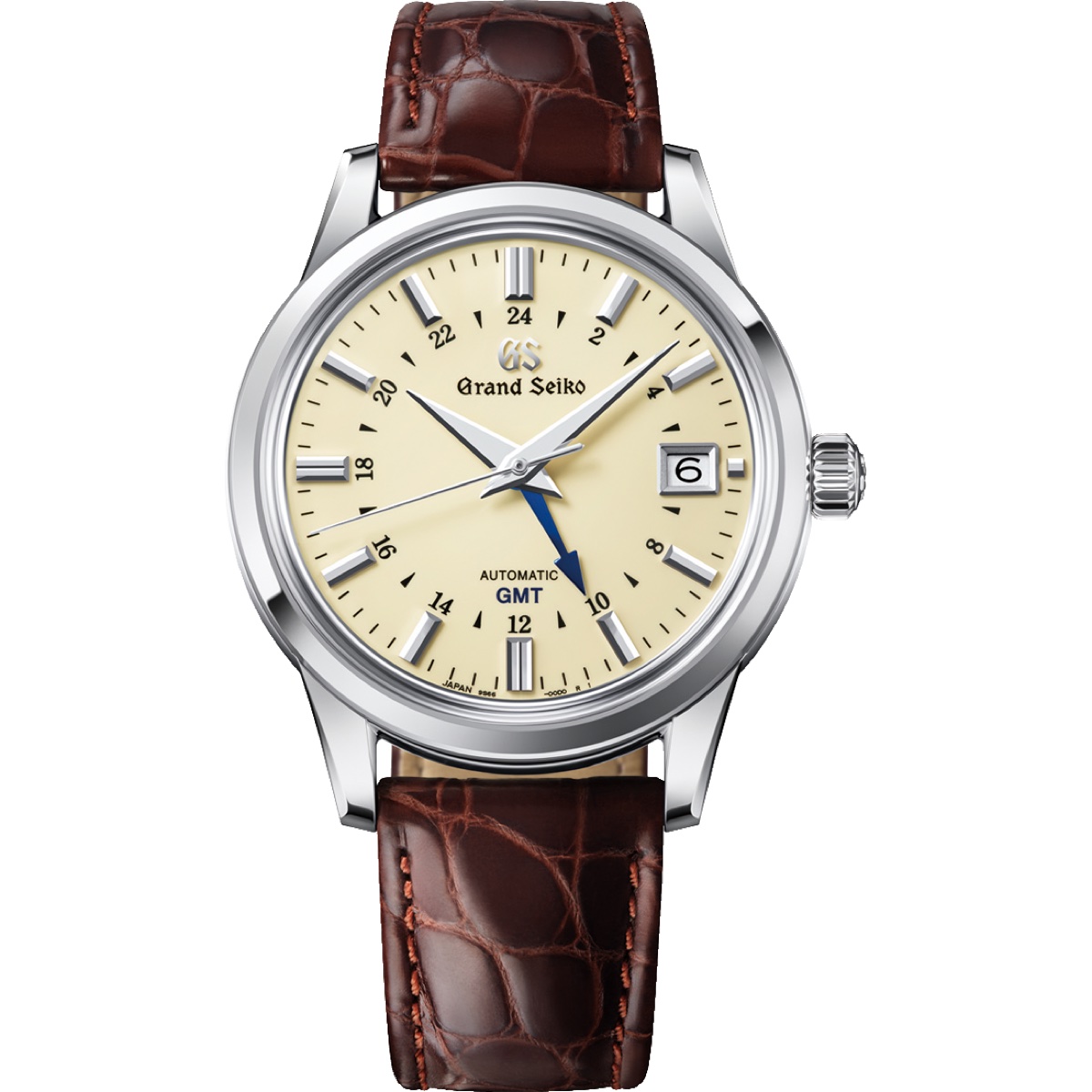
A steel Elegance GMT on the 9S66, which is a conventional in-house automatic rather than a Spring Drive. The most useful check is that the GMT is a true traveller complication and behaves like one, and the most important thing to know is that this watch is not built for water.
| Area | What to check | What is correct | Red flag |
|---|---|---|---|
| movement | True traveller GMT behaviour | The local hour hand jumps in one-hour steps without disturbing the minutes or the 24-hour hand | The 24-hour hand moving while the local hand stays fixed, which is the wrong caliber or a fault |
| dial | Zaratsu-polished markers and the spiral texture | Distortion-free mirror facets on the markers and hands, with the dial pattern pressed rather than printed | Any waviness in a polished facet, which is the tell Zaratsu polishing exists to avoid |
| movement | Caliber 9S66 through the display back | Automatic 9S66 at 28,800bph, roughly 72 hours from full wind, seconds hacking on the crown | A reserve well short of 72 hours, or seconds that keep running with the crown out |
| case | Case back screws and gaskets | Six screws present and even; the modest rating depends on intact gaskets | Mismatched or burred screws, which suggests the case has been opened casually |
This watch on Grand Seiko’s site →
Closest by lug-to-lug, thickness and width, which is what decides how a watch sits, rather than by brand or price. Family members are excluded.
Drawn from the 651 of 790 references that have all three measurements recorded. Why the other 139 are missing.
Pre-purchase sheet → The numbers to check, what to look at and what to ask, on one printable page.