Live pricing is coming soon. Get notified when it is available for this reference.
Community + OSINT signals haven’t landed for this reference yet. We don’t publish a rating against zero signal: the number would mean nothing. Editorial body + caliber + market value still surface above; ratings appear once the signal corpus does.
Rectangular case proportions are difficult to counterfeit precisely; Cal. 1611 MC manual-wind and case dimensions are the primary checks.
| Area | What to check | What is correct | Red flag |
|---|---|---|---|
| movement | Cal. 1611 MC manual-wind identification | Watch is manually wound only; no rotor visible through exhibition caseback; winding via crown adds power reserve; Cal. 1611 MC text or architecture visible; 72-hour power reserve | Rotor visible through caseback (indicates automatic, not Cal. 1611 MC); watch that self-winds with wrist motion; caseback showing any automatic movement |
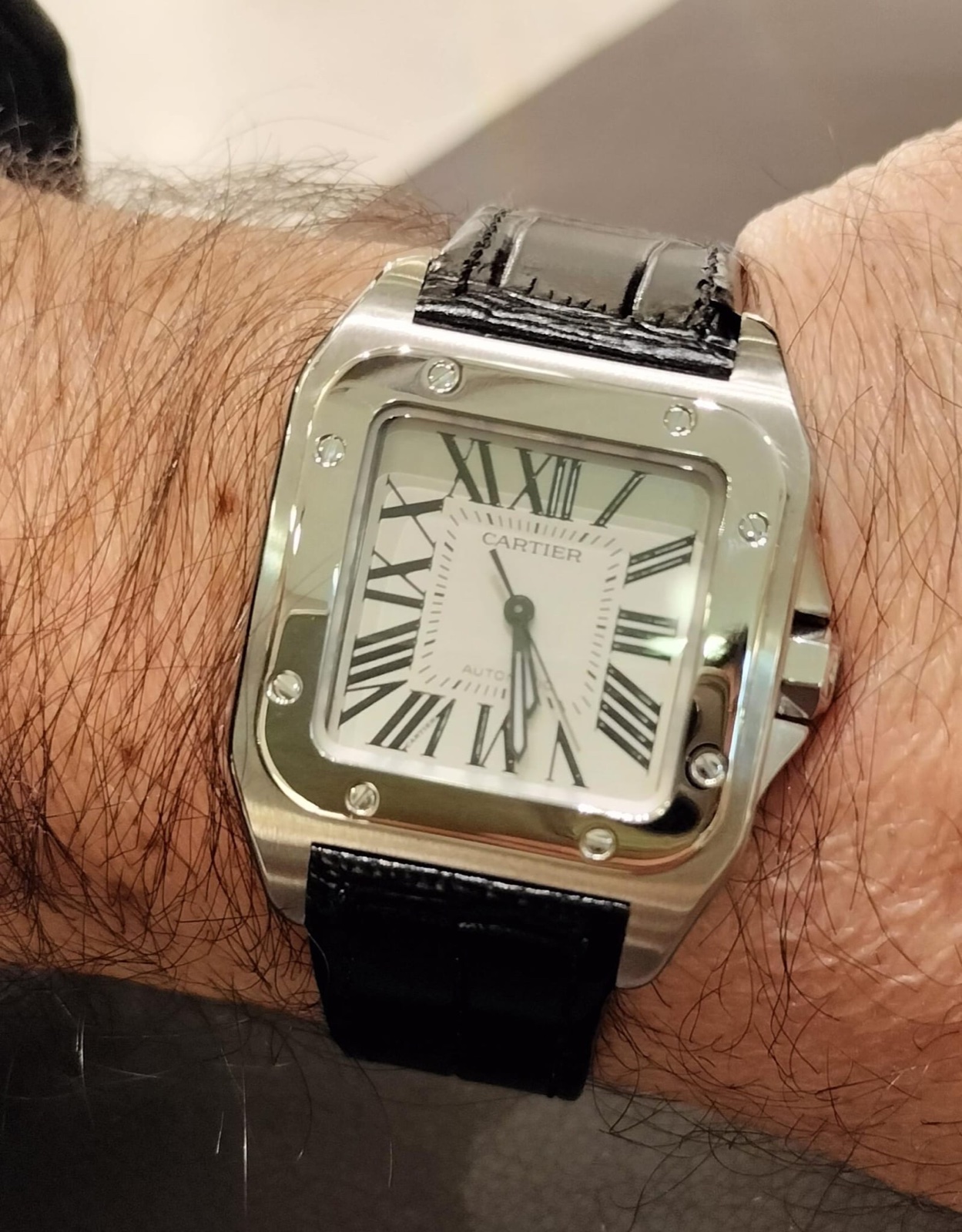
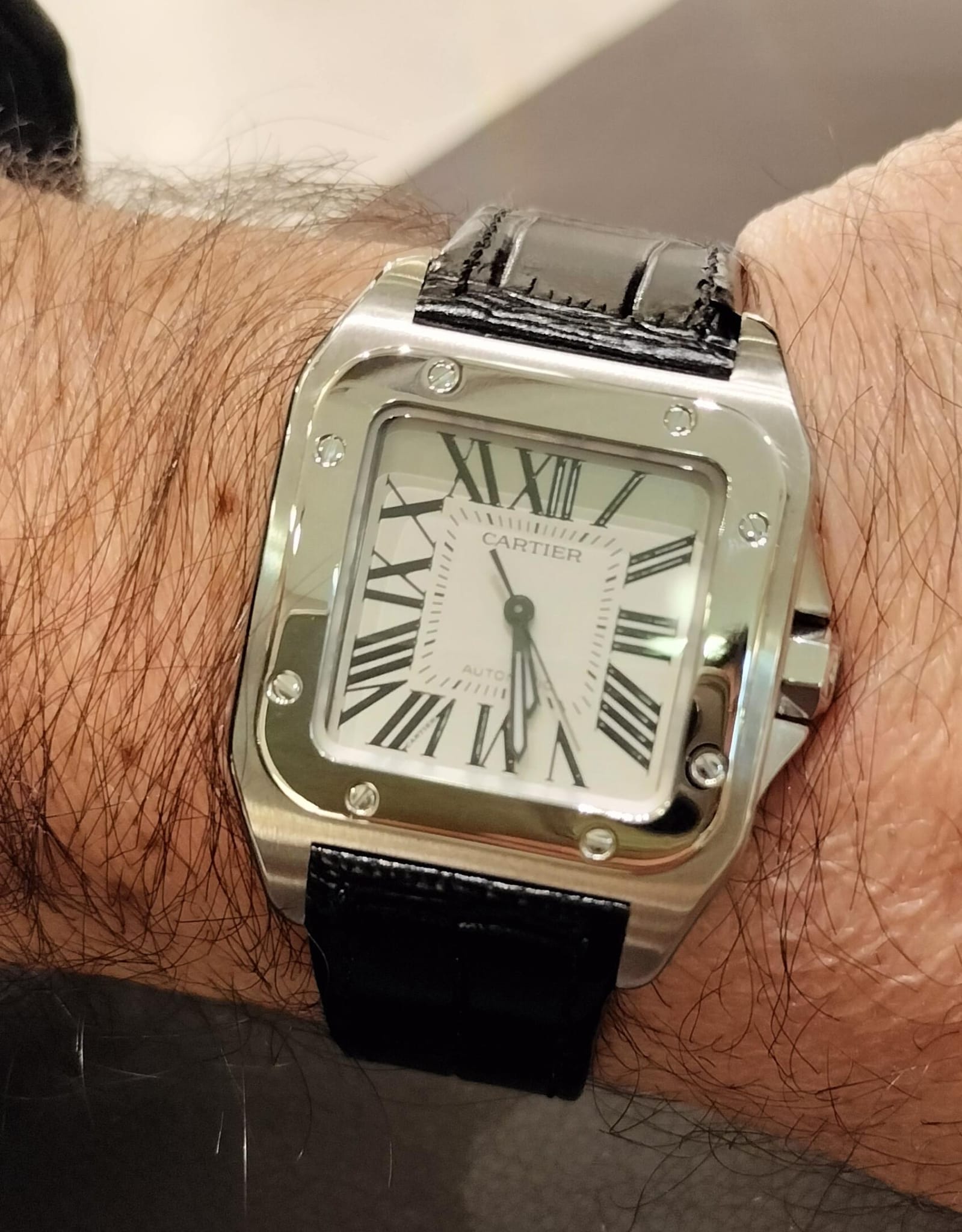
| case | 43.5x31.4mm rectangular dimensions | Case length approximately 43.5mm, width approximately 31.4mm; case is slim (ultra-thin profile); stepped rectangular case with polished surfaces and brushed flanks | Dimensions significantly different from 43.5x31.4mm; case that is excessively thick (should be slim); case proportions that appear square rather than elongated |
| dial | Rectangular dial Roman numerals | Roman numerals are scaled and spaced for the rectangular dial format; Cartier typeface maintained; "CARTIER" signature and "SANTOS-DUMONT" text present; blued steel sword hands | Numerals that appear compressed or stretched for the rectangular format; Cartier text with wrong typeface; hands that are black or silver rather than blued steel |
| crown | Crown with spring mechanism (push-in, not screw-down) | Crown pushes in and springs back; no screw-down crown on this model; blue cabochon on crown top; winding action is smooth and direct | Crown that screws down; absence of blue cabochon; winding that is rough or gritty indicating a worn movement |
| caseback | Exhibition caseback showing Cal. 1611 MC | Cal. 1611 MC plates visible through caseback; no rotor present; movement architecture is flat (ultra-thin); Cartier movement finishing visible on bridges | Rotor present; movement architecture inconsistent with ultra-thin manual-wind; absence of Cartier finishing on bridges |
The Santos-Dumont is the dress version of the Santos family: thinner, manual-wound, with a smooth non-integrated bracelet and a more refined case profile than the sports Santos. The thinner case and the absence of the QuickSwitch system distinguish it from the current-generation sports Santos.