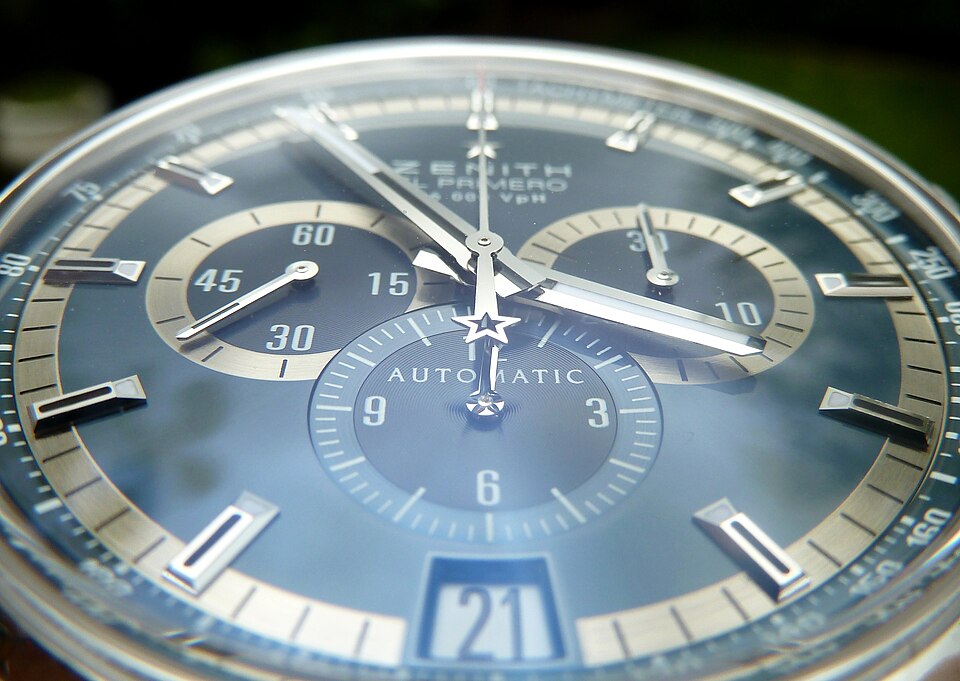
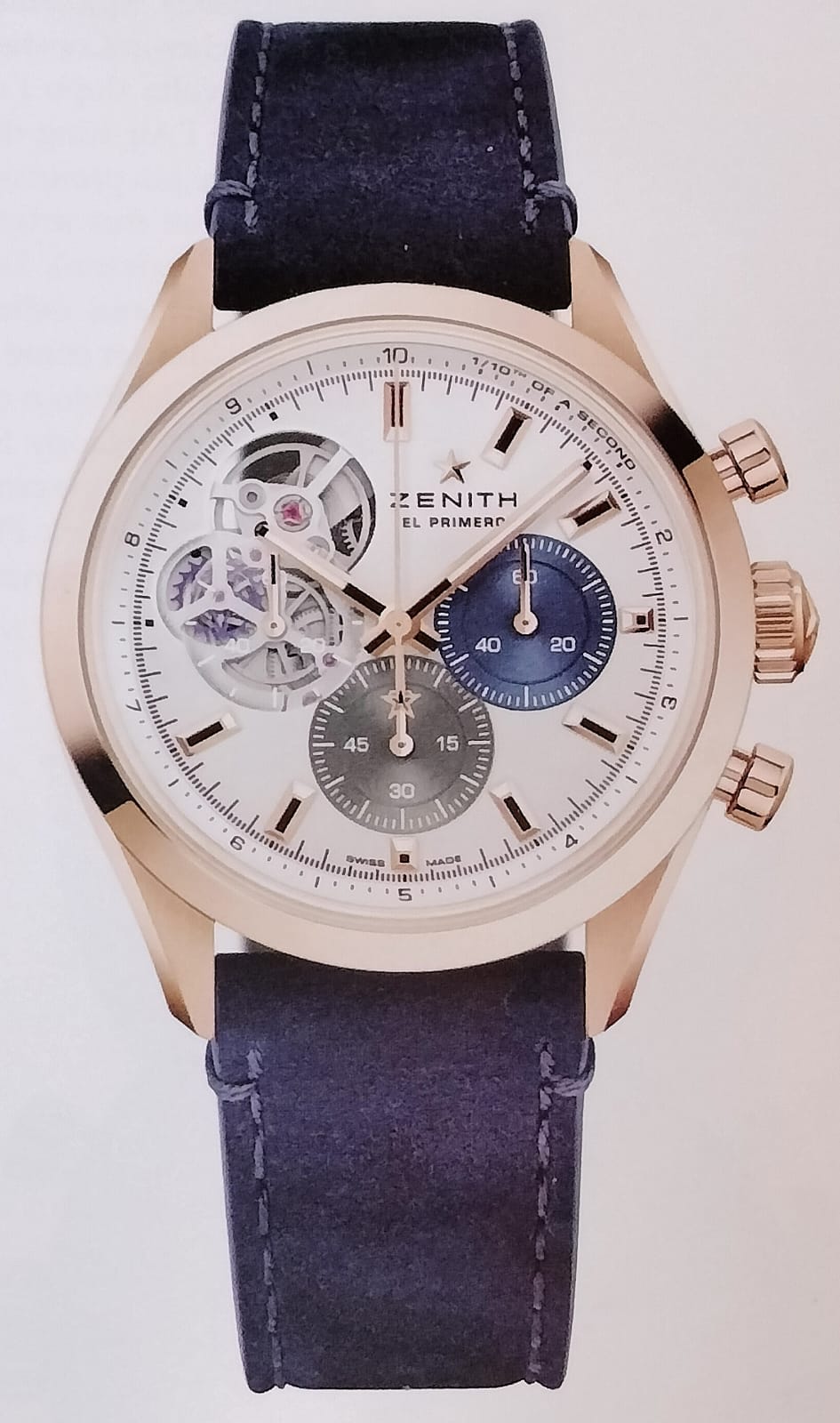
The Defy Classic strips the Defy family's angular geometry down to its most wearable form: a 41mm steel case around a fully skeletonized automatic movement, no dial required. What you see through the lattice is the actual caliber running, not a decoration applied on top of one. For the price, it is a genuine open-worked watch from a manufacture that builds its own movements.
What it is
Zenith relaunched the Defy name in 2017 as part of a broader revival under CEO Jean-Claude Biver, anchoring the family in the angular, multifaceted case language the original Defy introduced in 1969. The Classic was positioned as the entry point, contrasting with the Defy El Primero 21 and later the Defy Skyline's 1/10-second chronograph novelty. The Elite 670 SK is a skeletonized derivative of the Elite 670, Zenith's slimmer automatic caliber line developed separately from the famous El Primero.
The movement bridges dress and sport: thin enough for a suit, rated to 100m water resistance. The current generation has held its core specification unchanged since launch, with color and strap variations rather than technical revisions.
Buying notes
The open-worked dial collects dust and lint visibly, and cleaning requires more care than a solid dial, ideally at a watchmaker rather than at home with a blower. Some examples show fingerprint smearing on the movement bridges through the lattice after handling, which is harder to address without disassembly. Bracelet finishing on entry-level steel Defy examples can show wear on brushed surfaces faster than expected; check the bracelet condition carefully on pre-owned pieces.
The angular case has pronounced lugs that can feel aggressive on smaller wrists, so wearing it before buying is worth the effort if the 41mm lug-to-lug measurement is borderline for you. Avoid examples where the skeletonized bridges show scratches from improper cleaning attempts, as refinishing that correctly is a specialist task.
Market read
New retail runs roughly $6,500 to $7,500 depending on configuration, and the pre-owned market typically sits 20 to 30 percent below that for clean examples. Demand is steady but not aggressive, which means patient buyers can find well-priced pieces without urgency. The Defy Classic does not command the premium of the El Primero lines, which works in a buyer's favor.
Service expectations
The Elite 670 SK carries a recommended service interval of approximately 5 years. Given the skeletonized architecture, service requires a watchmaker experienced with open-worked calibers, as reassembly is more involved than a standard automatic and the visible bridges must be handled without marking. Zenith boutiques and authorized service centers are the safest option to preserve the movement's finishing.
Editorial copy is AI-drafted from primary sources and reviewed by Grail Atlas before publication. Where the text is uncertain about a fact, it says so. Email
corrections@grailatlas.com if something reads wrong. Signals on this page (community, OSINT) are clearly separated from the editorial sections.