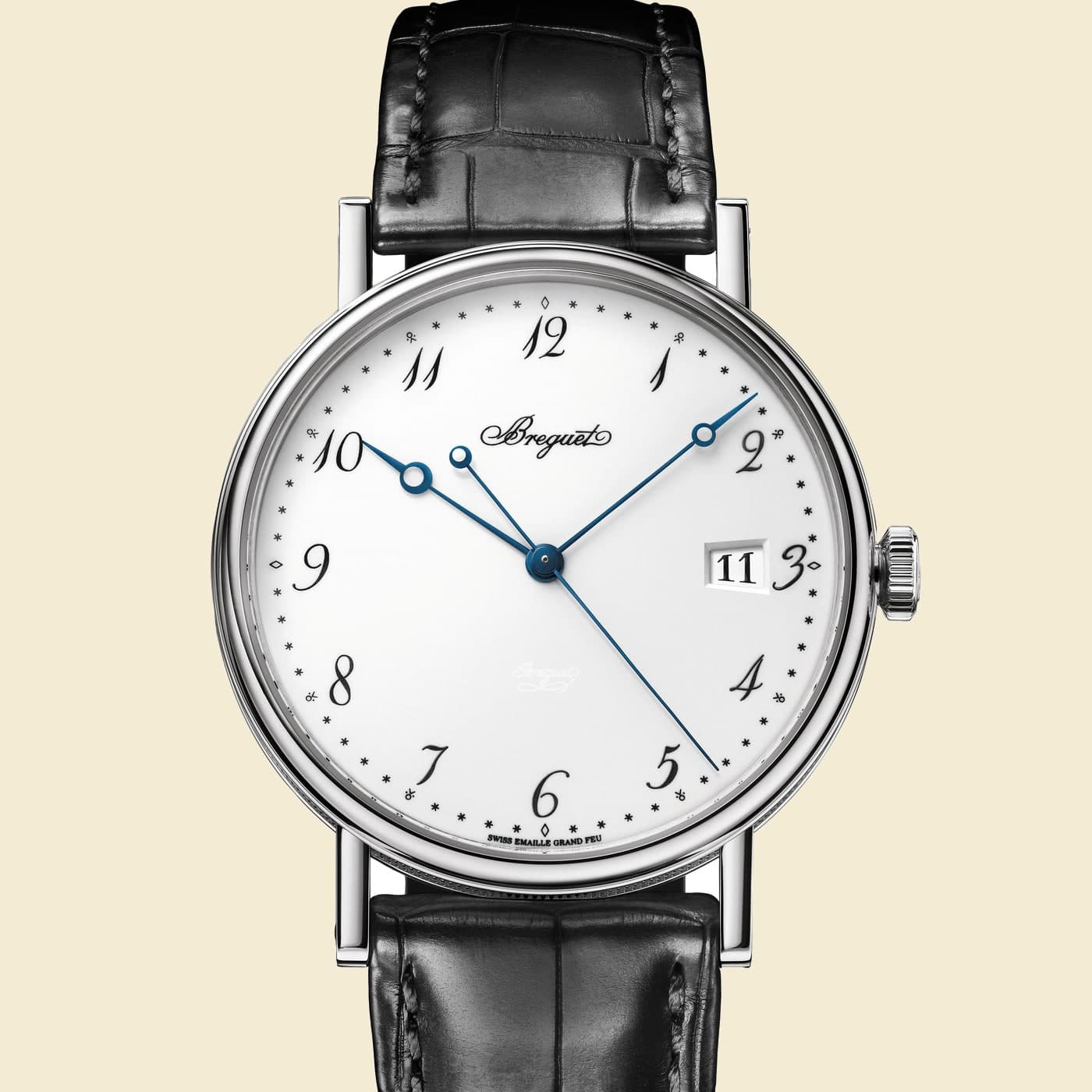
Grand feu enamel
Kiln-fired glass-based dial coating at 800°C
What it is
Grand feu enamel (French: "great fire") is a dial-making technique in which ground glass powder; enamel frit; is applied to a metal substrate and kiln-fired at 800 to 850 degrees Celsius until the glass melts and fuses to the metal. The process is repeated multiple times to build up the correct depth. The resulting surface is chemically inert, UV-stable, and impervious to humidity: enamel dials from the 18th century remain as vivid today as when they were made.
History
Grand feu enamel dials have been produced since the 16th century, reaching their peak in Geneva and Limoges ateliers during the 18th and 19th centuries, when Patek Philippe, Vacheron Constantin, and Cartier all featured elaborate hand-painted enamel scenes on pocket-watch dials. Modern grand feu enamel dial producers are extremely rare: the Stern family's enamel atelier in Geneva makes dials exclusively for Patek Philippe; Donzé Cadrans in Le Locle supplies several manufactures; a handful of independent ateliers fill remaining demand. The reject rate during production can exceed 70 percent: any impurity in the frit, temperature variation inside the kiln, or incompatibility between the enamel and substrate causes cracking, bubbling, or discolouration; defects discovered only after the piece has cooled and left the kiln. Patek Philippe references 5077P-011 and 5078G-010 carry grand feu enamel dials.
How it's done
Ground glass powder mixed with water and a binding medium is applied to a slightly convex gold or copper disc using a fine brush or spatula in an even layer. The disc goes into a kiln at 800 to 850 degrees Celsius for two to three minutes, during which the glass melts and bonds to the metal. The process is repeated five to eight times to build up the correct final depth and surface quality. Each successive firing can cause earlier layers to crack if the enamel composition is mismatched or the temperature profile deviates from the target. After the final firing, the surface is ground flat using a wet stone, then re-fired once more to restore the gloss. Lettering and indices are applied to the finished enamel surface by hand using fine brushes and enamel-based paints before a final low-temperature fixing fire.