
Why the 14060M
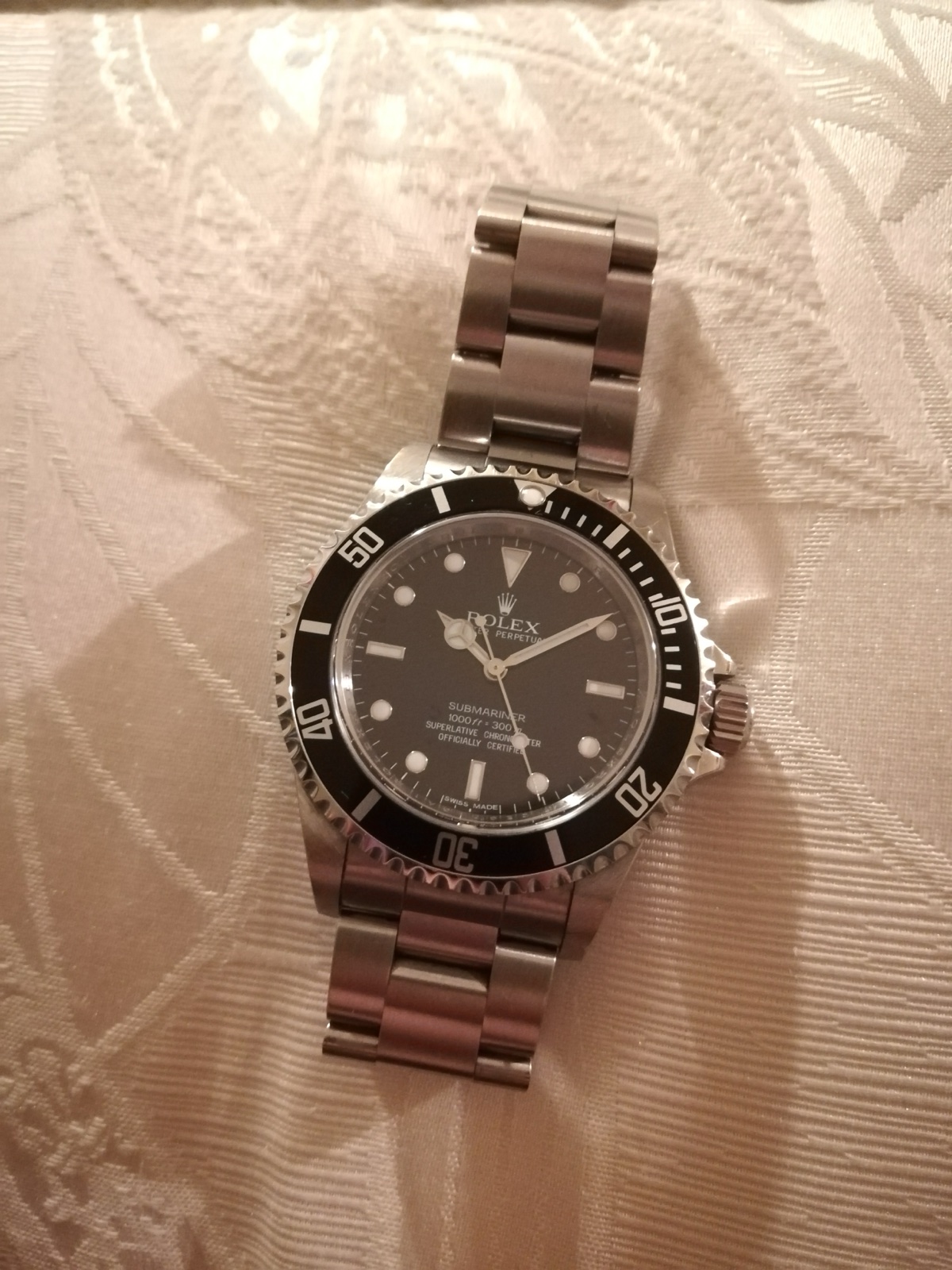
Picture the Submariner 14060M that has been sitting in the catalog since the day Grail Atlas was an idea. 40mm. No date. Aluminium bezel, faded soft from a decade of wrists. The caliber 3130, Rolex's bread-and-butter no-date Sub movement, the last one before the supercase chassis arrived on the date Sub in 2010 (the 116610LN) and the no-date Sub in 2012 (the 114060), thickening the lugs and growing the bezel insert from aluminium to ceramic. If a buyer were starting over from zero today (no fixed budget, no horological CV to defend), the case for this reference starting the collection is unusually strong. Not for sentimental reasons. For the reasons that should drive any first reference choice, and that usually do not.
What this is not saying
This is not an argument that the 14060M is the bestreference. That word does too much work. The 14060M is not the most precise watch in the catalog (a Grand Seiko 9F destroys it). It is not the rarest (a Patek 3700 is rarer by an order of magnitude). It is not the most beautiful (taste is taste; the Lange 1 will out-prose any Rolex). It is not the safest investment (the word "investment" should never be in a watch sentence; the long version).
What this is saying is that the 14060M is the reference that, more than most, fits the questions that should govern a first reference choice. Those questions are simpler than the watch press tends to make them, and the press is selling magazine pages, not telling a reader what to wear for the next thirty years.
The four questions
Every first reference choice should answer four questions in order. The order matters because the later ones get easier once you've answered the earlier ones honestly.
- Will the buyer wear this in three years?Not "does it appeal now." Not "is it appreciating." Will the wearer, in three years, after the novelty has worn off, still put it on without thinking about it. If a buyer cannot answer yes confidently for a specific reference, the rest of the questions do not matter.
- Will the next service make economic sense?The first service on a vintage Rolex Sub is comfortably under $1,000 from an independent watchmaker; the watch itself trades comfortably above $8,000. Math works. The first service on a Dubois-Dépraz chronograph module is a four-figure expense relative to a watch that may trade in the low four figures. The math does not work the same way. Service economics is the silent test for reference choice; the watch press rarely talks about it because it is unsexy.
- Does the silhouette still wear right thirty years from now? A 42mm chronograph reads as "big watch on a wrist" at 35; at 60 it reads as "watch the wearer bought before they knew better." A 38-40mm sport watch with honest proportions wears the same across a lifetime. This is the one question the watch press never asks because the press cycle is annual, not lifetime.
- Can a buyer still find honest examples?A reference that requires wading through a market of refinished dials, replaced bezels, and "service replacement everything" examples is a reference that asks more of the buyer's eye than a first watch should. The 14060M passes this test today; the 5513 does not (for most buyers); the 16610 (the ceramic-bezel-era ceramic-bezel-replacement) does not.
Why the 14060M lands on all four
The 14060M is the last no-date Submariner with the classic 40mm case, the slim bezel, the aluminium insert that fades honest. Production ran 1999 to 2012. The caliber 3130 is the longest-serving no-date Sub movement of the modern era (the vintage 1520/1530 ran longer in absolute years across the 5513's lifetime) and one of the most-serviceable Rolex movements still in active service. Honest examples are still findable. The 14060M market is mature enough that the over-polished and service-replaced examples have been picked over and are flagged in collector circles; the remaining honest examples have started to firm in price as that thinning becomes a pattern.
The wear is the right wear. 40mm, 12.5mm thick, riveted Oyster bracelet, a case profile that has not moved in sixty years and is not going to. It is not a flashy watch. It is not a watch that registers as "expensive" on the wrist of someone who is not looking. It is a watch the owner puts on, and twenty years from now puts on the same watch, and the only thing that has changed is the owner.
The wider point
The four questions above do not decide every reference for the buyer. They make clear that "buy what you love" is half the answer, that "buy what makes economic sense" is the other half, and that the references passing both tests are surprisingly few. The 14060M passes because it was designed for a use case (a working dive watch) by a manufacturer that built the watch intelligently (Rolex of the late 1990s), held by a movement that was engineered to be serviced indefinitely (the caliber 3130), in a case profile that does not flatter the moment and so does not betray it later.
Most watches do not pass. Most of the watches a collector might own before owning a 14060M are watches that belong second, the ones that complement a serious first reference rather than substitute for it. A Speedmaster Professional is exactly that. A Tank LC is exactly that. A Reverso Classic is exactly that. These are watches that earn their place in a collection. None of them is the place to start when the question is "what should the first watch be."
That is the wider point. The first reference is not the most expensive, the rarest, or the most-pictured on Instagram. It is the reference that, across the long horizon nobody actually wants to do the math on, makes economic sense and gets the wear and asks the least unnecessary thinking of the wearer while it is on the wrist. For a lot of buyers, that is the 14060M. For others, it is the Tank LC, or the Speedmaster, or the Reverso, or the Mark XVIII. The framework matters more than the specific watch.
Buy the one whose math works first. The others come next.