Passing strike
Sounds the hour without being asked
What it is
A passing strike, or sonnerie au passage, is a chiming complication that strikes automatically as the hour passes. The wearer does nothing. This is the whole distinction from a minute repeater: a repeater answers a question you ask it, while a passing strike volunteers. Most strike once on the hour and say nothing else, so unlike a repeater it does not tell you what time it is, only that an hour has turned.
History
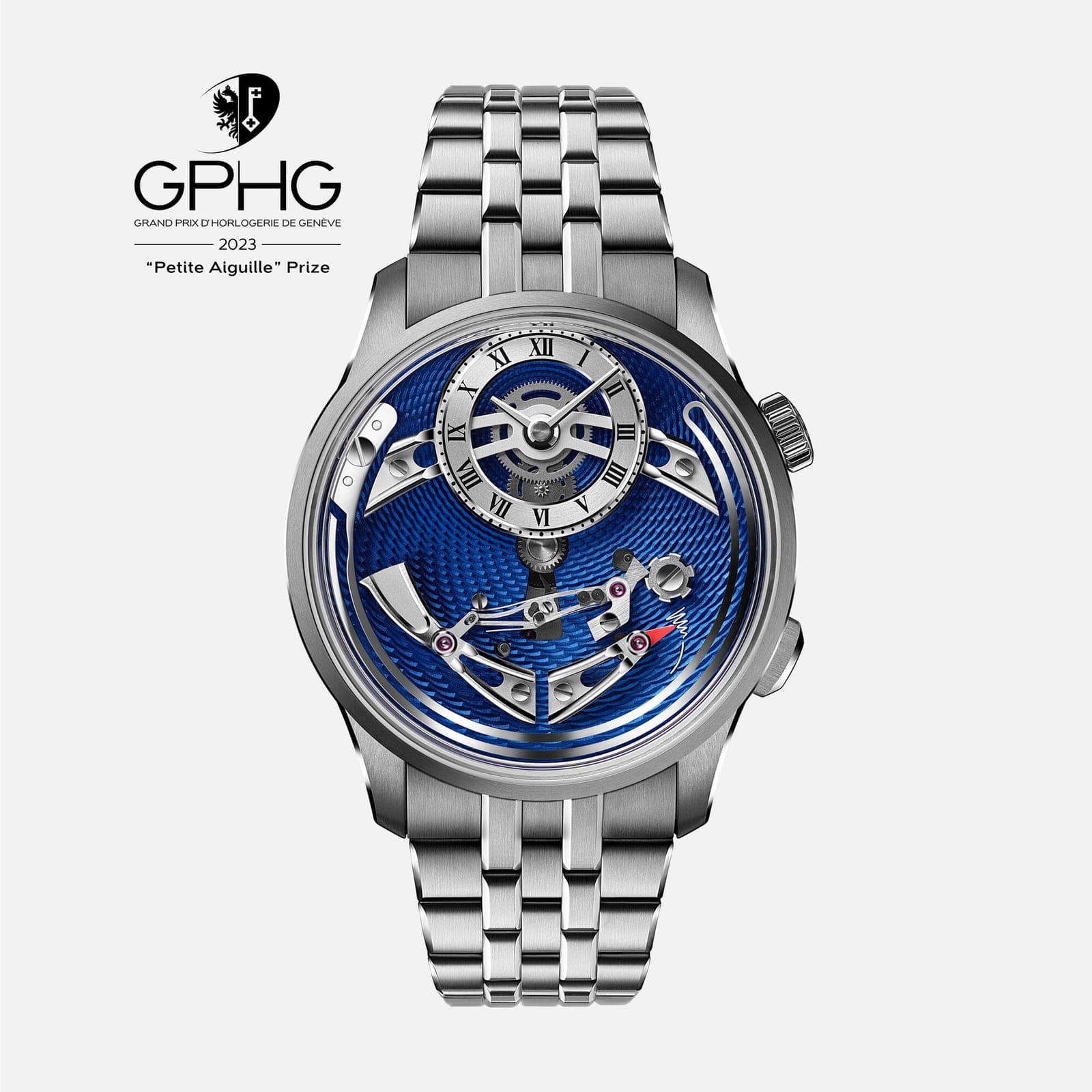
Automatic striking predates the wristwatch by centuries; it is what tower clocks and carriage clocks did, and the domestic striking clock is the direct ancestor. Miniaturising it into a wristwatch put it among the most expensive things a brand could make, and for most of the twentieth century a passing strike sat alongside the grande sonnerie in price. The category changed in 2022, when Christopher Ward released the C1 Bel Canto: a chiming module built onto a Sellita SW200-1 base, at under $5,000, in a field where the nearest alternative cost several times as much. It remains close to alone in its price bracket.
How it works
A cam on the motion work, turning once an hour, lifts a hammer against spring tension as the hour approaches. At the top of the hour the cam releases, the hammer falls, and it strikes a gong wrapped around the movement. A governor regulates the release so the energy leaves the barrel at a controlled rate rather than in a jolt that would disturb timekeeping. Some designs draw from the mainspring directly; others use a separate strike barrel so the chime cannot rob the going train.
Parts required
Hour cam on the motion work, hammer and its spring, a gong (usually a hardened steel wire coiled around the movement periphery), a release lever, and a governor or fly to control the strike speed. Far fewer parts than a repeater, which needs a rack-and-snail system reading three levels of time.
What makes it difficult
The sound is the product, and almost nothing about a wristwatch helps it. The case is small, sealed, and usually made of metal chosen for looks rather than acoustics. The gong has to be anchored so vibration reaches the case rather than dying in the movement, while the case still has to keep water out. And the strike has to draw energy without visibly disturbing the balance, which is why the governor matters more than its part count suggests. A passing strike that fires reliably but sounds thin is a solved engineering problem and a failed watch.
In the catalog
Related
- Minute repeater: Strikes the time in chimes on demand
- Grande sonnerie: Strikes the time automatically as it passes; the most demanding audible