Mirror polishing
Producing an optically flat, reflective surface on steel
What it is
Mirror polishing is the process of working a steel surface through successively finer abrasive grades until it reaches an optically flat, highly reflective finish. In the German watchmaking tradition this is called Schwarzpolieren (black polishing) because a perfect mirror surface appears almost black against ambient light; it reflects only the surrounding environment rather than scattering diffuse grey. The technique is applied to individual screws, click springs, levers, and the polished bevels on steel bridges.
History
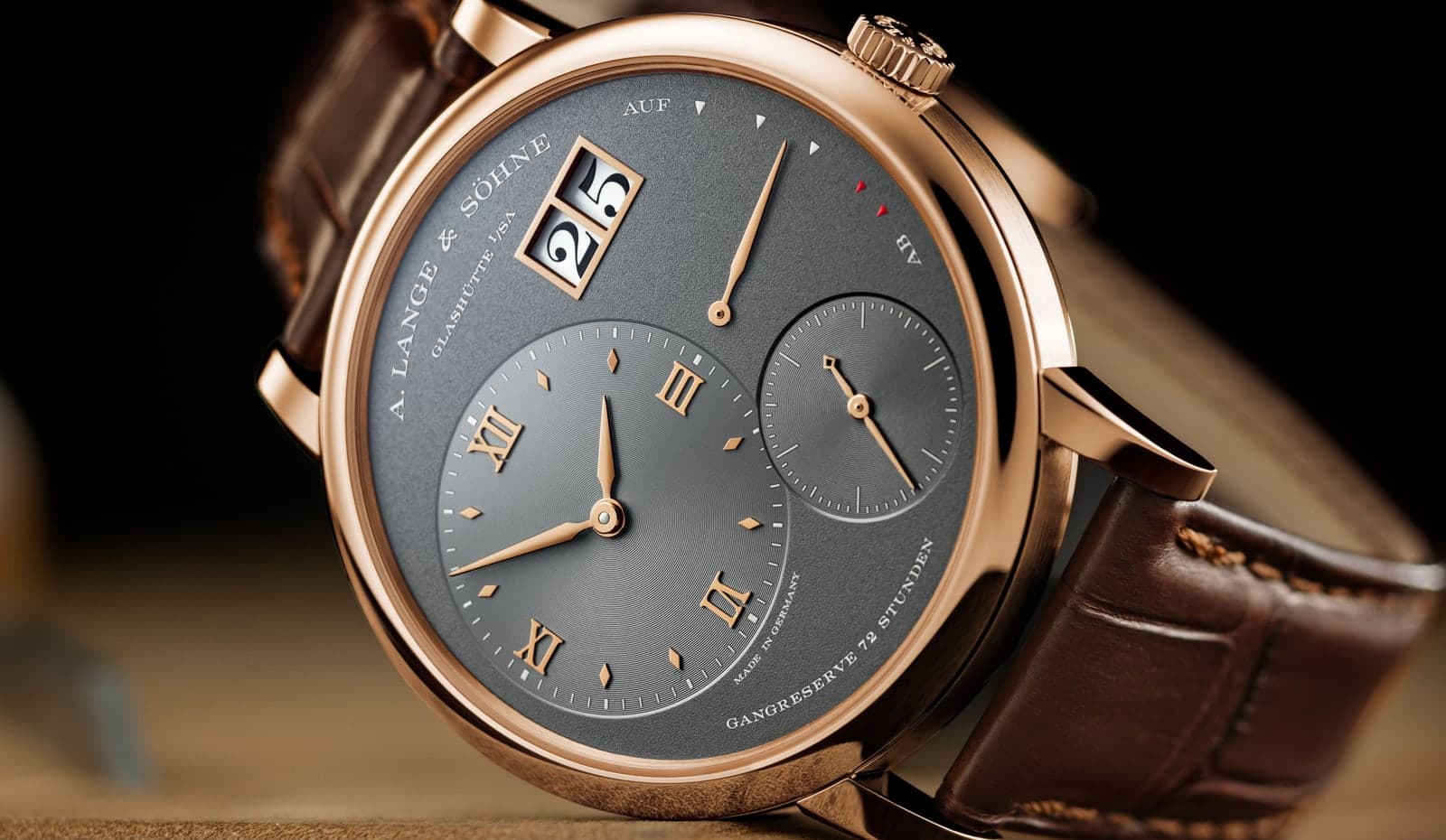
Mirror polishing on steel movement parts is the defining aesthetic signature of A. Lange & Söhne's Glashütte tradition. When Lange re-founded the manufacture in 1994, every screw in the movement was Schwarzpoliert; a commitment that has not changed. The blued screws on the Lange 1 are mirror-polished before bluing; the blue oxide makes any surface defect visible, which means the polishing must be perfect before the thermal treatment begins. Patek Philippe mirror-polishes the beveled edges on bridges and the chamfers on screws throughout their high-end calibres. The technique is the single most time-consuming surface treatment in fine watchmaking: a single screw head done correctly by hand can take fifteen to twenty minutes.
How it's done
A wooden stick; pith wood, boxwood, or a similar dense, close-grained wood; is loaded with diamond paste starting at a coarser grit (typically 3 or 6 micron) and progressing to 1 micron for the final pass. The craftsman rubs the steel surface in a single consistent plane with constant, controlled pressure. Any lateral drift or change of direction leaves visible scratches that require backtracking to a coarser grit. Work proceeds through successive diamond paste grades until the surface shows no directionality under a loupe. The finished surface is checked under raking light at multiple angles; any imperfection shows immediately as a grey shadow or directional haze. Machine polishing can approach but not equal hand Schwarzpolieren at the corners and internal transitions where two polished planes meet.
In the catalog
Related
- Anglage: Beveling and polishing the edges of movement parts
- Bluing: Heat-treating steel to a vivid deep blue
- Côtes de Genève: The parallel wave-pattern decoration on bridges and rotors