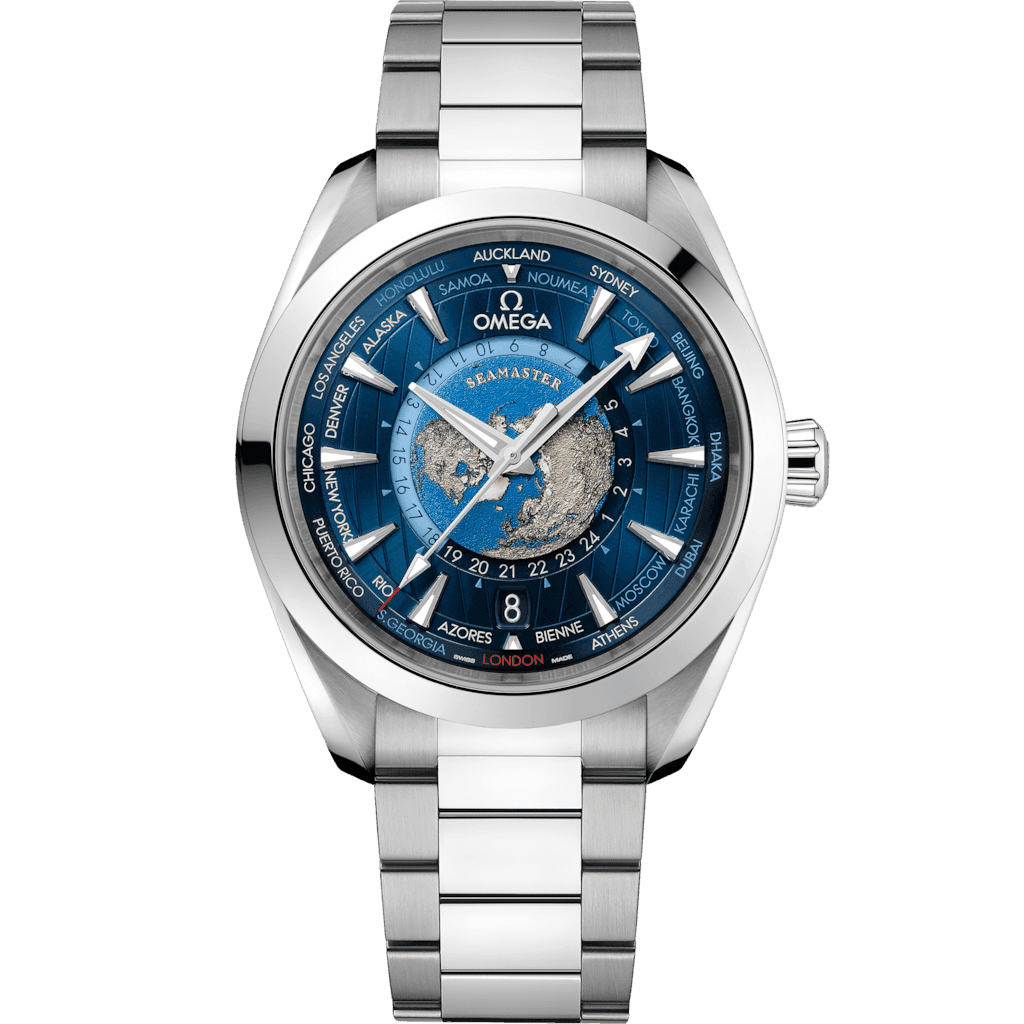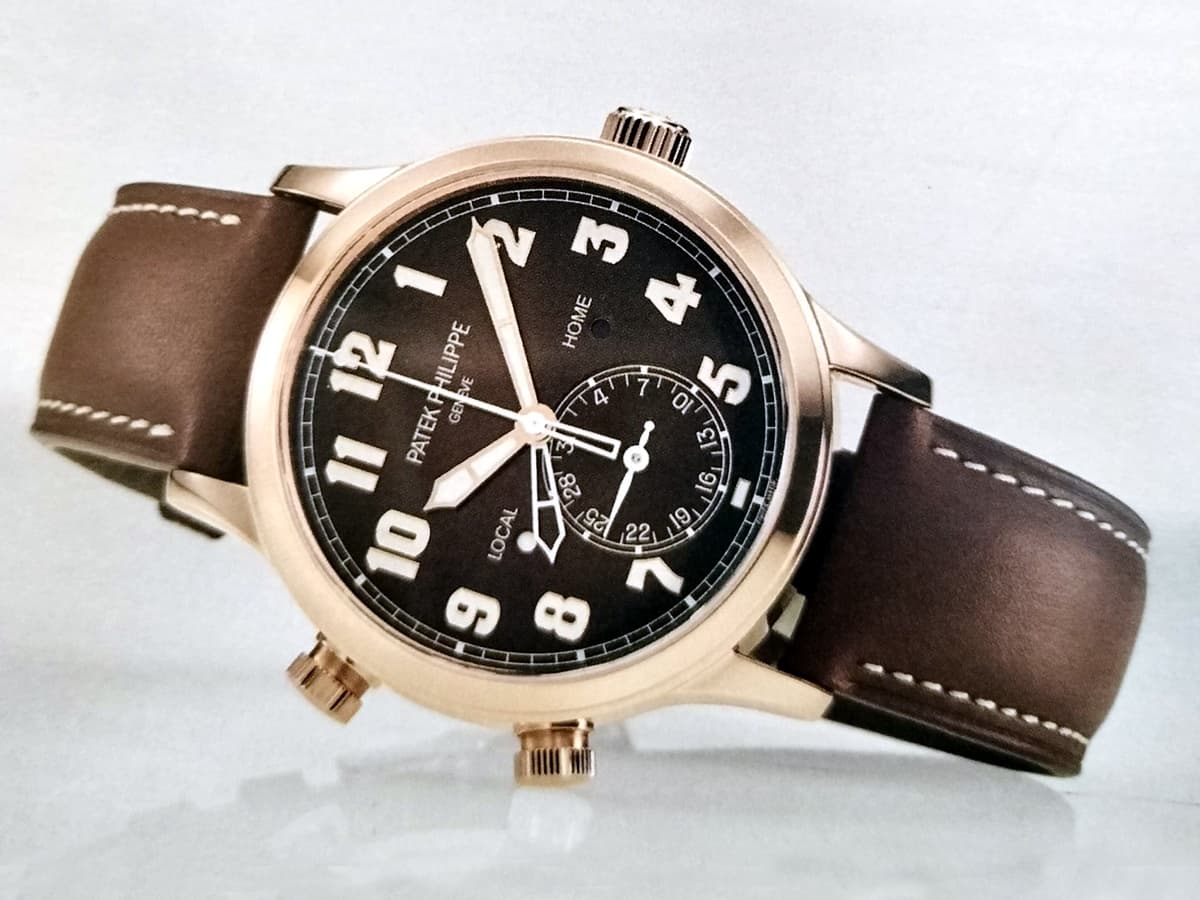
Worldtime
All 24 time zones displayed simultaneously
What it is
A worldtime display carries the names of 24 reference cities on an outer ring; one per time zone; alongside a 24-hour inner ring. The hour hand shows local time; reading any other time zone requires only finding the city name on the ring and reading the corresponding hour on the 24-hour scale. All 24 time zones are readable simultaneously without any calculation. It is the most complete multi-zone display architecture in watchmaking.
History
Louis Cottier developed the worldtime mechanism in Geneva in the 1930s, and it appeared in Rolex, Patek Philippe, and Vacheron Constantin pocket watches and early wristwatches of the era. Patek's reference 2523 (1953) with its two-tone cloisonné enamel dial is the most coveted worldtime wristwatch. The modern worldtime lineage continues through the Vacheron Overseas World Time, and the Patek 5131 (cloisonné enamel) and 5230 (lacquer dial). The Patek 5231G (2012) simplified setting to a single pusher at 10 o'clock, making it practical for everyday use.
How it works
The outer ring of the dial carries the names of 24 reference cities, one per time zone. Inside it, a 24-hour ring marks the hours in AM/PM notation. Both rings rotate together, driven by the same mechanism. The hour hand shows home time; reading another city's time means looking at that city's position on the 24-hour ring. Turning the crown or pressing the setting pusher rotates all rings in tandem to reset the home zone.
Parts required
24-position city disc, 24-hour ring, dedicated motion-works driving both discs in synchronisation, setting mechanism (crown-driven or pusher-driven)
What makes it difficult
All 24 city positions and their corresponding 24-hour ring positions must stay precisely aligned as the discs rotate; any slippage makes the display misleading. The setting mechanism must advance both discs in exact synchronisation from a single input. Printing or engraving 24 legible city names in a small outer ring requires either exceptional miniaturisation or a clever typographic layout. The Patek 5231G's single-pusher setting mechanism, which advances the rings in synchronised clicks, is itself a sophisticated sub-mechanism.
In the catalog
Related
- GMT / Dual-time: A second time zone shown on the same dial